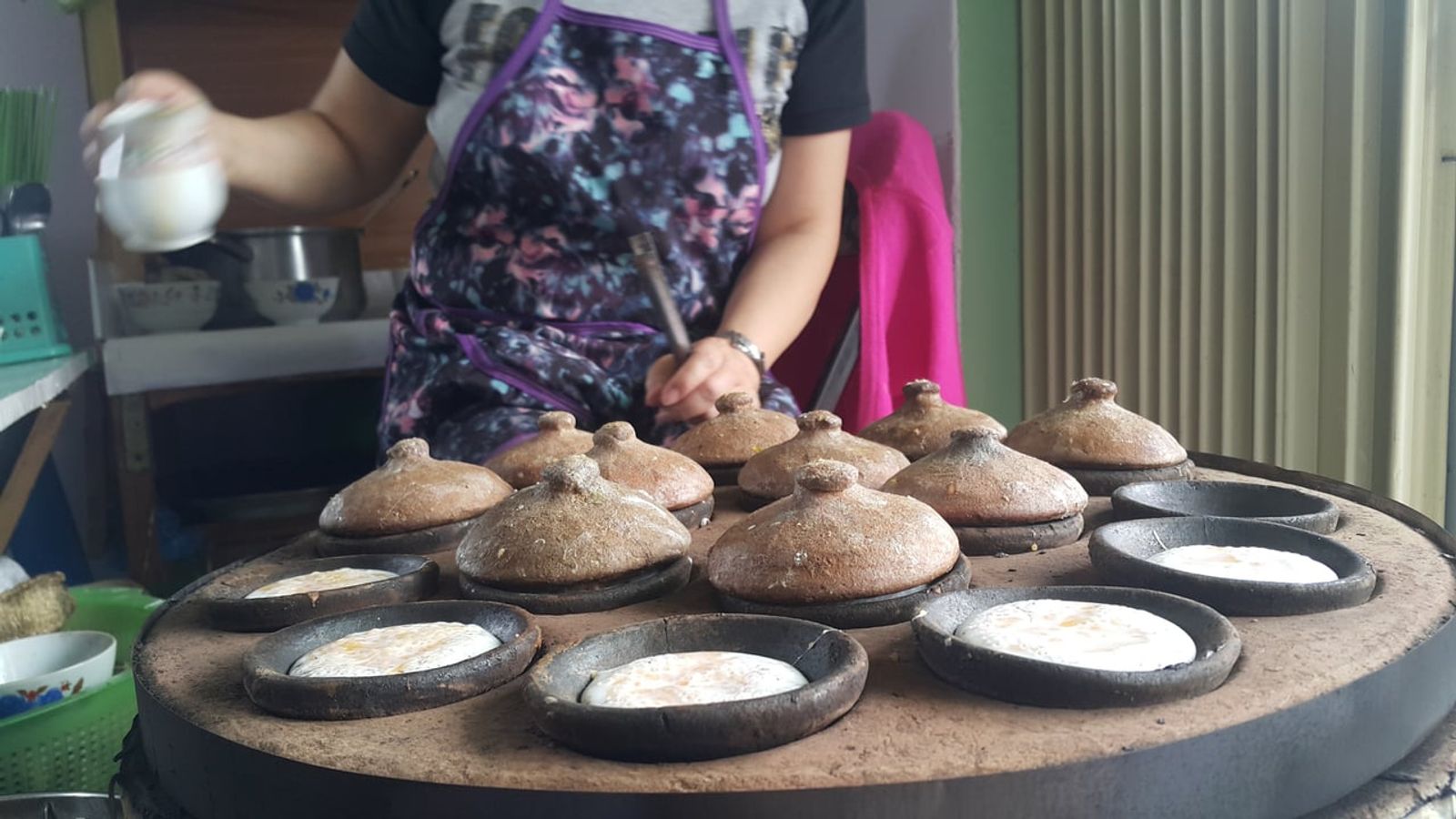
Clay moulds and lids for baking bánh căn · Photo: VinhNguyen.1257 / CC BY-SA 4.0 (Wikimedia Commons)
 VietnamNha Trang
Nha Trang Bánh Căn: Mini Rice Pancakes Baked One by One in Clay Moulds
Rice batter poured into tiny clay moulds, topped with quail egg, shrimp or squid and baked one at a time over charcoal: that is bánh căn. Here is how it is cooked, what makes the Nha Trang seafood version special, the sauces and sides, and how to order.
What Is Bánh Căn?
Bánh căn are small rice-flour pancakes, smaller than your palm, each baked in its own little round clay mould. Because of their round shape, many visitors are reminded of mini pancakes or something from a takoyaki pan. They are served several to a plate and dunked in sauce, somewhere between a snack and a meal. Bánh căn is eaten in several parts of south-central Vietnam, but Vietnam's tourism board singles out the Nha Trang version as unique. What the board highlights is the range of toppings: quail egg, seafood such as shrimp and squid, and dried or fresh meat. The seafood in particular is a fitting twist for a seaside city.
One at a Time in Clay Moulds Over Charcoal
Stand in front of a bánh căn stall and the first thing you notice is a row of small clay moulds with lids set over a charcoal brazier. Batter is ladled into each mould, the lid goes on and the cake cooks; because each one is baked individually, it takes a while. Watching them cook while you wait is part of the fun. A well-made bánh căn has a crisp rim and a soft, slightly chewy centre. The clay spreads the heat gently and evenly, browning the bottom while keeping the top moist, so bánh căn is best eaten warm, as soon as it reaches you.
From Quail Eggs to Squid: Nha Trang-Style Toppings
Once the batter begins to set, the topping goes on. One of Nha Trang's favourites is quail egg (trứng cút): a tiny egg sitting perfectly on a tiny pancake, so neat that Vietnam's tourism board remarks on how well the miniature eggs fit the miniature cakes. Then comes the seafood that makes it Nha Trang. Shrimp and squid are the classics, and Vietnamese travel guides mention that some shops also use baby octopus or small clams (hến). There are meat toppings too, such as beef, minced pork or dried meat. Street stalls often price each topping separately, so for a first try, order a few of each, mixing quail egg and seafood, and compare.
Dunk It: Sauces and Sides
Bánh căn is meant to be dunked rather than eaten plain. In Nha Trang the most common dip is a sweet-and-sour fish sauce, sometimes made spicy with garlic and chilli. Depending on the shop, you may also get mắm nêm (an anchovy sauce) or a warm fish broth served like a sauce. The local way is to drop several cakes into the bowl and fish them out as they soak through. Sides come too. Vietnam's tourism board describes a dressed side dish of pork meatballs, fried pork skin, sliced scallions and shredded green mango. Crunchy, tart green mango and fragrant herbs cut through the richness so you can keep eating one cake after another.
When and Where to Eat It
Bánh căn is mainly sold from late afternoon into the evening. Stalls light their charcoal one after another as the sun goes down, so it is better as part of an evening stroll than a midday meal. In Nha Trang, the area around Xóm Mới market and the streets near Nguyễn Thị Minh Khai and Hoàng Hoa Thám are often named as places with plenty of bánh căn, and Vietnam's tourism board says it is easy to find all over the city. Sources vary on price: about 12,000–25,000 VND a plate at street stalls and roughly 30,000–60,000 VND at sit-down shops. To order, just say the topping and how many: quail egg is trứng cút, shrimp is tôm and squid is mực. A good approach is to taste a first round, then add a few more of the topping you liked best.