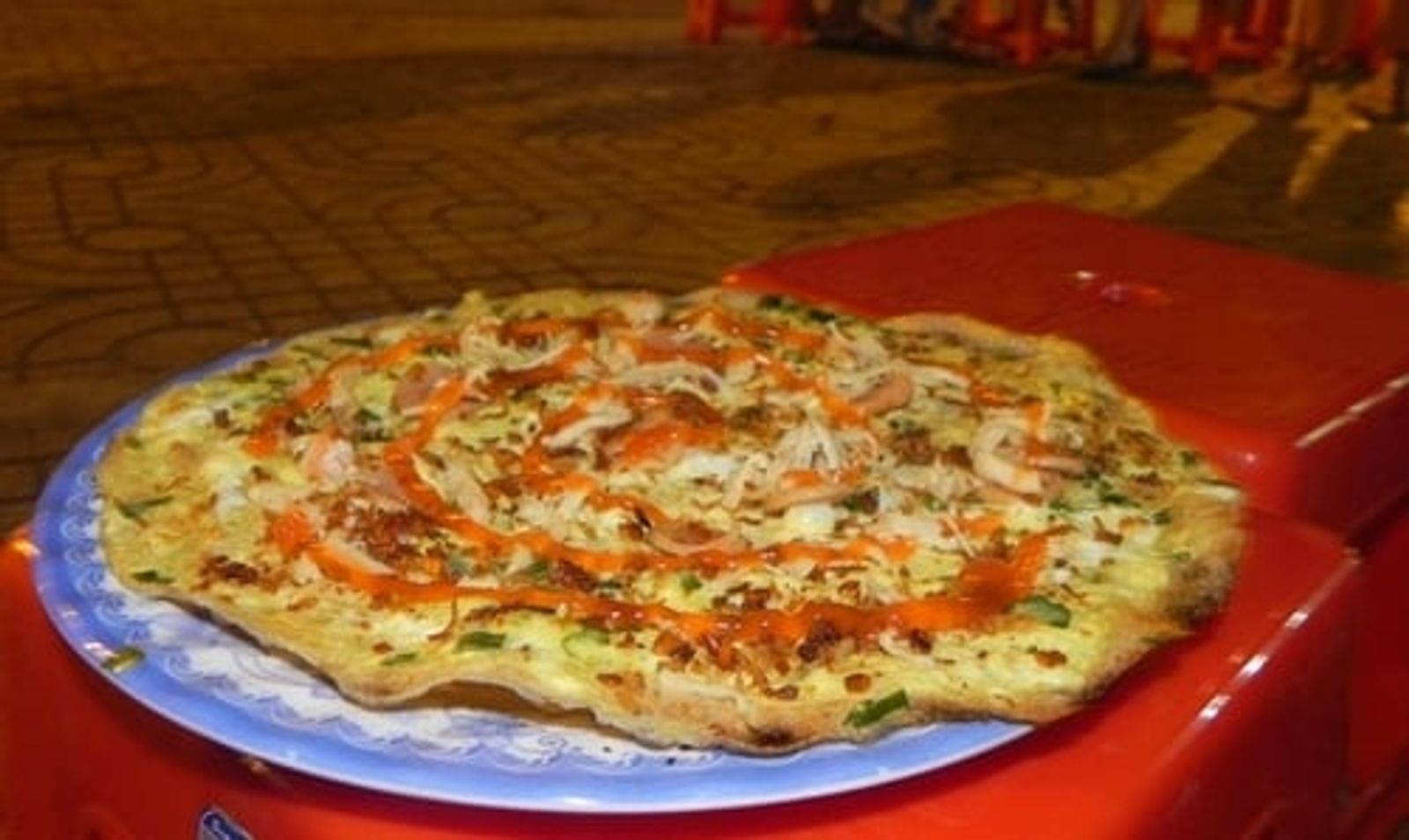
Bánh tráng nướng with toppings · Photo: Huutai11791 / CC BY-SA 3.0 (Wikimedia Commons)
 VietnamDa Lat
Bánh Tráng Nướng: How Da Lat Turned Rice Paper Into ‘Vietnamese Pizza’
Rice paper is usually softened in water for rolls. In Da Lat it goes straight onto charcoal, gets brushed with egg and topped with dried shrimp and scallions. Here is where the snack may come from, what makes the Da Lat version different and how to order one at the night market.
The Idea of Grilling Rice Paper
Bánh tráng is a thin rice sheet made by spreading rice batter over a cloth stretched across a pot of boiling water, then drying it in the sun on bamboo racks. Rice flour is the base, and depending on the region cooks may add cassava, corn or mung bean flour, or flavourings such as sesame, coconut and garlic. Most visitors know it softened in water and wrapped around fried spring rolls, meat and herbs. But Vietnamese cooks have long eaten the same sheet another way: grilled dry over charcoal until it snaps like a cracker. Bánh tráng nướng simply means grilled rice paper. Spreading egg and toppings over that crisp sheet and turning it into a proper snack is what made it a Da Lat signature.
Where It Started: Sources Disagree
Nobody has pinned down a year or an inventor for bánh tráng nướng. Vietnamese Wikipedia links its roots to the Phan Rang area of Ninh Thuận on the south-central coast and says it later spread to Da Lat and Phan Thiết and became common in Saigon. That passage carries no detailed sourcing, though, so it is best read as tradition rather than settled fact. The Da Lat side of the story is more concrete. Vietnamese news site VietNamNet reports that Da Lat's grilled rice paper began as a plain snack brushed only with scallion oil (mỡ hành), and that vendors gradually added dried beef, pâté, cheese and more to draw customers, which is how it reached its current form. So rather than calling Da Lat the birthplace, it is more natural to see it as the place that gave the snack its present shape.
What Makes the Da Lat Version Different
At a Da Lat stall the vendor lays a sheet of rice paper on a small charcoal brazier, cracks an egg on top and spreads it thin with a spoon. Many use quail eggs. Then come the toppings you choose: dried shrimp, chopped scallions, minced pork or pâté, dried beef, sausage, shredded chicken, fried shallots and cheese. The sheet is moved constantly so it does not scorch. Once the egg sets and the edges turn golden, it gets stripes of chili sauce and is folded in half or cut into wedges. The round, open look is why locals call it Vietnamese pizza, but instead of dough you get a paper-thin rice sheet that shatters when you bite it, a completely different texture.
Why It Belongs to Da Lat's Evenings
Da Lat sits on a plateau at roughly 1,500 metres, so unlike the steamy cities of the south its evenings turn cool. Sitting around a charcoal brazier with a hot snack in hand fits the city unusually well. Vietnam News, the state English-language daily, describes bánh tráng nướng as a fixture of the Da Lat night market that is also sold at small shops around town, and notes it is popular in Nha Trang, Ho Chi Minh City and elsewhere. It is now a nationwide street snack, yet travellers still list it as a must in Da Lat because this is the city that shaped and popularised it. The downtown stretch from Xuân Hương Lake to Da Lat Market is the classic place to find the stalls.
How to Order and Eat It
Stalls usually display a board of toppings. You start from the basic egg, dried shrimp and scallions and add cheese, sausage or beef. Even without a shared language, pointing at the ingredients works. If you do not want it spicy, signal before the sauce goes on that you want no chili (ớt). The key is to eat it immediately. Rice paper goes limp as it cools, and the crunch and toasty flavour are best while the egg is warm. If it comes folded, eat it like a crêpe in one hand; if it comes cut, eat it like pizza slices. Prices depend on toppings, so ask before ordering. At the night market many locals sit on low stools with a warm drink alongside, and joining them is the most Da Lat way to enjoy it.