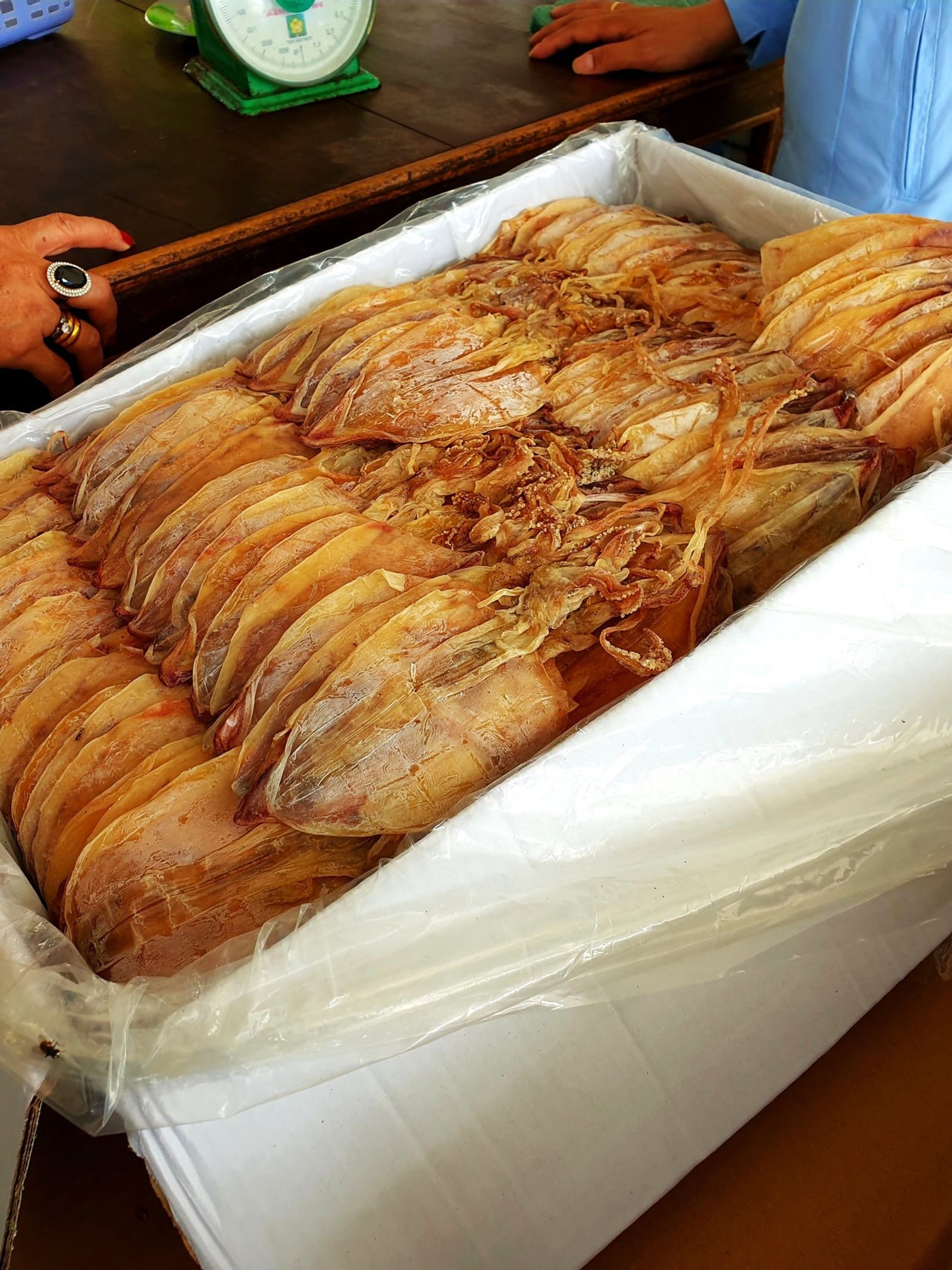
Mực một nắng for sale in Phan Thiết · Photo: Phương Huy / CC0 (Wikimedia Commons)
 Vietnam
Mực Một Nắng: Phan Thiết's ‘One-Sun’ Squid That Won Global Attention
Dried in the sun for exactly one day, Phan Thiết's mực một nắng is firm outside and moist inside. Here is what the name means, why it is dried for just one day, how it caught the eye of an international food-rating site, and how to grill and buy it.
A Name That Means ‘One Sun’
Mực một nắng means squid (mực) of one (một) sun (nắng): squid dried in the sun only once. It is made from mực lá, a broad, thick-fleshed squid caught in large numbers off Phan Thiết. According to local media such as Tuổi Trẻ, the process goes like this. The fishermen's catch is cleaned, the skin and innards removed, and the squid is dried in the sun from morning to afternoon for a single day. Rather than drying it for days into hard dried squid, the process stops after one day, so the surface firms up while the inside keeps its freshness, sweetness and crisp bite. It resembles other semi-dried squid around Asia, but the shorter drying aims for a texture much closer to fresh.
Why Only One Day?
As local fishermen put it, mực lá is crisp when eaten fresh and tough when fully dried. Drying it for just one day strikes a balance between the two, giving a texture that is dry yet moist, crisp yet tender, as VnExpress reports. The same article says mực lá was not especially popular in the past, and that today's one-day method was devised in the mid-1990s by the owner of a Phan Thiết seafood restaurant and then spread. That was a time when Phan Thiết drew attention as a viewing spot for the 1995 total solar eclipse and visitors from elsewhere were increasing. It is hard to find another account of the origin beyond this article, so treat it as what is told locally. What is clear is that mực một nắng is now one of Phan Thiết's signature specialties and souvenirs.
On a World List of Squid Dishes
In May 2025, mực một nắng earned high marks when it appeared on food-rating site TasteAtlas's list of the world's best squid dishes. Tuổi Trẻ and VnExpress reported that it was the only Vietnamese dish on the list. The top spots went to fried squid dishes from Mediterranean countries such as Türkiye, Spain and Greece. The list combines votes from readers worldwide with some expert input, so it is quite different from an official certification or a gourmet rating, and its rankings and scores change often. Even so, the fact that a humble half-dried squid from a Vietnamese fishing town appeared alongside famous Mediterranean dishes made news locally. TasteAtlas singled out charcoal grilling as the best way to cook it and suggested pairing it with a cold beer.
How It Is Grilled and Eaten
The classic way to cook mực một nắng is over charcoal. Because it is semi-dried, the surface scorches easily, so heat control matters; local articles warn that if the fire is too hot the outside burns while the inside stays undercooked. Well-grilled squid is lightly charred outside, white and springy inside, and moist when sliced. The grilled squid is cut into bite-sized pieces and dipped in chili fish sauce (mắm ớt) or chili sauce (tương ớt), and a cold beer is treated as the natural partner. Besides grilling, local media mention frying it in fish sauce, stir-frying it sweet and sour, or steaming it with ginger. Seafood restaurant menus usually list the method, such as mực một nắng nướng (grilled), so just pick the style you want.
Tips for Buying It
Markets and seafood shops in central Phan Thiết and specialty stores along the Mũi Né coast road sell mực một nắng by weight. You will often see it laid neatly in boxes and weighed out, as in the photo. Bigger squid cost more, and the provincial newspaper Báo Lâm Đồng points to squid with thick, fragrant flesh as the mark of a good batch. The thing to remember is that this is not fully dried seafood. Dried for only a day, it still holds a lot of moisture and spoils quickly at room temperature. When buying, ask whether they can pack it in a cooler or with ice, and put it straight into a fridge if your accommodation has one. If you plan to take it abroad, check the destination country's rules on seafood imports first. The simplest option is to enjoy it freshly grilled at a seafood restaurant during your trip.