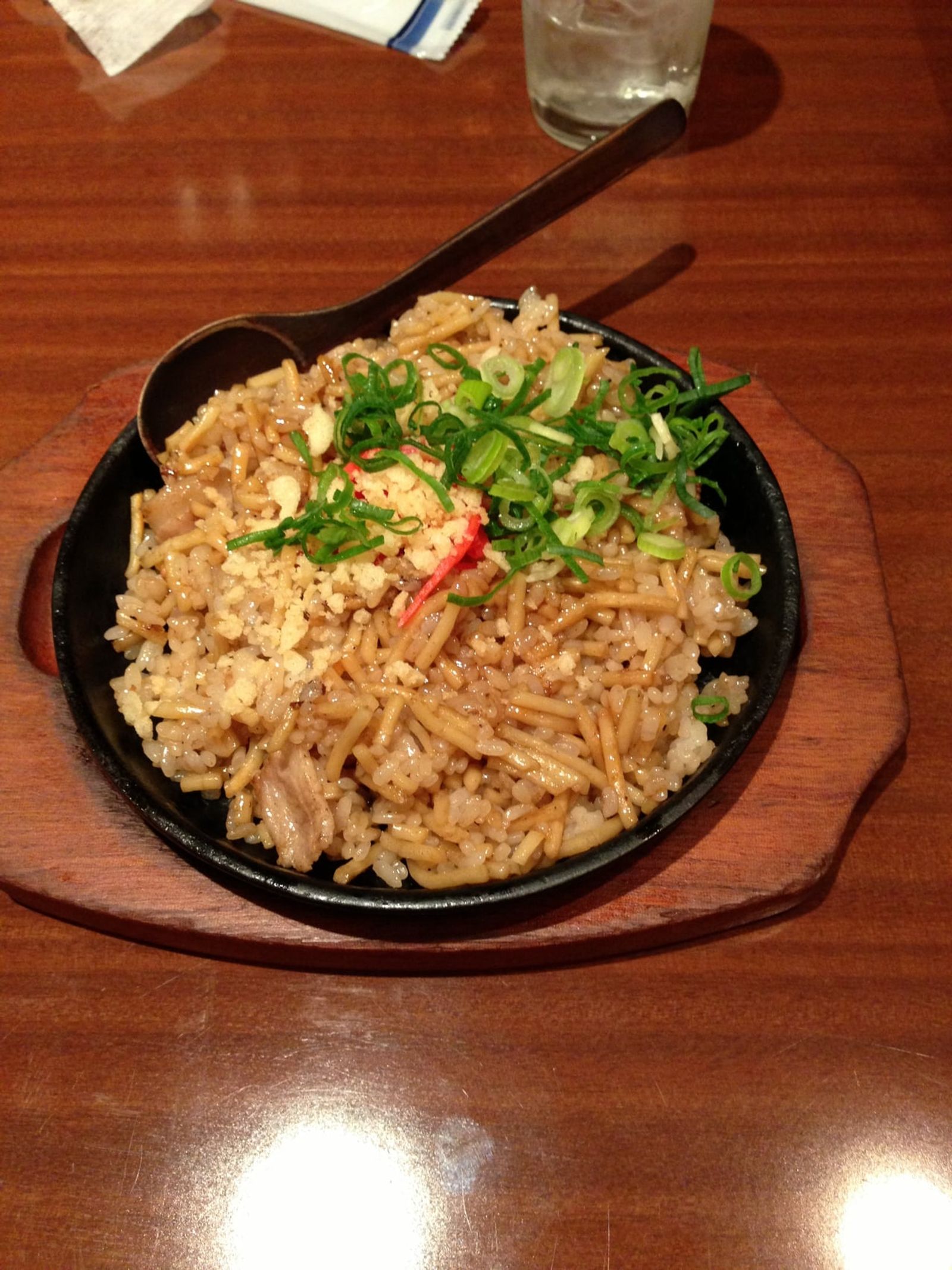
Sobameshi served on a hot iron plate · Photo: Masayuki (Yuki) Kawagishi / CC BY 2.0 (Wikimedia Commons)
 JapanKobe
Sobameshi and Bokkake: The Working-Class Flavors Born in Kobe's Shoe-Factory District
Sobameshi, chopped yakisoba noodles fried together with rice on a griddle, and bokkake, beef tendon and konjac simmered sweet and savory, both come from Nagata, the shoe-factory district of western Kobe. Here is how they were born and how to eat them.
Nagata, a Shoe-Factory Town That Smells of the Griddle
Head west from Sannomiya, the heart of Kobe, and you reach Nagata Ward. It has long been known as the center of Kobe's 'chemical shoes' industry, footwear made from synthetic leather and similar materials. With so many people working in small factories, cheap and filling griddle restaurants opened all over the neighborhood. The Nagata ward office describes the Shin-Nagata area as having what is said to be the highest concentration of okonomiyaki shops in Japan, a place where you walk past the smell of sauce and the sizzle of hot plates. Among its many flour-based dishes, from Nagata-yaki and suji-yaki to modan-yaki and offal udon, the two that made the neighborhood famous nationwide are sobameshi and bokkake.
How Sobameshi Began: A Request to Fry a Cold Lunchbox Rice
Sobameshi is said to have started in an okonomiyaki shop in Nagata's working-class streets, when a worker from a nearby factory asked the cook to fry the cold rice from their lunchbox together with yakisoba. The Kobe Shimbun dates this to around 1955 and says the two were mixed so the worker could eat rice and noodles at once during a short lunch break. Kobe City materials describe the customer as a woman working in a shoe factory. At first it was an off-menu dish made only for regulars who brought their own rice, and almost nobody outside knew about it. A shop near Shin-Nagata Station is generally credited with first putting it on the menu under the name 'sobameshi' around 1985, but sources disagree about which shop was truly first.
From Neighborhood Secret to Nationwide Frozen Food
What spread sobameshi beyond Kobe was frozen food. In August 1990 a seafood and food company launched frozen sobameshi in the Osaka area only, and after it sold well, expanded sales nationwide in March 2000. After it was featured on television, production reportedly could not keep up and sales were suspended twice. Today you can find it everywhere in Japan, as frozen food for homes and restaurants and even as kits with vacuum-packed noodles and powdered sauce. Nagata is still proud of being the birthplace, though: at Shin-Nagata Station there is a monument shaped like a kote, the small metal spatula used at okonomiyaki griddles, put up to promote sobameshi. Look for it when you get off the train.
Bokkake: How Discarded Beef Tendon Became a Local Specialty
Bokkake is beef tendon (gyusuji) and konjac simmered sweet and savory with soy sauce, mirin and the like. According to the Kobe Shimbun, its roots go back to around 1919, when a slaughterhouse opened in Nagata and 'sujikon' was devised as a way to eat tendon that was often thrown away. The name is most likely a dialect form of bukkakeru, 'to pour over', as in pouring it onto udon. Interestingly, many local shopkeepers still call it 'suji' or 'sujikon' rather than bokkake. The catchy name spread nationwide thanks to efforts to revive Nagata after it was badly damaged in the 1995 Great Hanshin-Awaji Earthquake. In 2002 a local organization held a food event themed on bokkake, made retort-pouch products and maps, and the dish was picked up by TV and magazines.
How to Eat and Order: Chop Fine, Sauce to Taste
To make sobameshi, meat and cabbage are fried on a hot griddle, then Chinese noodles and cold rice go in and the noodles are chopped up with spatulas as everything is mixed. Noodles cut nearly as short as rice grains are what set it apart from fried noodles. It is seasoned with tonkatsu or Worcestershire sauce, and diners add aonori seaweed powder, fish powder or thick, spicy 'doro sauce' to their liking. Bokkake usually appears as a topping rather than a dish on its own: bokkake udon, suji-yaki okonomiyaki with tendon mixed in, sobameshi or yakisoba with bokkake, and some shops even put it in curry. To try both at once, ask an okonomiyaki shop around Shin-Nagata Station whether they have bokkake sobameshi. Retort pouches of bokkake are also easy to find in Kobe souvenir shops.