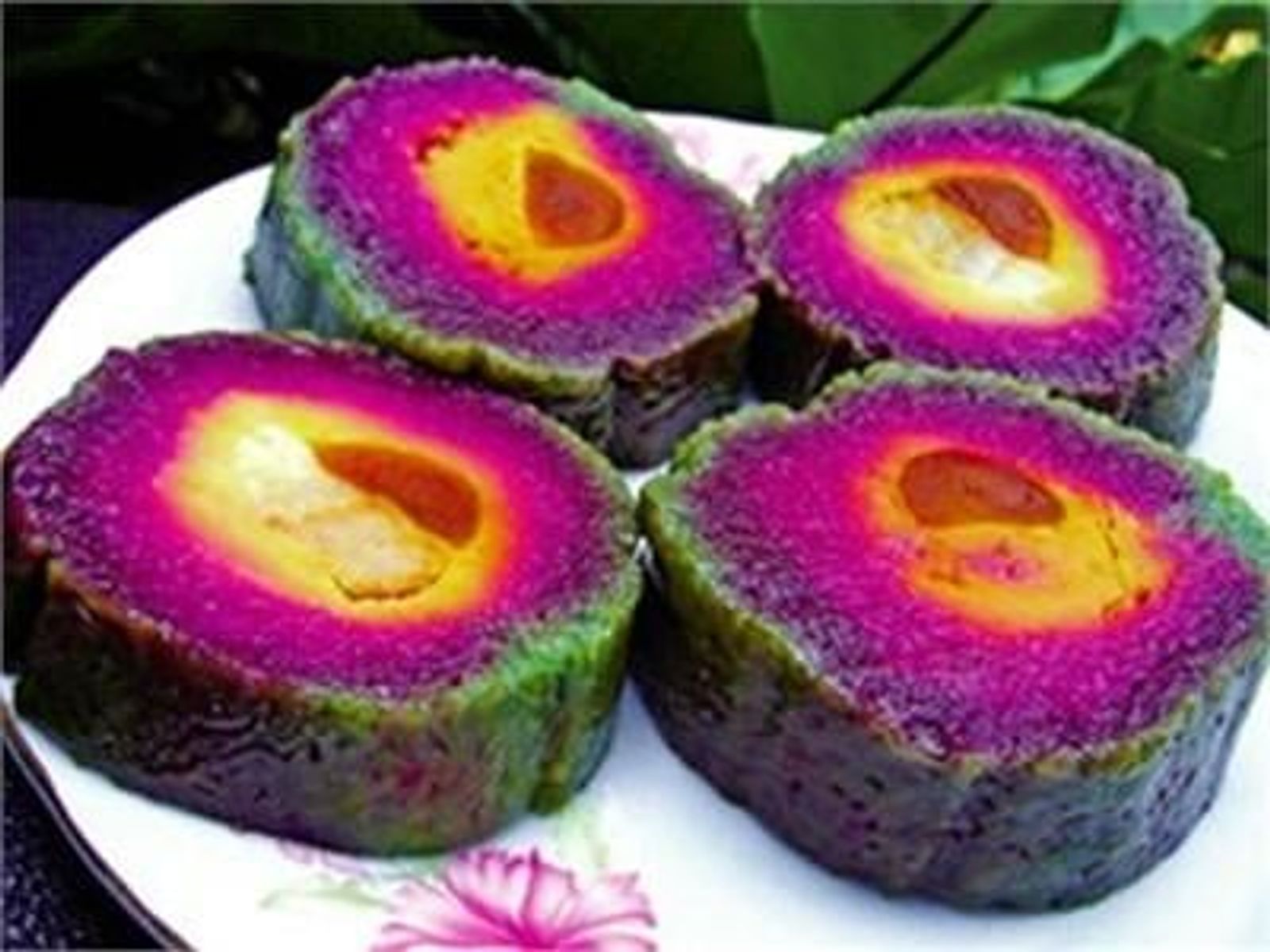
Slices of bánh tét lá cẩm with salted duck egg yolk · Photo: Tienduongproduction / CC BY-SA 4.0 (Wikimedia Commons)
 VietnamCan Tho
Bánh Tét Lá Cẩm: Cần Thơ's Purple New Year Rice Cake from Bình Thủy
Slice it open and you find golden salted duck yolk set in purple sticky rice. Here is how bánh tét lá cẩm, said to have begun in a home kitchen in Bình Thủy, Cần Thơ, in the 1960s, became a star of the Mekong Delta's Tết table, plus how to eat and buy it.
What Bánh Tét Is, and Why Cần Thơ's Is Purple
Bánh tét is the cylindrical sticky rice cake no southern Vietnamese Lunar New Year (Tết) is complete without. Sticky rice is filled with mung beans, pork and the like, rolled tightly in banana leaves, boiled for hours and sliced into rounds. It is the southern counterpart of the square bánh chưng of the north. Ordinary bánh tét has white or pale green rice. Cần Thơ's bánh tét lá cẩm, however, reveals vivid purple rice when sliced, with a golden salted duck egg yolk in the center. The Cần Thơ city portal names the purple color and the duck yolk filling as the hallmarks of the local bánh tét and presents it as one of the city's signature specialties.
A Purple Rice Cake from 1960s Bình Thủy
Bánh tét lá cẩm is said to have first been made in the 1960s by a family in the Bình Thủy area of Cần Thơ. Vietnamese press credit this household as the originator and relate that it all began when someone tried coloring the sticky rice with lá cẩm leaf juice instead of the usual green. Only a few reports describe how that happened in any detail, so the exact circumstances remain a story passed along. The cake was then carried on through the generations as a family trade, and local media say it grew so popular that more than 1,000 were made a day around Tết. Today it is made not only in Bình Thủy but also by many shops across Cần Thơ and elsewhere in the south, and it has become a star of the Mekong Delta's Tết table.
The Lá Cẩm Leaf and How It Is Made
The source of the purple is lá cẩm, the leaf of Peristrophe roxburghiana, a plant in the acanthus family. In Vietnam it is considered cooling, used in folk remedies, and also used to give sticky rice a natural color. Here is how the cake is made. Sticky rice is soaked for about six hours, drained and mixed evenly with lá cẩm juice to dye it, then stir-fried with coconut milk, sugar and salt and left to absorb the seasoning. The filling goes in, everything is wrapped tightly in banana leaves, and the cakes are boiled over a wood fire for four to five hours. During the long cook the rice binds into a chewy mass and takes on the scent of banana leaf. Some families boil about 100 at a time in a huge pot, and makers say they stick to firewood or charcoal because a coal fire can crack the cakes and give them a smoky taste.
Choosing a Filling and Eating It the Local Way
Fillings fall into savory and sweet. The signature version holds seasoned pork and salted duck egg yolk with mung beans, rich and savory. There are also versions with just pork fat, with banana, and a sweet vegetarian one with only mung beans, so shops usually sell around four kinds. The duck yolk version costs the most, while banana and mung bean ones are cheaper. To eat it, peel off the banana leaves and cut thick rounds. On a Cần Thơ Tết table it is usually served with tangy pickled shallots (củ kiệu) and braised pork (thịt kho). Bánh tét lá cẩm has also been named among Vietnam's 100 representative dishes and specialties by the Vietnam Records Organization.
Where to Buy It and How to Bring It Home
Bánh tét lá cẩm is no longer just for Tết. It has become a signature gift that travelers buy in Cần Thơ. Several shops specializing in bánh tét operate around Bình Thủy, known as its birthplace, and in central Ninh Kiều, and as Tết approaches orders pile up so much that you may need to reserve. They make it year-round, but in much smaller quantities. Prices depend on the filling. One press report put the mixed pork version at around VND80,000 a roll, the pork fat one at VND40,000 and banana or mung bean ones at VND30,000 to 40,000. That report is not recent, so expect prices to vary by shop and season. Since it contains sticky rice and meat, eat it within a few days at room temperature or refrigerate it to keep it longer, and ask the shop how long it will last. If you plan to take it abroad, products containing meat and egg may be restricted at customs, so check your destination's quarantine rules before you fly.