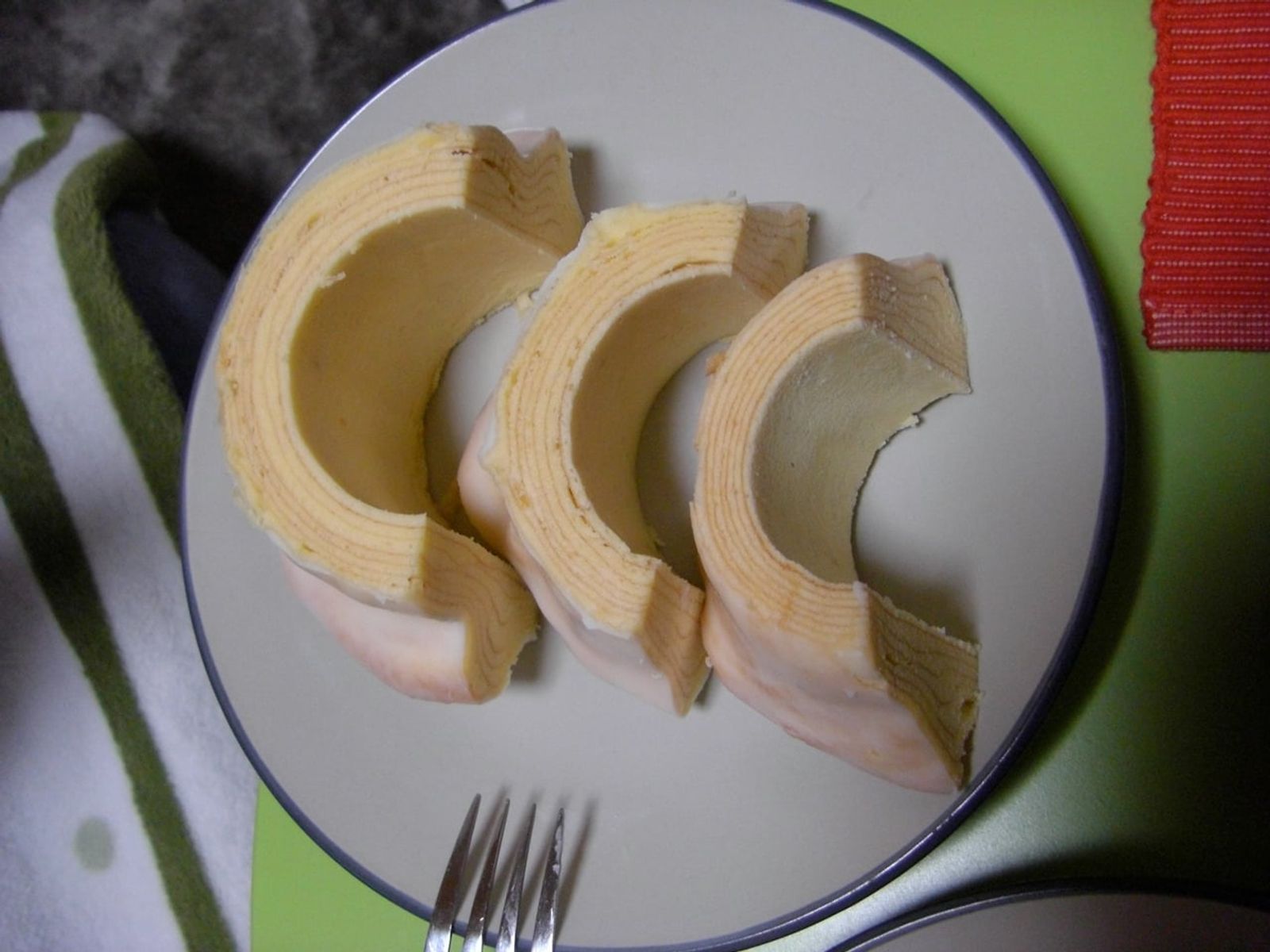
Ring-cut slices of Baumkuchen · Photo: Dai Wat / CC BY 2.0 (Wikimedia Commons)
 JapanKobe
Why Kobe Became Japan's City of Bread and Western Sweets: The 1868 Port Opening and the Foreign Settlement
Kobe households spend more on bread than almost anyone else in Japan. From the bakeries of the foreign settlement that opened with the port in 1868 to German and Russian confectioners who arrived after war and revolution, here is how bread and Western sweets took root in Kobe.
1868: A Foreign Town Opens on the Waterfront
The port of Kobe opened on January 1, 1868, under treaties signed with five Western nations. Right behind the harbor a 'foreign settlement' was laid out where foreigners could live and trade. Its streets formed a neat grid divided into 126 lots, covering about 258,000 square meters. The settlement was returned to Japan in 1899, but the area, still lined with Western-style stone buildings, is called the Former Foreign Settlement (Kyukyoryuchi) and remains one of Kobe's signature cityscapes. With Western merchants, sailors and their families living there, someone had to supply daily bread, meat and milk. Kobe's story of bread and Western sweets begins at the dinner tables of this settlement.
The First Bakeries, Opened the Year After the Port
According to Kobe City, the city's first bakeries are said to have been two shops run by a Briton and a Frenchman inside the settlement in 1869, the year after the port opened. They served the foreign residents at first, but as baking by foreigners took off, bakeries run by Japanese began to appear one after another. Around the same time foreigners opened slaughterhouses and butcher shops in Kobe to sell beef, and the habit of drinking milk and eating bread is said to have spread along with it. The meat trade gradually passed from foreign to Japanese hands, and bread followed a similar path: skills learned from foreigners were taken up by Japanese bakers and grew into a culture of neighborhood bakeries. This is where bread stopped being an import and became everyday food for Kobe people.
Confectioners Brought by War and Revolution
Western sweets also grew up around the settlement. A shop founded in 1882 in the mixed residential zone where foreigners and Japanese lived side by side is regarded as Kobe's first Western confectionery, and one founded in 1897 as its first full-fledged one. In the 20th century, major historical events brought more craftsmen to Kobe. A German confectioner taken prisoner by the Japanese army in Qingdao, China, during World War I made and sold Japan's first Baumkuchen in Hiroshima in 1919; after losing his Yokohama shop in the 1923 Great Kanto Earthquake, he moved to Kobe and reopened there. Around the same time, White Russians who fled the Russian Revolution made chocolates and pastries in Kobe, and one of their companies says it launched Japan's first Valentine's Day chocolate product in 1932.
Kobe, the 'Bread City', in Numbers
Kobe's love of bread shows up in statistics too. According to Kobe City, the national Family Income and Expenditure Survey (2023–2025 average) found that Kobe households of two or more people spent 41,967 yen a year on bread, the highest among prefectural capitals and designated cities. The 2021 Economic Census also put Kobe first among designated cities for bakeries per capita. It helps to know that this 'number one' compares prefectural capitals and major cities, not every municipality in Japan. In the Statistics Bureau's data, the items Kobe buys notably more of include sliced bread along with black tea and margarine. Toast and tea for breakfast: a Western lifestyle dating back to the settlement days still shows in the numbers.
Traveler Tips: Bakery Hopping and Sweet Souvenirs
To enjoy Kobe's bread and sweets, walk the Former Foreign Settlement between Sannomiya and Motomachi, the streets around the Motomachi shopping arcade, and Kitano, the hillside neighborhood of old Western-style houses known as ijinkan. Long-established bakeries and newer shops are all within walking distance of one another. Morning is the best time for bakery hopping: that is when the most freshly baked bread comes out, and popular items can sell out by afternoon. Many Kobe sweets travel well, such as Baumkuchen, cookies, pudding and chocolates, so they make popular souvenirs. 'Kobe Sweets' has become a local brand that also covers Japanese and Chinese confections, so pausing at a café for a slice of cake after a stroll by the harbor is a very Kobe way to travel.