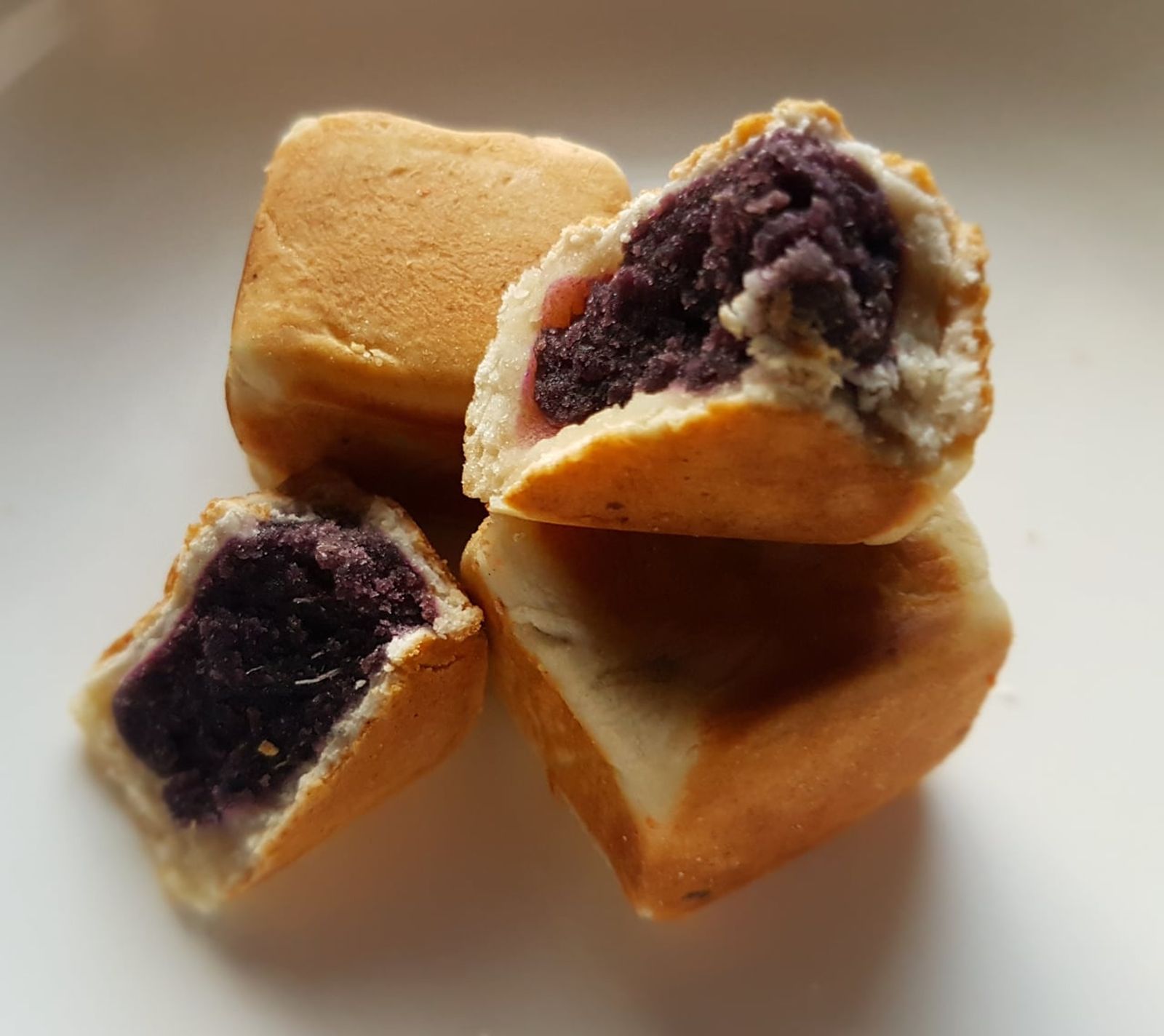
Ube (purple yam) hopia · Photo: Obsidian Soul / CC BY-SA 4.0 (Wikimedia Commons)
 PhilippinesManila
Lunar New Year in Binondo: Tikoy, Hopia and Round Fruit, and What They Mean
The Philippines has marked Lunar New Year as a special non-working day since 2012, and on that day Binondo fills with shoppers. Here is how to fry tikoy in egg, which hopia to try, and what people buy at the Ongpin Street New Year market.
Lunar New Year in the Philippines
In the Philippines, the Lunar New Year is not only a Chinese-Filipino holiday. In November 2011, President Benigno Aquino III's Proclamation No. 295 declared January 23, 2012, Chinese New Year, a special non-working day, noting that the festival is celebrated by Chinese Filipinos and other Filipinos alike, and that marking it together shows solidarity with the Chinese Filipino community. Since then the day has been set each year by presidential proclamation. So around the New Year, Binondo fills with people from all over Manila. Dragon dances wind through the streets, and crowds come to buy cakes, pastries, fruit and lucky charms for the holiday. Events change every year, so check the City of Manila and local news before you go.
Tikoy: The Sticky Rice Cake People Give at New Year
The star of the New Year is tikoy, the Philippine name for nian gao. It comes from the Hokkien 甜粿 (tiⁿ-kóe, "sweet cake"), a chewy cake of glutinous rice flour and sugar. In the Philippines it is a popular New Year gift for friends and relatives, and local media report that non-Chinese Filipinos now seek it out and give it as well. The meaning travels with the cake. Local media describe tikoy and similar sticky rice cakes as symbols of rising fortune and family unity. Nian gao also sounds like "higher every year" in Chinese, and an old story says the sticky cake was offered to the Kitchen God to glue his mouth shut so he could not speak ill of the family in heaven.
How to Eat Tikoy: Dipped in Egg and Pan-Fried
The most common Filipino way to eat tikoy is to slice it thin, dip it in beaten egg and pan-fry it lightly. It turns crisp outside and stays chewy inside, the sweet cake pairing nicely with the savory egg coating. Many families have it at breakfast or merienda with coffee or tea. Boxed tikoy is often firm, so slice it thinly with a knife. Cut it too thick and the outside burns before the middle softens, so cook it slowly over low heat. Plain white tikoy is the standard, but the New Year market also has other colors and flavors such as pandan and ube. Prices depend on size; a 2024 local report found sizes selling from 100 to 500 pesos.
Hopia: The Many Faces of the "Good Pastry"
Alongside tikoy, the other classic New Year gift is hopia, a pastry brought by Fujianese immigrants whose name is usually glossed as "good pastry." It belongs to the same family as Indonesia's bakpia. There are two kinds of dough: a flaky one built from thin layers like Chinese puff pastry, and a softer cake-like dough also common in the Philippines. Mung bean hopia (hopiang munggo) is the basic filling. Others include hopiang baboy, a savory filling of candied pork back fat and candied winter melon flavored with scallion, hopiang hapon with red bean, and ube, purple yam. Ube hopia is said to have been introduced in the 1980s by a Chinese deli in Binondo.
What People Buy at the Ongpin New Year Market
As the New Year approaches, a street market fills Ongpin and the surrounding streets of Binondo. A 2024 local report named tikoy, fruit and lucky charms as the main goods. Round fruit is especially popular, since its coin-like shape is thought to bring abundance: kiat-kiat (a small citrus), grapes, oranges and ponkan are sold by the kilo or by the piece. Lucky bracelets and gold-plated charms are everywhere, with bracelets around 100 to 300 pesos. For food, local guides list dumplings shaped like gold ingots, to "bite into wealth," noodles for long life, and fresh lumpia to attract prosperity. The eve and the day itself are packed and traffic crawls, so shop a few days early or go first thing in the morning.