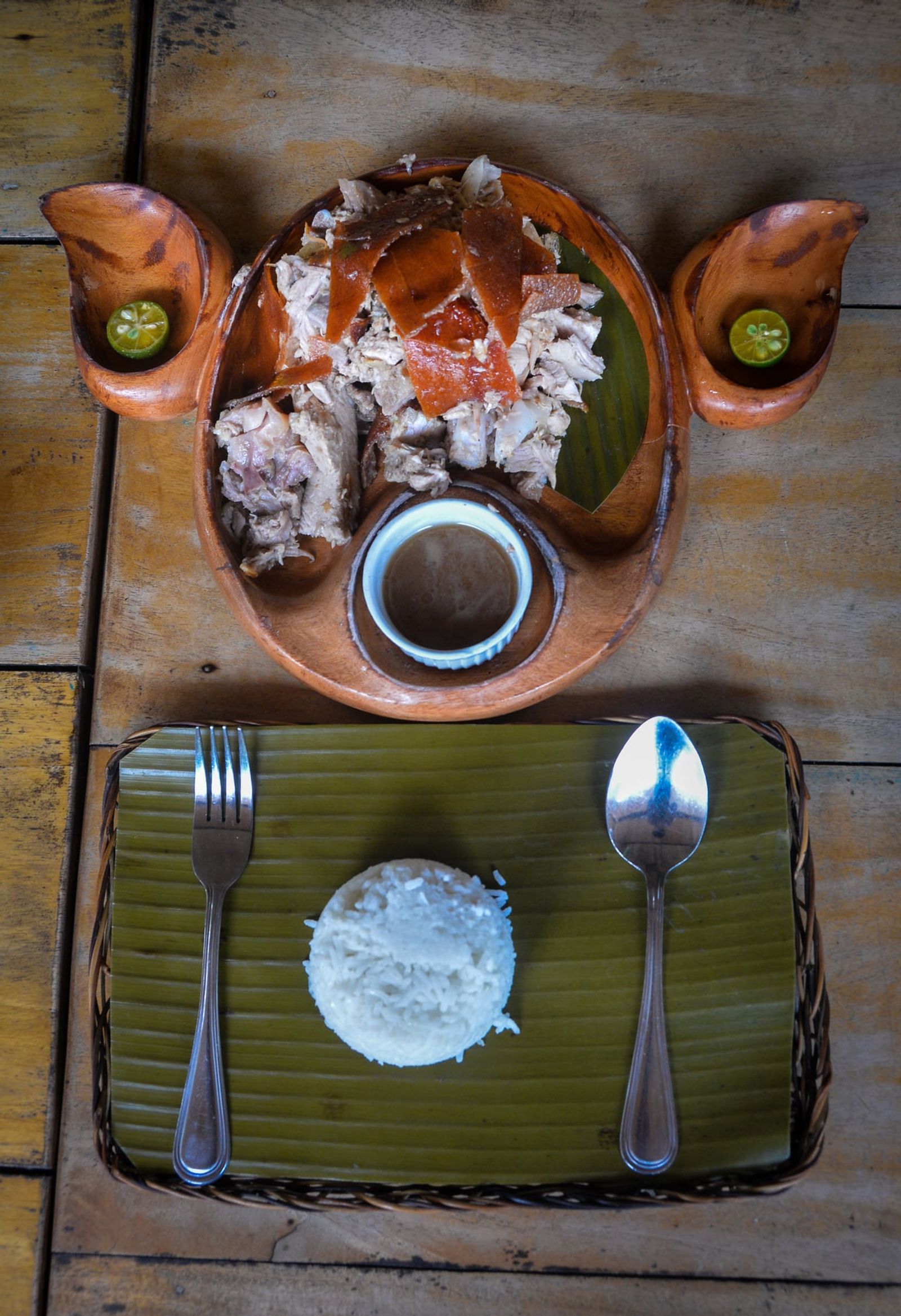
Cebu lechon served on a platter · Photo: EMMAN A. FORONDA / CC BY-SA 4.0 (Wikimedia Commons)
 PhilippinesCebu
Cebu Lechon: How a Sauce-Free Whole Roast Pig Became Cebu's Pride
Whole roast pig, lechon, is on festive tables all over the Philippines, but Cebu's version is famous for being stuffed with herbs and eaten without any sauce. Here is the story behind it, the Talisay and Carcar styles, lechon belly and what locals do with the leftovers.
The Name Lechon and the Philippine Whole Roast Pig
Lechón is a Spanish word for a suckling pig, but in the Philippines its meaning has widened to cover whole pigs roasted on a spit over coals in general. Filipino lechon is in fact more often made from weaned or fully grown pigs than from suckling piglets, and the Spanish-style roast piglet has its own name, cochinillo. Roasting a whole pig over fire is thought to be a native tradition that predates the Spanish. Today lechon is the star of Noche Buena, the Christmas Eve feast, as well as weddings, birthdays and town fiestas. And if you ask Filipinos where the best lechon is, many will answer without hesitation: Cebu.
Cebu's Secret: The Herbs Inside the Pig
What sets Cebu lechon apart is that the flavour comes from inside rather than from the surface. The cavity is packed with plenty of lemongrass along with garlic, spring onions, bay leaves and star anise, then sewn shut before roasting. The exact mix varies from household to household, and many keep theirs a closely guarded secret. According to GMA News, the pig is turned slowly over charcoal for about five hours. In that time the herbs perfume the meat right through, while the skin puffs up thin, glassy and crisp. A pig on a bamboo pole being rotated in front of the coals is a common roadside sight around Cebu.
Talisay and Carcar: Two Names Within Cebu
Within Cebu, two places are especially famous for lechon. One is Talisay City, just south of Cebu City. A local historian quoted by GMA News says Cebu's first lechoneros came from Talisay in the 1920s, and that they called the dish inasal. In Cebuano, asal means roasting something whole over live coals. The other is Carcar City further south. Cebu lechon is normally eaten without sauce, but Carcar is the exception. A basin placed under the pig catches the drippings during roasting, and these are mixed with vinegar, soy sauce and herbs into a dipping sauce. Asking a Cebuano which style they prefer is a good way to start a lively conversation.
Why No Sauce, and Bourdain's Verdict
Elsewhere lechon is often served with a separate sauce, but Cebuanos say there is no need for sauce because the flavour is already in the meat, thanks to the herbs roasted inside. Some still like a little spiced vinegar on the side. Cebu lechon's international fame owes something to the American chef and TV host Anthony Bourdain. In the Philippines episode of his travel show No Reservations, he tasted Cebu lechon and declared it the best pig he had ever had. The line is still quoted whenever Cebu lechon is introduced.
How to Eat It: Skin First, Lechon Belly and Leftovers
In Cebu, many eateries and market stalls sell lechon by the kilo, so you can try it without ordering a whole pig. The skin softens as it sits, so the trick is to eat it first, the moment it arrives. Rice, or puso rice cooked in woven coconut leaves, on the side makes it a proper local meal. If a whole pig is too much, there is lechon belly (lechon liempo), pork belly rolled up with herbs and roasted; one account dates it back to the 1930s. Leftovers after a feast are simmered in vinegar and soy sauce to make lechon paksiw, and the Cebu version is said to be more salty than sour, with hardly any liver sauce.