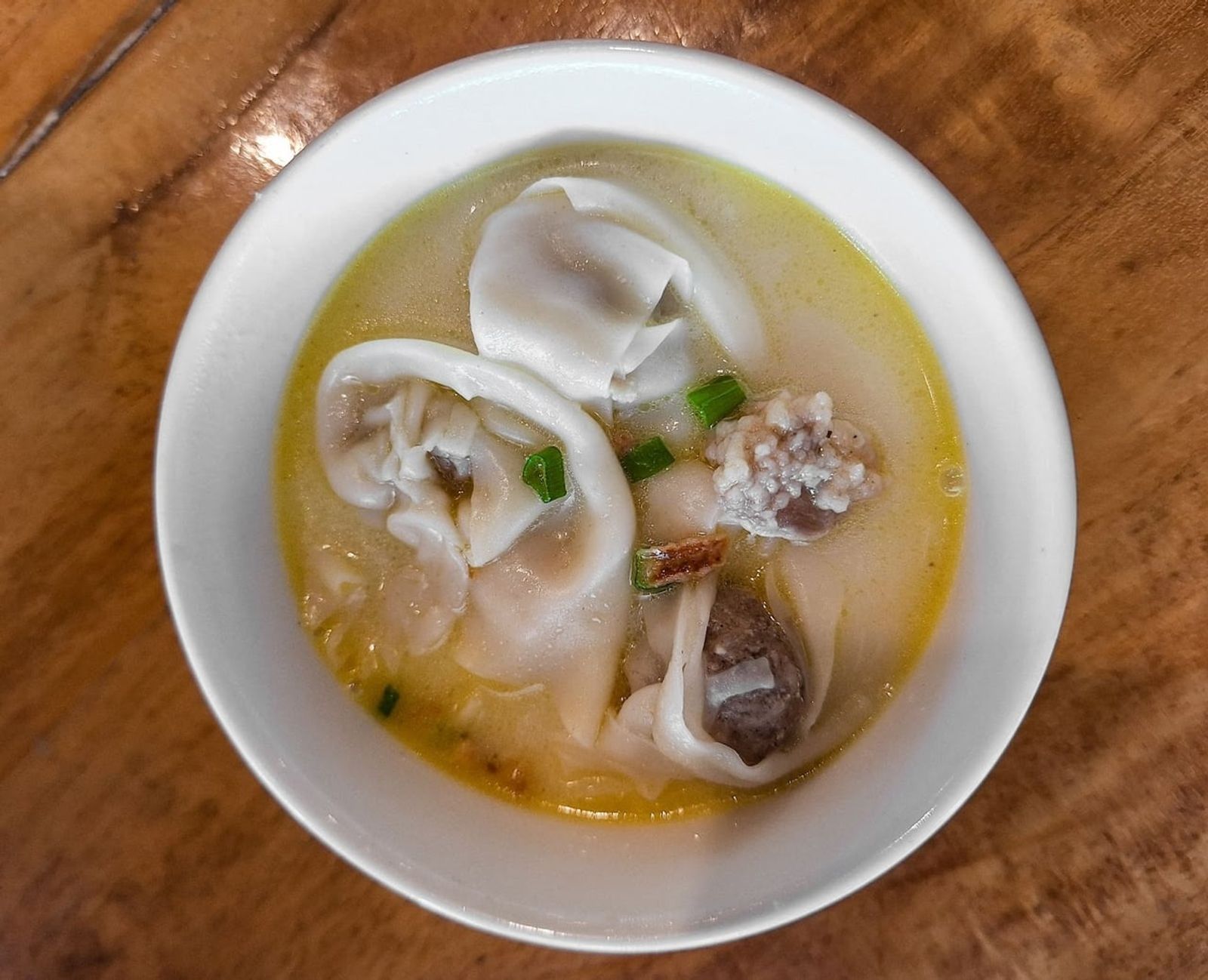
Pancit Molo from Iloilo · Photo: Mhlayson / CC BY-SA 4.0 (Wikimedia Commons)
 PhilippinesIloilo
Pancit Molo: The 'Noodle' Soup With No Noodles, From Iloilo's Old Chinese Quarter
Its name says pancit, noodles, yet there are no noodles in the bowl — just flower-folded pork wontons floating in a clear chicken broth. Here is the story of the dumpling soup born in Iloilo City's Molo district and how to enjoy it.
Why Is It Called Pancit If There Are No Noodles?
In the Philippines, pancit is the word for noodle dishes in general, yet a bowl of pancit Molo has no noodles as you would picture them. Instead it holds pork-filled wontons along with loose, unfilled wrappers that drift through the broth, and it is these thin wrappers that are said to play the role of the noodles. The wrappers are rolled from wheat dough, broadly the same stuff as noodles, and the dish came to the Philippines through Chinese influence, which is understood to be why it carries the pancit name. That is why pancit Molo is usually introduced as a Filipino wonton soup; it is closer to a clear dumpling soup than to a noodle dish.
Molo District: From a 17th-Century Chinese Settlement
Molo in the dish's name is a district of Iloilo City. According to Philippine media, Molo began as a Chinese community in the 17th century (1637, according to encyclopaedic sources) and became a renowned centre of learning and culture in the 1800s. Its Gothic church, plaza and old mansions still make it a key stop on any tour of old Iloilo. Sources agree that pancit Molo originated in this district, but firm records of who first made it, and when, are hard to find. Still, it makes sense that a dish based on Chinese wontons took root and adapted to local taste in Molo, with its large Chinese population. From there it spread across the country as Iloilo's signature soup.
Flower-Folded Wontons and a Clear Broth
The wonton filling is based on ground pork, often mixed with shredded chicken or shrimp. Once filled, the wrappers are gathered up at the top, so the dumplings can look like little blossoms floating on the soup. The dish is often compared to siomai, the Chinese-style steamed dumpling that is common in the Philippines too. The broth is a clear stock made from chicken meat and bones, and shredded chicken goes into the bowl as well. It is usually finished with chopped spring onion and crispy fried garlic. The nutty aroma of the garlic gives the mild broth a clear, memorable character.
When It's Eaten: A Holiday Dish for Guests
For Ilonggos, pancit Molo is a dish for guests and holiday tables, especially at Christmas and Easter. Each wonton has to be folded by hand, so families often gather to make them together. Perhaps for that reason, many say homemade pancit Molo carries a family character that restaurant or street versions lack. In 2011 President Benigno Aquino III visited Iloilo and praised the soup as delicious, which gave a boost to local tourism promotion. Today you can have it all year round at restaurants and stalls, and because it is a clear, warming broth, many people order it on rainy days or for breakfast.
Traveller Tips: Pair It With a Walk Around Molo Church
Pancit Molo is easy to find anywhere in Iloilo City, but it is more memorable after a walk around Molo, the district that gave it its name. A comfortable plan is to stroll around Molo Plaza and the church, look at the old mansions nearby, and then have a bowl at a local eatery. When ordering, check the menu, since shops differ: plain wonton soup, versions loaded with chicken, or sets combined with other dishes. The broth is mild, so feel free to squeeze in calamansi or add a little fish sauce. On the same day you could also compare La Paz batchoy and the sour soup KBL to taste three of Iloilo's great soups.