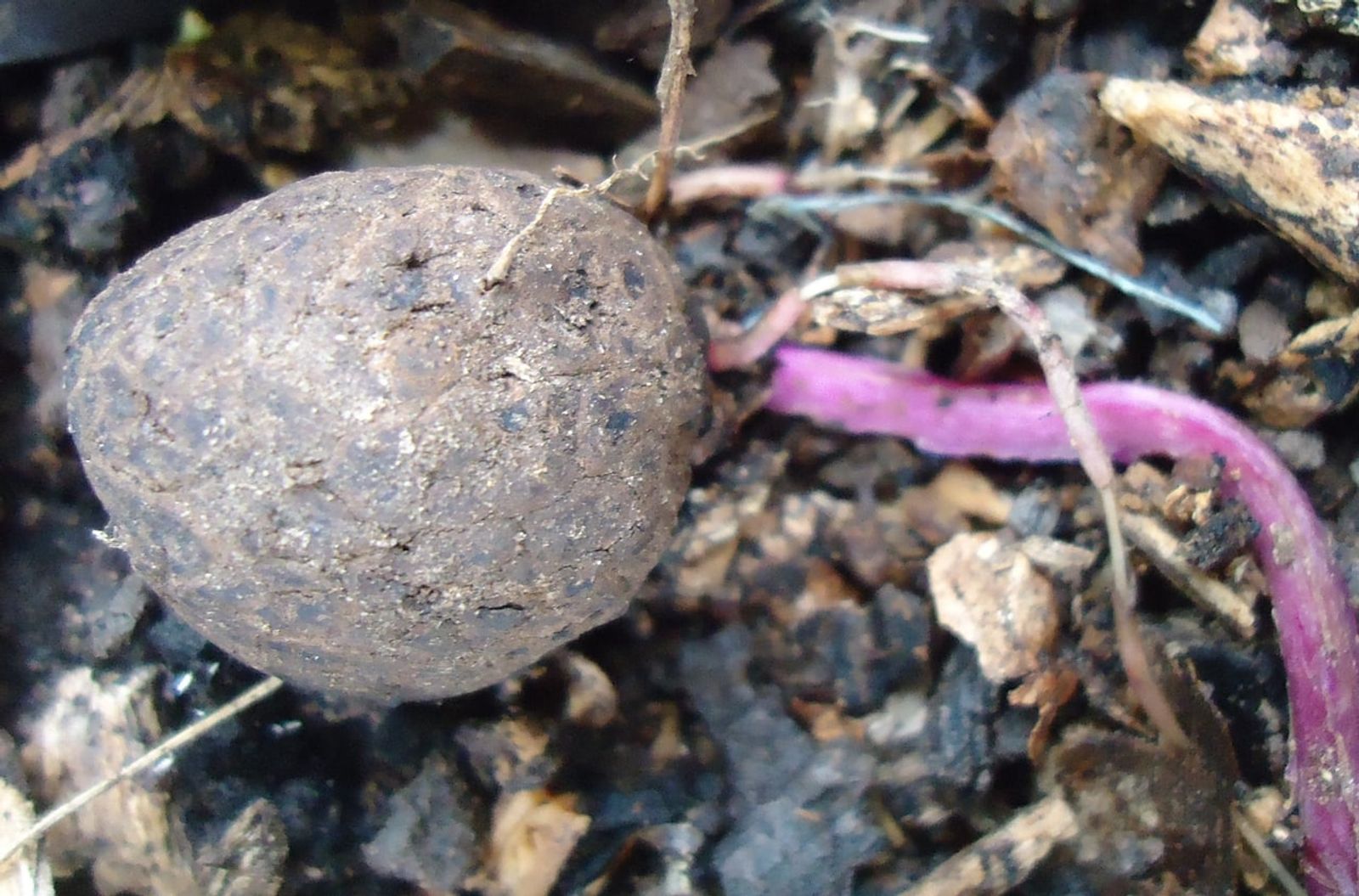
Purple yam (ubi) tuber · Photo: Obsidian Soul / CC BY-SA 3.0 (Wikimedia Commons)
 PhilippinesBohol
Bohol's Ubi: The Purple Yam That Saw the Island Through Hard Times
Ube turns Filipino desserts purple, and in Bohol, where it is spelled ubi, it is a point of island pride. Here is the prized kinampay variety, the story of a crop that kept people fed through hard times, the custom of kissing a dropped yam, and the Ubi Festival.
Ube and Ubi: The Same Purple Yam
Ube, the ingredient that turns Filipino desserts purple, is purple yam (Dioscorea alata), a member of the yam family. In Bohol it is spelled ubi; a Philippine newspaper column explains that ubi is simply the Boholano spelling of what Luzon calls ube. It is often confused with purple sweet potato or taro, but these are different crops. According to reference sources, purple yam has a moister texture than sweet potato and contains more of the anthocyanins that make it purple. The skin is rough and brown, while the flesh ranges from deep purple to lavender or nearly white depending on the variety. Within the Philippines, Bohol is renowned for growing fine varieties of ubi.
Kinampay, the 'Queen of Philippine Yams'
The most prized ubi variety in Bohol is kinampay. Festival news from the Bohol provincial agriculture office singles out kinampay among the varieties on show, and some sources call it the 'Queen of Philippine Yams'. Slow Food's Ark of Taste lists Panglao Island in the southwest and Guindulman in the east as its home in Bohol, and notes it is also found in Antique and Negros Occidental in the Western Visayas. Kinampay is valued for its aroma, colour and smooth texture, especially for jams and desserts. A Philippine newspaper column notes that thanks to Bohol's reputation for the best varieties, some well-known ube jams made elsewhere in the country use ubi grown in Bohol. To Boholanos, ubi is the island's number one crop.
A Crop That Fed People Through Hard Times, and a Kiss If You Drop It
There is a reason ubi is special in Bohol. According to a Philippine newspaper column, in hard times of pirate raids, famine and foreign invasion, this purple yam was what kept Boholanos fed, and it saved people from hunger during the Second World War as well. That is why it is sometimes called a savior crop. That gratitude survives as a custom. The same column relays what local guides say: if you accidentally drop an ubi, you must kiss it when you pick it up, or else it will rot or ripen too quickly. The writer described Boholanos' attitude toward ubi as practically sacred.
The Ubi Festival at Harvest Time
Bohol even has a festival just for ubi. Run by the provincial agriculture office, the Ubi Festival honours ubi farmers and is held in the capital, Tagbilaran. The 2017 edition was the 17th, and January 2023 saw the 22nd. It was long held in January, but because December is harvest time and demand peaks over Christmas, the provincial board moved it to December by ordinance. That is why 2023 had two festivals, in January and December, and the 2024 edition took place in mid-December at Plaza Rizal. The venue has moved over the years, from Plaza Rizal to the provincial agricultural promotion centre and elsewhere. Events include contests for the largest display of ubi and the best harvest, ubi eating, ubi jingles and poems, and awards for outstanding growers. Hotels and restaurants have also competed with ubi dishes. Exact dates change every year, so check the Bohol provincial government's announcements.
Traveller Tips: How to Taste Ubi in Bohol
In Bohol, ubi turns up as jam, ice cream, halo-halo, doughnuts, cake, puto rice cakes and candy. The most basic form is ube halaya, a jam of boiled, mashed ubi cooked down with sugar and milk, sold in jars at souvenir shops. There is also ube calamay, so try it alongside the classic. If you want fresh tubers, December, the harvest season and festival month, is a good time. However, raw tubers with soil on them may be restricted by your home country's import rules, so jams and processed products are the safer souvenir. Deep purple is seen as the mark of ubi, but some products add colouring, so check the ingredient list.