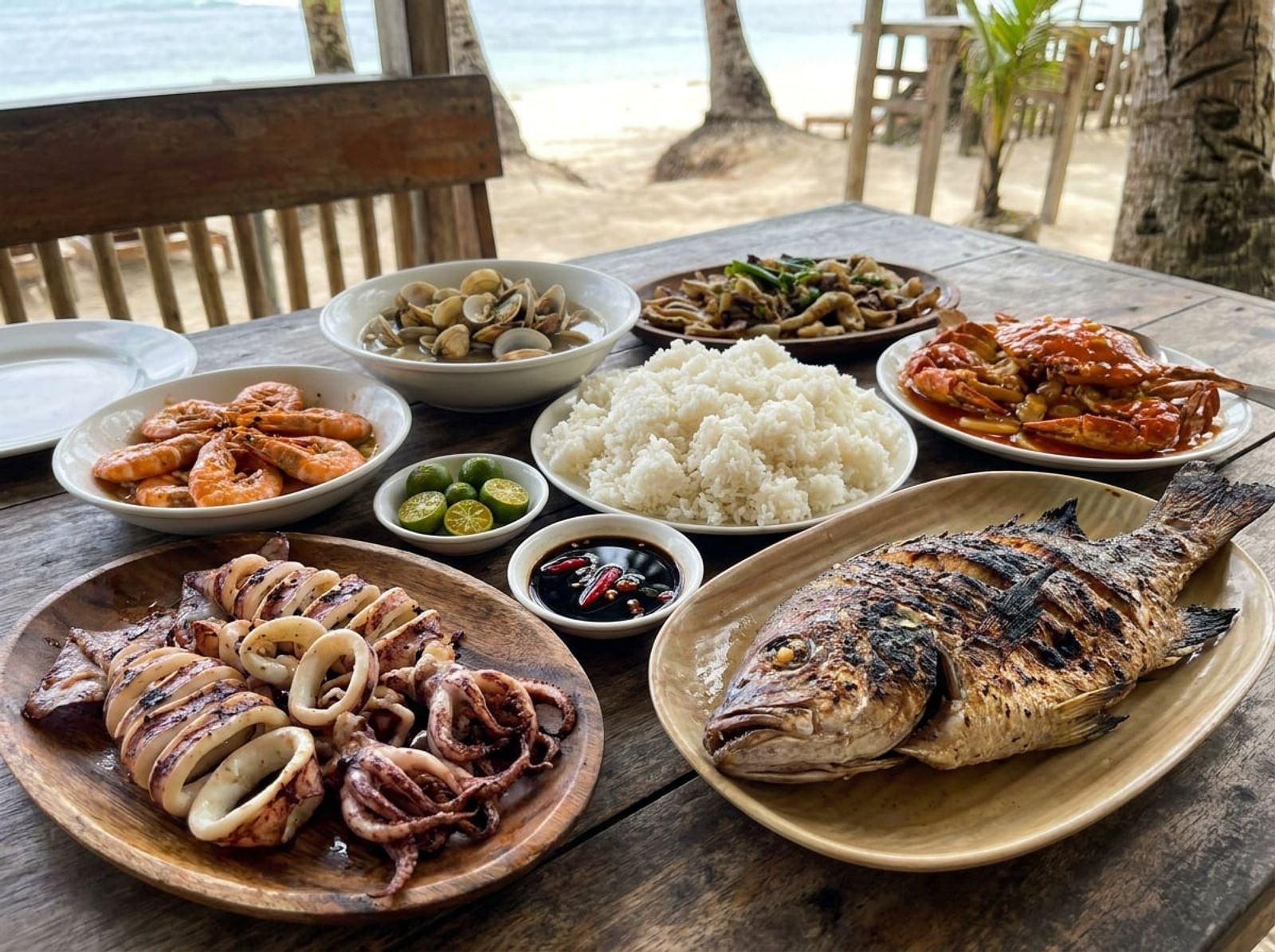
Boracay Paluto
 PhilippinesBoracay
Paluto in Boracay: Pick Your Seafood at the Market, Have It Cooked Next Door
The most local seafood meal in Boracay starts at the market. Buy fish, prawns or crabs from the stalls, hand them to a nearby eatery and have them cooked the way you like: that is paluto. Here is how it works, which cooking styles to choose and how to bargain.
What Paluto Means: 'Please Cook This'
Paluto comes from the Filipino word luto, to cook, with a prefix meaning 'to have something done', and it refers to an eatery cooking ingredients that the customer brings. You can find it in seaside towns and markets all over the Philippines, but for travellers the best-known place is Boracay. The system is simple. First, buy seafood such as fish, prawns, crabs, clams or squid, plus vegetables, from the stalls of a wet market. Then take them to one of the paluto eateries clustered around the market, say how you want them cooked, and for a cooking fee they will prepare everything and serve it at your table. Compared with ordering finished dishes at a beachfront restaurant, choosing is half the fun, and you can see for yourself how fresh everything is.
Boracay's Seafood Market, D'Talipapa
Boracay is an island in the municipality of Malay, Aklan, made up of three barangays: Balabag, Manoc-Manoc and Yapak. The hub of paluto is the D'Talipapa market in the Station 2 area, the middle stretch of White Beach. Talipapa is a Filipino word for a small or makeshift market. Built in 2004, the market closed after a major fire in 2017; rebuilding was delayed by the 2018 island closure and the COVID-19 pandemic, and it soft-opened in March 2026 before a grand reopening on 1 May. Local media report that the new building sits 1.5 metres higher to guard against flooding, and that most of the old vendors have returned, making it once again the island's main paluto spot. It is an easy walk or tricycle ride from the beach, so many people head there for dinner after a swim.
What to Buy and How to Have It Cooked
Paluto eateries can cook most Filipino seafood styles. Common requests are grilled fish (inihaw) or fish in sour sinigang broth; prawns cooked halabos style in salted water or stir-fried with garlic butter; steamed crabs; clams grilled or in soup; and oysters or very fresh fish as kinilaw, dressed in vinegar. You can also ask for one ingredient to be split between two styles. In a group, mix your methods, one grilled, one soup, one stir-fry, one raw, for a generous spread. Order rice separately from the eatery, and enjoy it with calamansi and a soy-vinegar dip.
Bargaining and Paying: Check the Weight and the Cooking Fee
Market seafood is usually priced by the kilo. The first price quoted to tourists can be high, so do not accept it straight away; haggle. Walk past a few stalls to compare prices before buying, and watch the scale yourself to confirm the weight. Paluto eateries often charge the cooking fee by weight or by number of dishes, but methods and amounts vary from place to place. Choose your eatery before you shop and ask how the fee is calculated and what rice and drinks cost, and there will be no surprises later. For pricey items like crabs or lobster, check especially whether the price is per piece or per kilo.
Traveller Tips: Timing and Keeping the Island Clean
Stalls sell out of popular items as the day goes on, and eateries get busy at dinnertime, so you may have to wait. A comfortable plan is to shop before sunset, watch the sun go down, then eat. Because of environmental decline, Boracay was closed to tourists for six months of rehabilitation, from 26 April to 26 October 2018. Beach rules have been stricter since then, so always put rubbish where it belongs. Eat raw dishes only at places whose hygiene you trust, and ask for leftovers to be packed to go.