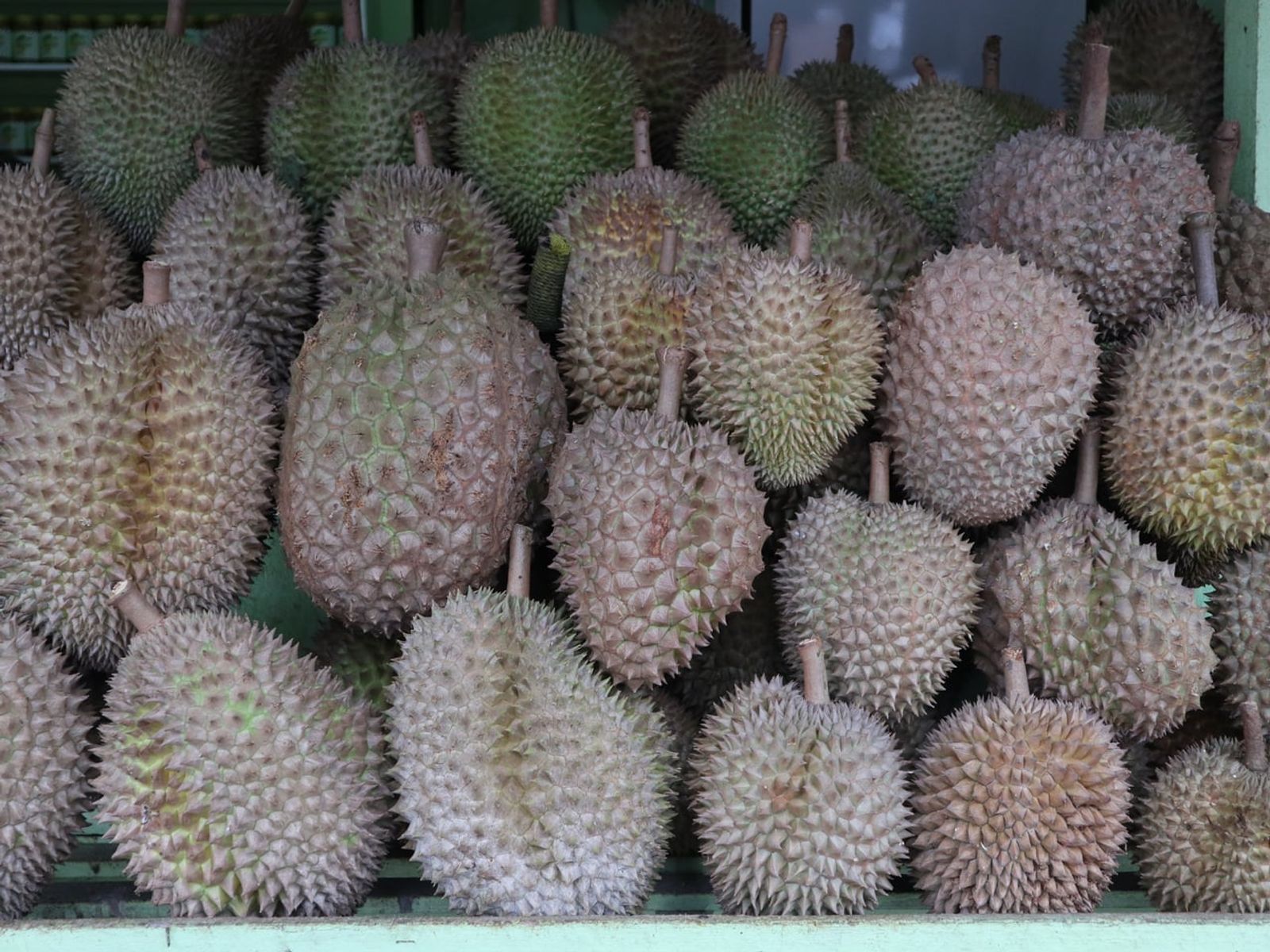
Durians at a stall by Magsaysay Park, Davao City · Photo: patrickroque01 / CC BY-SA 4.0 (Wikimedia Commons)
 PhilippinesDavao
Davao Durian 101: Puyat, Arancillo and How to Pick a Good One in the Durian Capital
Most of the Philippines’ durian comes from the Davao Region, and stalls here sell it by variety. Here is how the varieties differ, when the season peaks, how to pick a good fruit, and where to try it around Magsaysay Park.
Why Davao Is Called the Durian Capital
Davao City on Mindanao calls itself the fruit basket of the Philippines, and the local press often calls it the country’s durian capital. The numbers back that up. According to a 2022 Davao City government release, the Davao Region (Region XI) grows 78 percent of the nation’s durian, and half of that comes from Davao City itself. Durian is a tropical fruit native to Southeast Asia. Its powerful smell and custard-like flesh earned it the title king of fruits. In Davao the spiky green fruit is practically a city mascot, showing up on snack packaging, souvenirs and festival decorations. The smell divides people, but the flavor is widely described as rich and sweet.
Every Variety Tastes Different: Puyat, Arancillo, Duyaya
Davao stalls sell durian by variety. A local newspaper covering the 2024 festival listed Puyat, Arancillo, Duyaya, D101, D24, Kob, Monthong and the so-called native durian. Vendors most often recommend Puyat to first-timers because its flesh is thick and creamy. Arancillo is often praised for its sweetness and silky texture, and some vendors say the native durian is their personal favorite. That year, a kilo of Monthong went for around 80 pesos, while Puyat, Kob and D101 cost roughly 180 to 200 pesos. Prices swing a lot with each year’s harvest, so check on the spot.
Peak Season: August and September, With Kadayawan
Davao’s durian season is fairly long, but according to local media the fruit is already plentiful on the streets by August and peaks in September. That window overlaps Kadayawan, Davao’s signature festival. In 2022 a month-long durian fair was held at a shopping area in the city to coincide with the festival, opening with a ceremonial tasting of durian and other seasonal fruit. Harvests vary from year to year, though. In 2025, reports warned that Kadayawan would have fewer Davao durians and almost no other local fruit, with the first batch expected only in late August or the first week of September. If you are planning a trip around durian, mid-September is the safest bet.
How to Pick a Good One
A Davao newspaper offers simple advice. First, look at the stem. A dried-out stem suggests the fruit was picked a while ago. If the stem has been cut off, give the fruit a gentle shake: seeds rattling inside mean the flesh has lost moisture and will taste flatter. Stalls price durian by weight and will split your pick open with a knife on the spot. If a whole fruit is too much, ask whether they sell opened flesh in packs. Because the smell is so strong, hotels and transport may have their own rules about bringing durian inside, so check first; eating it at the stall is the easiest option. The smell on your hands lingers longer than you might expect.
Where to Eat It: Around Magsaysay Park, Plus Durian Sweets
The easiest place for visitors to meet durian is the row of fruit stalls around Magsaysay Park in the city center. Each stall piles up durian by variety and sets out seats so you can eat right there. They also sell other seasonal fruit such as mangosteen and pomelo, so you can browse everything in one stop. If fresh durian feels like too big a leap, start with the snacks. Stalls in the same area sell durian candy, tarts, milky pastillas and filled hopia pastries, along with durian-themed keychains, bags and T-shirts. The sweets smell much milder than the fresh fruit and come packaged, which makes them handy gifts to take home.