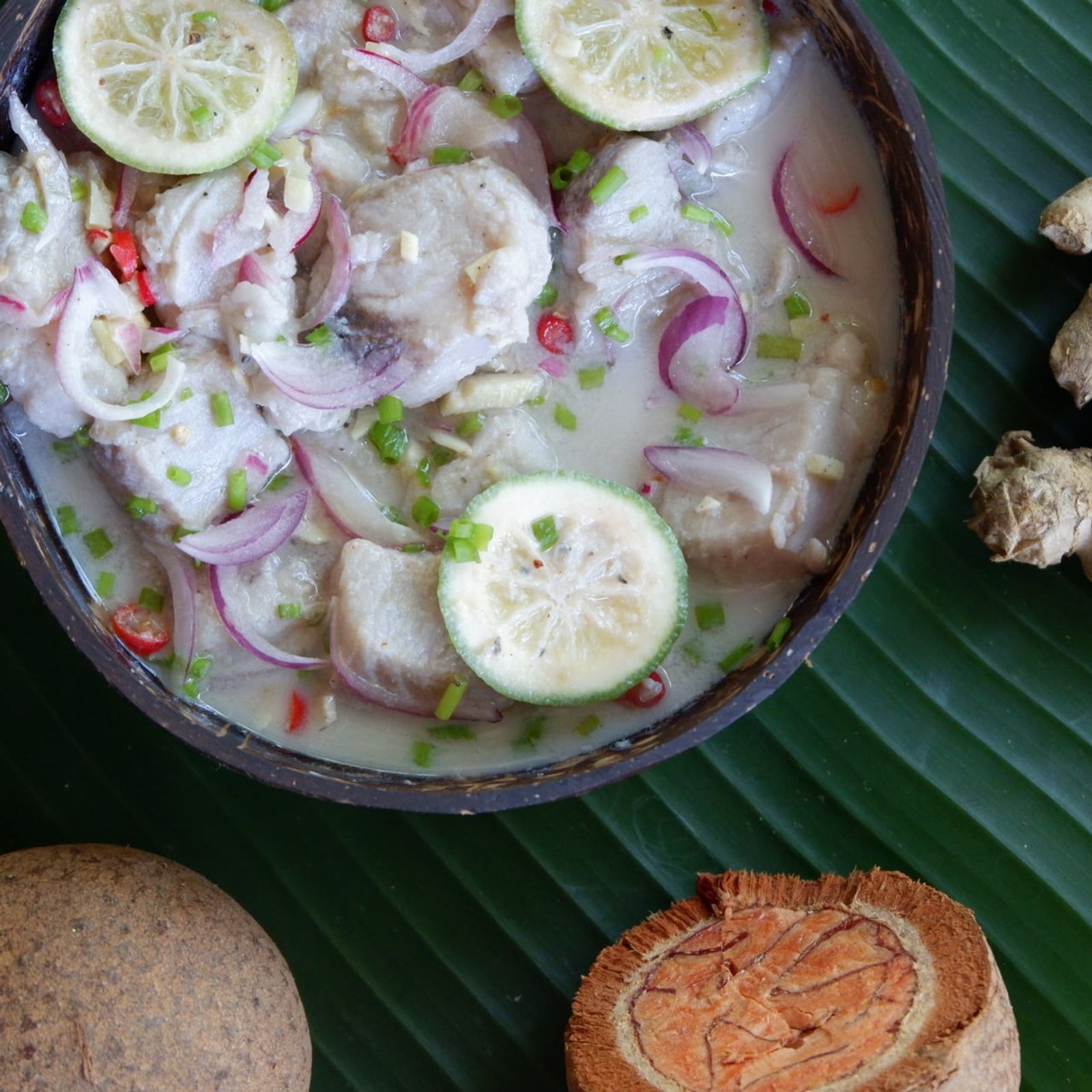
Northern Mindanao kinilaw with tabon-tabon and native biasong citrus · Photo: Lokalpedia / CC BY-SA 4.0 (Wikimedia Commons)
 PhilippinesCagayan de Oro
Sinuglaw of Cagayan de Oro: Grilled Pork Meets Raw Fish in a Thousand-Year-Old Kinilaw Tradition
The signature dish of Cagayan de Oro in northern Mindanao is sinuglaw, grilled pork belly tossed with raw-fish kinilaw. Here is the secret ingredient tabon-tabon, found even at a thousand-year-old archaeological site, plus the local marinade and how to order.
What Is Sinuglaw?
Sinuglaw is a mash-up of two dish names. One is sinugba, from the Cebuano word for grilling over charcoal; the other is kinilaw, the Filipino way of dressing raw fish in vinegar and citrus. Chop charcoal-grilled pork belly and toss it with fish kinilaw, and you have sinuglaw: smoke, acidity and rich pork fat in one bite. It is eaten across the Visayas and Mindanao, but Cagayan de Oro, a port city in northern Mindanao, claims it as its own. Local food guides often name sinuglaw as one of the city’s signature dishes.
A Thousand-Year-Old Dish: Kinilaw
Kinilaw is considered one of the oldest cooking methods in the Philippines. At the Balangay boat site in Butuan, northeastern Mindanao, dated to the 10th to 13th centuries, archaeologists found halved tabon-tabon fruits together with fish bones cut as if the fish had been cubed, suggesting the technique is at least a thousand years old. Its first written mention is in a Tagalog dictionary compiled by a Spanish missionary in 1613. The name comes from the Visayan verb kilaw, to eat raw. Cagayan de Oro’s version is described as one of the oldest surviving forms of kinilaw, and at its heart is the very fruit found at that ancient site: tabon-tabon.
The Secret Ingredient: Tabon-Tabon
Tabon-tabon (Atuna racemosa) is a native tree fruit traditionally used for kinilaw in Mindanao, said to look a bit like sapodilla, known locally as chico. Its flesh is grated and squeezed into kinilaw, where its astringency softens the sharp acidity of the vinegar and takes away the fishy smell. The Cagayan de Oro marinade combines tabon-tabon juice with coconut vinegar, local lime, onion, ginger and chili, sometimes with a native citrus such as biasong. The fish varies by source: Wikipedia says sinuglaw usually uses tuna, while a Philstar feature on Cagayan de Oro food says the fish is malasugi, the local name for swordfish, and other write-ups mention blue marlin. Either way, firm, very fresh fish is the rule.
How to Eat It and How to Order
Sinuglaw is eaten as a dish with rice and is also a popular drinking snack in the evening. The fat and smoke of the grilled pork wrap around the sharp raw fish, so the best bite has both fish and pork on the same spoon. Remember that the chili and ginger in the dressing give it a quiet kick. In restaurants, simply asking for sinuglaw works; if you want fish only, order kinilaw. Ask which fish they are using and many places will tell you what came in that day. Since it is raw fish, choose a busy place with fast turnover if hygiene is a concern. Each kitchen uses slightly different fish and seasoning, so if you have time, compare two or three versions.
What Else to Try in Cagayan de Oro
As the gateway to northern Mindanao, Cagayan de Oro gathers food from the whole region. Often mentioned alongside sinuglaw is humba, which here is known as pork belly slow-cooked in sweet soy and black bean sauce. Surol, from the island of Camiguin across the bay, is chicken simmered in coconut milk with native oregano. You may also see an assortment of grilled dishes served together on a round woven tray called a bilao. It is a seaside city with fresh fish and a strong grilling culture, so start with sinuglaw, add a few grilled plates and one soup, and you will get a good feel for the local table.