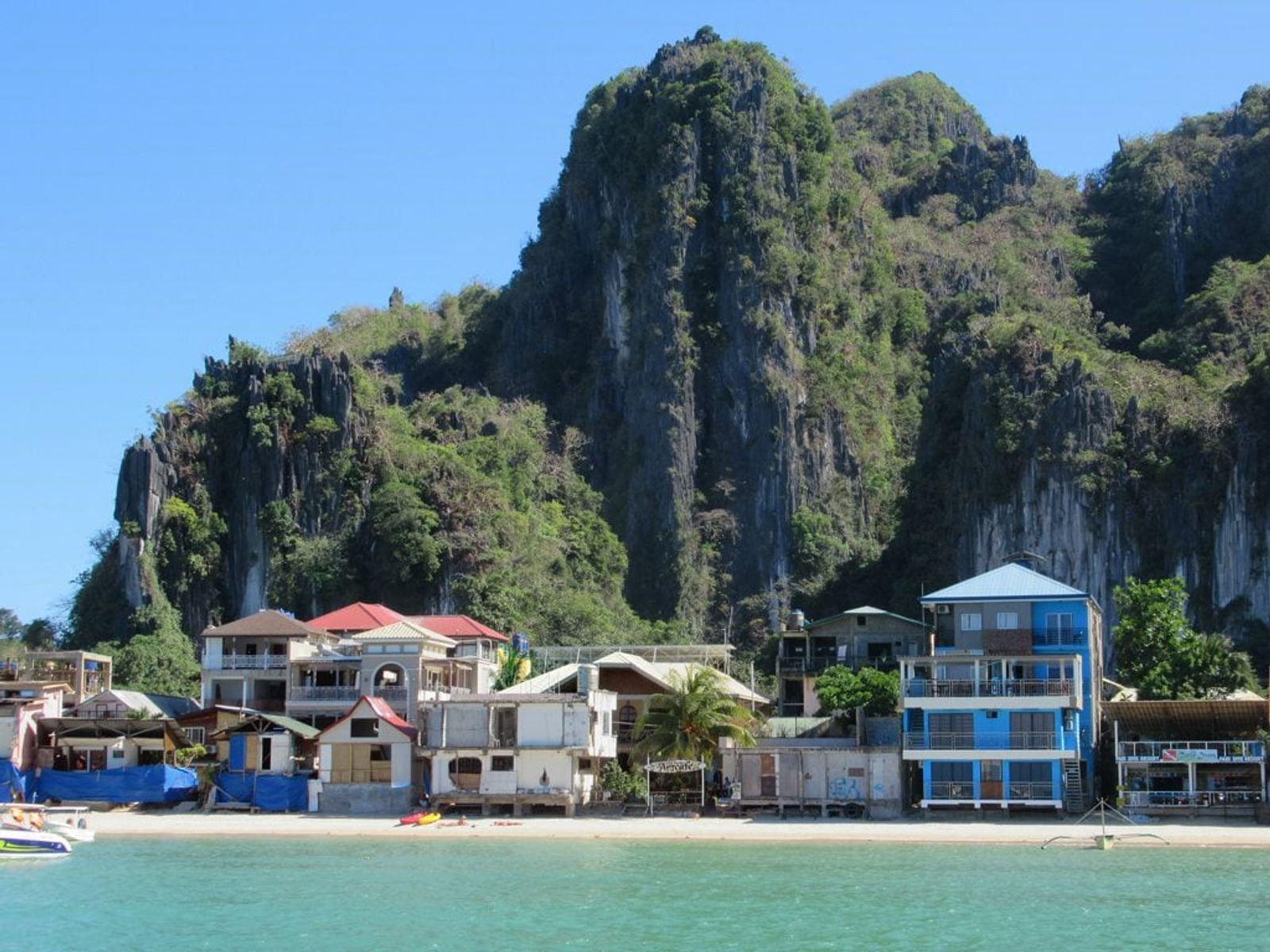
Taraw Cliff, the limestone wall rising behind El Nido town · Photo: David Stanley from Nanaimo, Canada / CC BY 2.0 (Wikimedia Commons)
 PhilippinesEl Nido
The Secret in El Nido’s Name: Edible Swiftlet Nests in the Limestone Cliffs and the People Who Harvest Them
El Nido means the nest in Spanish, named for the edible swiftlet nests tucked into its cliffs, the main ingredient of bird’s nest soup. Here is how the town was renamed in 1954, what the nests are made of, the busyador who climb for them, and what travelers should know.
El Nido Means The Nest
El Nido in northern Palawan means the nest in Spanish. The area was originally called Bacuit, and it was renamed El Nido by Republic Act No. 1140 on June 17, 1954. The new name honors the edible nests of swiftlets clinging to the limestone cliffs around Bacuit Bay, the nests behind bird’s nest soup. The old name comes with a folk tale of its own: when Spaniards asked a local what the place was called, he replied in Tagalog, Bakit? (Why?), and that became Bacuit. The area’s first settlers are said to have been the Tagbanwa and Cuyunon peoples. It is striking that a name now famous for tourism actually comes from a prized ingredient hidden in the cliffs.
The Nest Is Made of Swiftlet Saliva
They are called bird’s nests, but the builder is not a swallow at all: it is the edible-nest swiftlet (Aerodramus fuciphagus), known in Palawan as balinsasayaw. Instead of twigs, the bird builds its nest from strands of its own saliva, layered and hardened against cave and cliff walls. These nests are the key ingredient of bird’s nest soup, a luxury in Chinese cuisine. The Palawan Council for Sustainable Development (PCSD) describes Palawan as one of the country’s top sources of high-quality nests thanks to their purity, and passes on the nickname caviar of the East. Wikipedia notes that El Nido’s nests sell for around 3,000 US dollars per kilogram, so each palm-sized nest is a very valuable product.
The Cliff Climbers: Busyador
Nest harvesters are known locally as busyador. They watch where the birds fly home to find the caves and holes, called butas, where the nests are, then climb the sea cliffs either bare-handed or with ropes, bamboo ladders and poles. It is described as one of the most dangerous jobs in Asia, with a constant risk of injury or death. The cliffs of El Nido and neighboring Taytay are the main harvesting grounds, and a 2016 source called El Nido the center of the bird’s nest trade. Research has also documented harvesters getting a poor deal, with middlemen marking down nests at weighing and disputes over access to the caves, a reminder of the hard labor behind an expensive ingredient.
Fewer Nests and the Rules That Protect Them
Nest harvesting is seasonal work. A feature on northern Palawan’s nest gatherers says the birds occupy the caves from December to August; harvesting runs from December to June, and in June and July the birds rebuild their nests and raise their young. Because harvesting overlaps with breeding, how many nests are taken and when directly affects the bird population. The Palawan Council for Sustainable Development manages nest collection and trade under the Wildlife Act (Republic Act No. 9147) and the Caves Act (Republic Act No. 9072), and has held forums with harvesters, traders and local governments to discuss sustainable management. The council has reported a sharp drop in nest production, and it is said that as the swiftlets declined, many harvesters moved into tourism. That shift is part of the story behind El Nido’s tourism boom.
What Travelers Should Know
Visitors to El Nido rarely get to see nest harvesting in person. But when your island-hopping boat passes the limestone cliffs of Bacuit Bay, remembering that nests cling somewhere in those cracks changes how the scenery looks. Massive limestone walls like Taraw Cliff, rising behind the town, are the very backdrop to the name. Bacuit Bay was proclaimed a marine reserve in 1991 and became a protected area in 1998, and visitors pay an environmental fee. Avoid wandering into caves or touching nests. If you buy bird’s nest products, choose licensed sellers with clear sourcing, and check your home country’s rules on bringing animal products back.