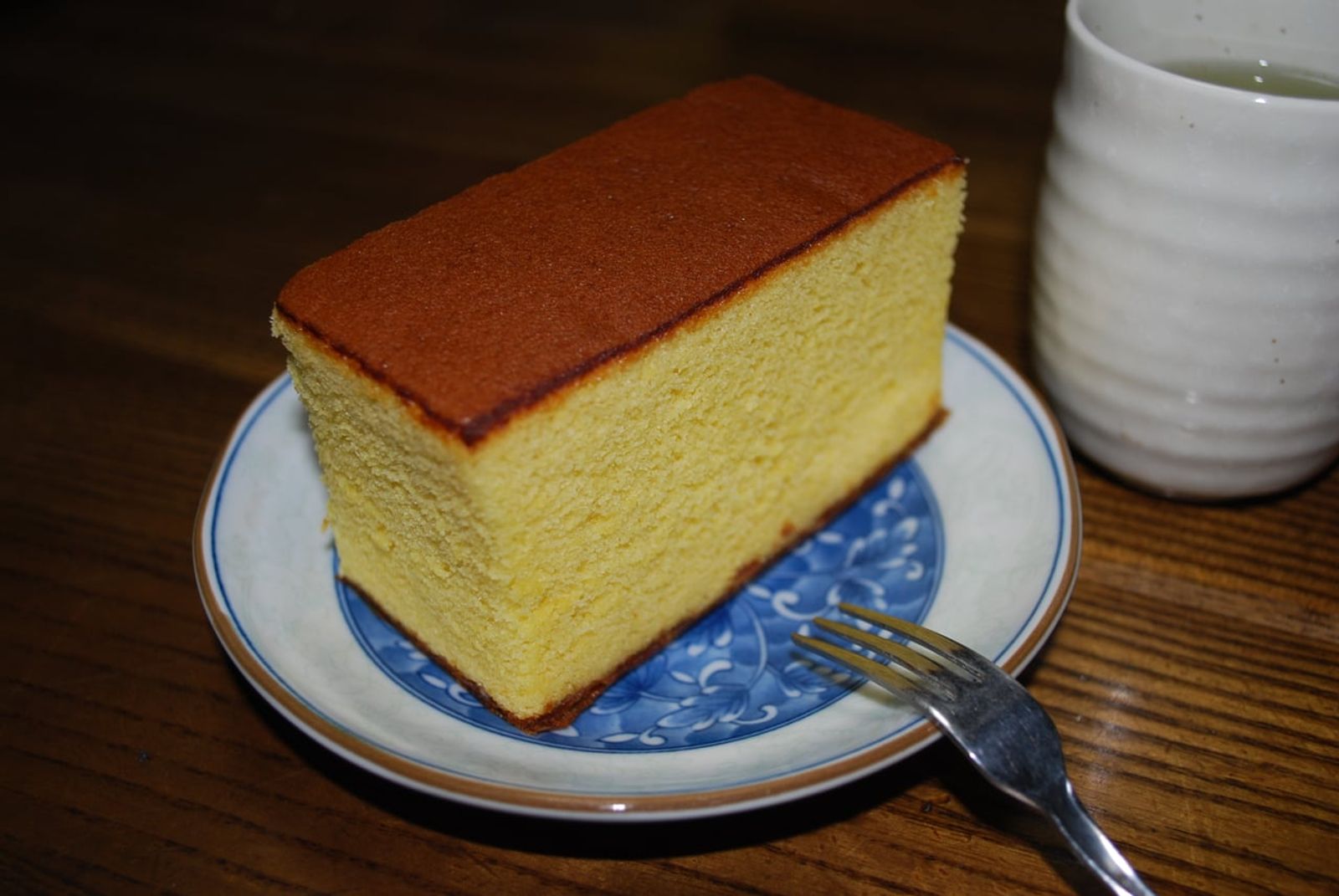
Castella made in Nagasaki City · Photo: katorisi / CC BY-SA 3.0 (Wikimedia Commons)
 JapanNagasaki
Nagasaki Castella: How a Portuguese "Nanban" Sweet Became Japanese Over 400 Years
Castella, Nagasaki's signature souvenir, began as a "Nanban" sweet brought by Portuguese traders and missionaries in the 16th century. Here is where the name comes from, records of Edo-period people eating it with wasabi, and the story behind the crunchy sugar on the bottom.
A Sweet That Came With the Nanban Trade
From the mid-16th century, Portuguese traders and Catholic missionaries arrived in Kyushu. The Japanese called them Nanban-jin, "southern barbarians," and took in European goods and food. The sweets that came with them are known as Nanban-gashi, and castella is the best known. Nagasaki, opened as a Portuguese trading port in the 1570s, became the hub of this exchange. There is no clear record of exactly when castella first reached Japan. But a Nanban cookbook from around 1600 includes a recipe under a name similar to "kasuteboro," and records show it was served to guests at Kyoto's Nijo Castle in 1626, so it was being made in Japan by the early 17th century at the latest.
The Puzzle of the Name "Castella"
The most widely accepted theory links the name to Castile (Castilla), the old Spanish kingdom: the Portuguese "bolo de Castela," meaning "cake from Castile," was shortened to "castella." Its ancestors are thought to be sponge cakes such as Portugal's pão de ló and Spain's bizcocho. Pão de ló already appears in a mid-16th-century cookbook. There are other theories. A Nagasaki book published in 1704 says the word was a corruption of "kasutoruboru," and another idea ties it to a Spanish word shouted while whipping meringue, though that is considered weak. In the end, no theory is certain, and sources explain it differently.
Did Edo-Period People Eat Castella With Wasabi?
Early castella was not the moist, sweet cake we know today. It was made with equal amounts of egg, flour and sugar, and it was not very sweet and did not rise much. Records show it in Nagoya and Kyoto in the 17th century, and by the mid-Edo period it was prestigious enough to be served at Edo Castle. The way people ate it then is surprising. According to records, it was put in soup in winter and eaten with cold water in summer, served with wasabi or grated daikon like a snack to go with drinks, and carried as travel food. It was also considered nourishing enough to give to people weakened by illnesses such as tuberculosis. It was less a dessert than a precious health food.
Starch Syrup and Coarse Sugar: Becoming Today's Castella
Castella became the moist, sweet cake we know only from the Meiji era onward. Wider use of starch syrup (mizuame) made the batter moister, and the addition of honey and white coarse sugar (zarame) made it much sweeter than in earlier times. Equipment such as gas ovens also made the quality more consistent. During the war, from 1939 to 1941, price controls even led to standardized recipes. What many people picture when they think of Nagasaki castella is the layer of coarse sugar crystals on the bottom. Many shops present that crunchy zarame as a hallmark of Nagasaki castella, and some explain that over time the sugar slowly melts into the cake and makes it even moister. Peel off the paper on the bottom slowly so the sugar stays on the cake.
Choosing It as a Souvenir, and Where to Buy
Nagasaki became castella country thanks to its history as Japan's only window for foreign trade during the Edo-period isolation, along with factors such as its climate. As products made elsewhere increasingly appeared under the name "Nagasaki castella," the Nagasaki Prefecture confectionery industry association registered a regional collective trademark in 2006. Nagasaki City has several long-established castella makers, and each differs slightly in moistness, sweetness and how much zarame is on the bottom. If you buy a whole loaf, one tip is to warm the knife before cutting for clean slices. You can easily buy castella in the shopping streets of central Nagasaki and in souvenir shops around Nagasaki Station, and pre-cut, individually wrapped pieces are handy for sharing.