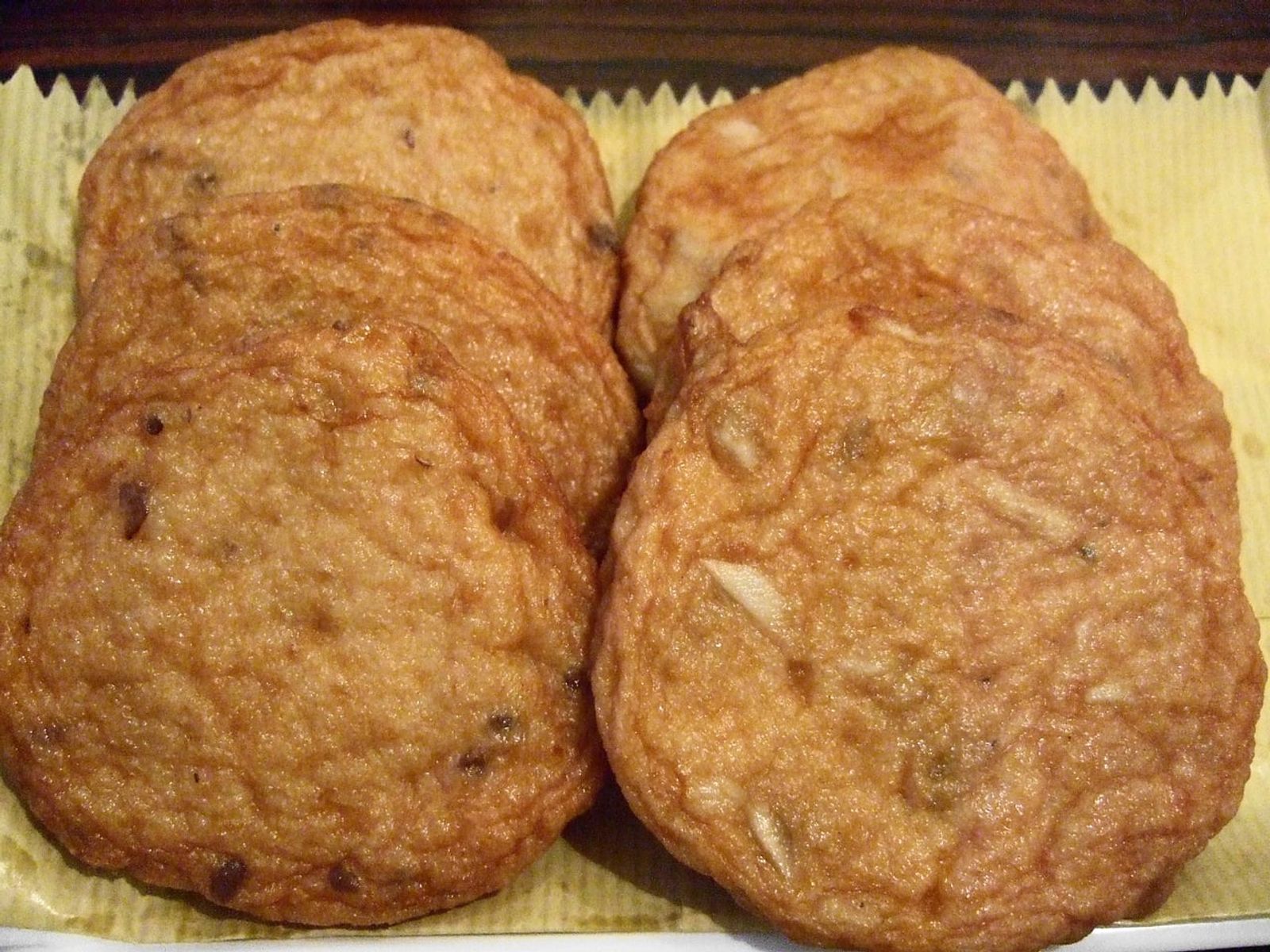
Satsuma-age (tsukeage) in Kagoshima · Photo: Sakurai Midori / CC BY 2.5 (Wikimedia Commons)
 JapanKagoshima
Satsuma-age, or "Tsukeage" in Kagoshima: The Sweet Fried Fish Cake With Ryukyu Roots
Satsuma-age is sold all over Japan, but in its home of Kagoshima it is called tsukeage and tastes distinctly sweet. Here are the Ryukyu and Shimazu Nariakira origin theories, the local sake behind the sweetness and the best ways to eat it.
One Food, Three Names
Satsuma-age (さつま揚げ) is a fried fish cake: fish is ground into a smooth paste, seasoned with salt and sugar, shaped and deep-fried. It resembles Korean eomuk, but its name in Japan depends on where you are. Eastern Japan, including Kanto, mostly calls it satsuma-age; western Japan, including Kansai, often calls it tempura even though it has no batter; and in Kagoshima, its home, it is tsukeage (つけあげ). Satsuma is the old name for the Kagoshima area, so satsuma-age simply means "fried food from Satsuma". In Kagoshima it comes in sticks, squares, ovals and discs, and irregular pieces torn off by hand and fried are called chigiri-ten.
Origin Theories: Ryukyu's Chiki-agi and Shimazu Nariakira
According to the Japanese agriculture ministry's guide to traditional foods, satsuma-age is said to have been created in the Edo period, when Shimazu Nariakira was lord of the Satsuma domain. There are two main theories about its origin. The first says it was developed from the techniques used for hanpen and kamaboko fish cakes in Kishū (today's Wakayama), turned into a fried food so it would keep in Satsuma's hot, humid climate. The second traces it to chiki-agi, a fried fish cake from the Ryukyu Kingdom, with which Satsuma traded actively, and explains Kagoshima's name tsukeage as a corruption of chiki-agi. Both are closer to tradition than documented history, so the exact year and inventor cannot be pinned down.
The Secret of the Sweetness: Tofu, Sugar and Akumochi-zake
Your first bite of Kagoshima tsukeage will taste noticeably sweeter than fish cakes elsewhere. The agriculture ministry says the fish paste is mixed with drained tofu, egg and starch, then seasoned with sugar, salt and akumochi-zake (灰持酒), a local sake, and names sweetness as its defining feature. Akumochi-zake is an unusual sake made by adding lye from wood ash to the fermenting mash before pressing; in Kagoshima it is also used for cooking. The fish is usually a mix of whatever is plentiful locally, such as sardine, horse mackerel, flying fish, mahi-mahi and kibinago (silver-stripe round herring). One explanation is that it began as a way to preserve abundant catches without waste. Vegetables such as carrot, burdock, shiso and lotus root are sometimes mixed in, so taste and texture vary quite a bit from shop to shop.
From Festive Food to Everyday Soul Food
According to the agriculture ministry, tsukeage was originally a special food for New Year and celebrations. Today it is an everyday side dish and drinking snack, the soul food of Kagoshima. People eat it as is or add it to chirashi sushi, simmered dishes and vinegared salads. In 2016 Kagoshima Prefecture designated 28 local dishes as "Kagoshima no Aji" (Tastes of Kagoshima) to preserve them, and tsukeage is one of them. As of March 2023, 98 satsuma-age products had also been certified under the prefecture's "furusato certified food" scheme, a sign of how many makers keep their own recipes alive. Kagoshima has plenty of shops specialising in tsukeage, and buying one or two pieces hot from the fryer is one of the small pleasures of a visit.
How to Eat It and Where to Buy It
Freshly fried tsukeage is best eaten plain. To revive cold pieces, warm them briefly in a toaster oven or frying pan, and dip in soy sauce with grated ginger or mustard, the usual way. The agriculture ministry also suggests sliced tsukeage with onion and shiso, dressed with ponzu. Dropped into an oden pot, it sweetens the broth and takes on a whole new character. You can buy it easily at souvenir shops around Kagoshima-Chūō Station and Tenmonkan, department store food halls and the airport, and there are shops around town that fry it to order. Izakaya often serve it as a local-cuisine snack, and it goes well with sweet potato shochu. As a fish product, many items need refrigeration and keep only a short time, so check storage and dates if you are buying gifts.