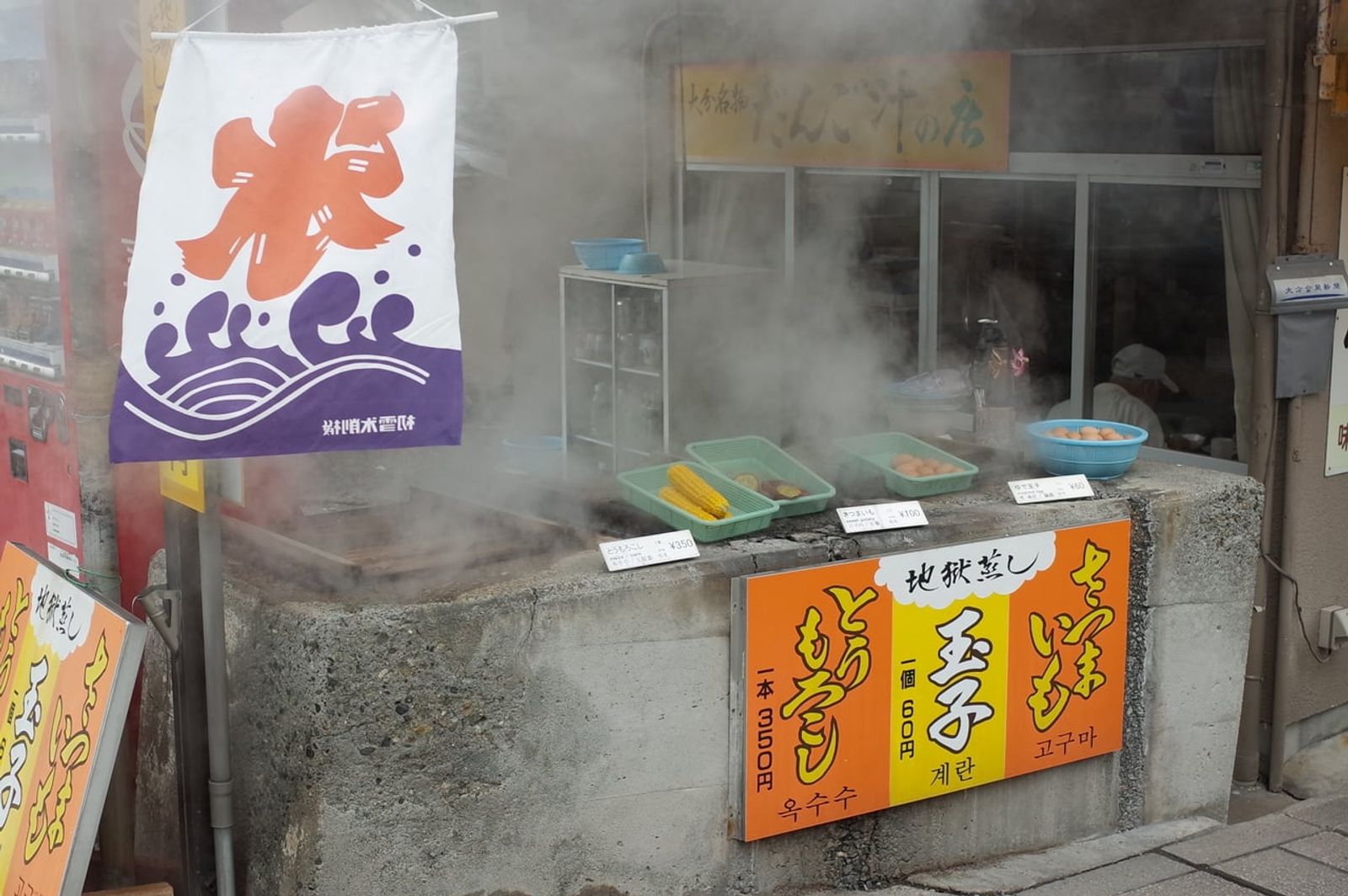
Sweet potato, eggs and corn cooked by jigoku-mushi · Photo: 極地狐 / CC BY-SA 2.0 (Wikimedia Commons)
 JapanBeppu
Jigoku-mushi: Cooking With Beppu’s Volcanic Hot Spring Steam
In Beppu’s Kannawa district, people steam eggs, sweet potatoes and seafood over the hot spring vapor that rises from the ground. Here is how jigoku-mushi works, where it came from, and how to try it yourself safely.
What Beppu Means by “Hell”
Beppu is one of Japan’s greatest hot spring towns, near the top of the country for both the number of springs and the volume of water. In the Kannawa and Myoban districts north of the center, the water is so hot that steam close to 100°C pours out of the ground day and night. Places where boiling water and vapor burst from the earth have long been called jigoku, or “hells,” which is where Beppu’s famous Hell Tour sightseeing route gets its name. Jigoku-mushi, “hell steaming,” is the technique of cooking food with this steam. A kiln-like steamer built over a vent is known locally as a jigoku-gama, or hell oven. Walk through Kannawa and you will see white plumes rising from gardens, inn courtyards and street corners; many of them come from these ovens and other hot spring equipment.
A Steam Kitchen Since the Edo Period
People in Kannawa and Myoban are said to have cooked food over near-boiling spring steam since the Edo period. Building kiln-shaped structures over the vents is what produced today’s jigoku-gama. A local history published in 1964, Beppu Konjaku, records that in the Meiji era the Kannawa area was called Jigokubaru, the “field of hell.” Steam rose wherever you dug, and children would push bamboo into the ground to make little vents, then boil soybean stalks or steam sweet potatoes over them. Kannawa’s story goes back even further. According to tradition, in 1276, during the Kamakura period, the wandering monk Ippen came here, tamed the land and opened a steam bath that used the vapor. Using this steam in everyday life is clearly a very old idea.
Why It Needs Almost No Seasoning
What sets jigoku-mushi apart from ordinary steaming is the steam itself. Because the vapor in Kannawa and Myoban is close to 100°C, food cooks quickly, which locals say keeps its natural flavor from escaping. The steam also carries salt from the spring water, so a gentle seasoning soaks in without adding any. That makes jigoku-mushi a dish about the ingredients rather than the sauce. Sweet potatoes and corn turn intensely sweet, and shrimp or clams come out lightly briny. Sources give slightly different figures for the steam temperature, such as around 100°C or 98°C. Either way, it is hot enough to burn you the instant you touch it.
What to Steam and How to Try It
There is no fixed menu for jigoku-mushi. Rice, vegetables, meat or seafood all go into a basket and over the steam. Snack stands at the sightseeing spots sell onsen eggs, pudding, potatoes, corn and pork buns steamed in hell ovens, which makes for an easy first taste. If you want to cook it yourself, look for one of the jigoku-mushi workshops in Kannawa’s hot spring streets. Typically you put food bought on site, or brought from outside, into a basket and lower it into the oven, renting the oven by the block of time. Cooking times differ, so start with slow items like eggs and sweet potatoes and add quick ones like shrimp and clams later. When you open the lid a blast of hot steam rushes up, so keep your face back and always wear the gloves provided.
Kannawa’s Long-Stay Culture and Practical Tips
Jigoku-mushi survived as everyday cooking, not just a tourist activity, because of Kannawa’s long-stay culture. Farmers came for toji, extended hot spring stays to rest during the off-season, and wanted cheap lodging where they could cook for themselves. That demand gave rise to kashima ryokan, inns that rent rooms without meals. Some self-catering inns in Kannawa still have hell ovens in the rooms or shared areas, so you can buy groceries and steam your own dinner. One more tip: the white plumes over Kannawa are most striking on cold mornings, especially in winter. The steam-filled townscape has reportedly been designated a cultural landscape, so after your meal, head to a lookout on the hillside to see the whole town breathing steam.