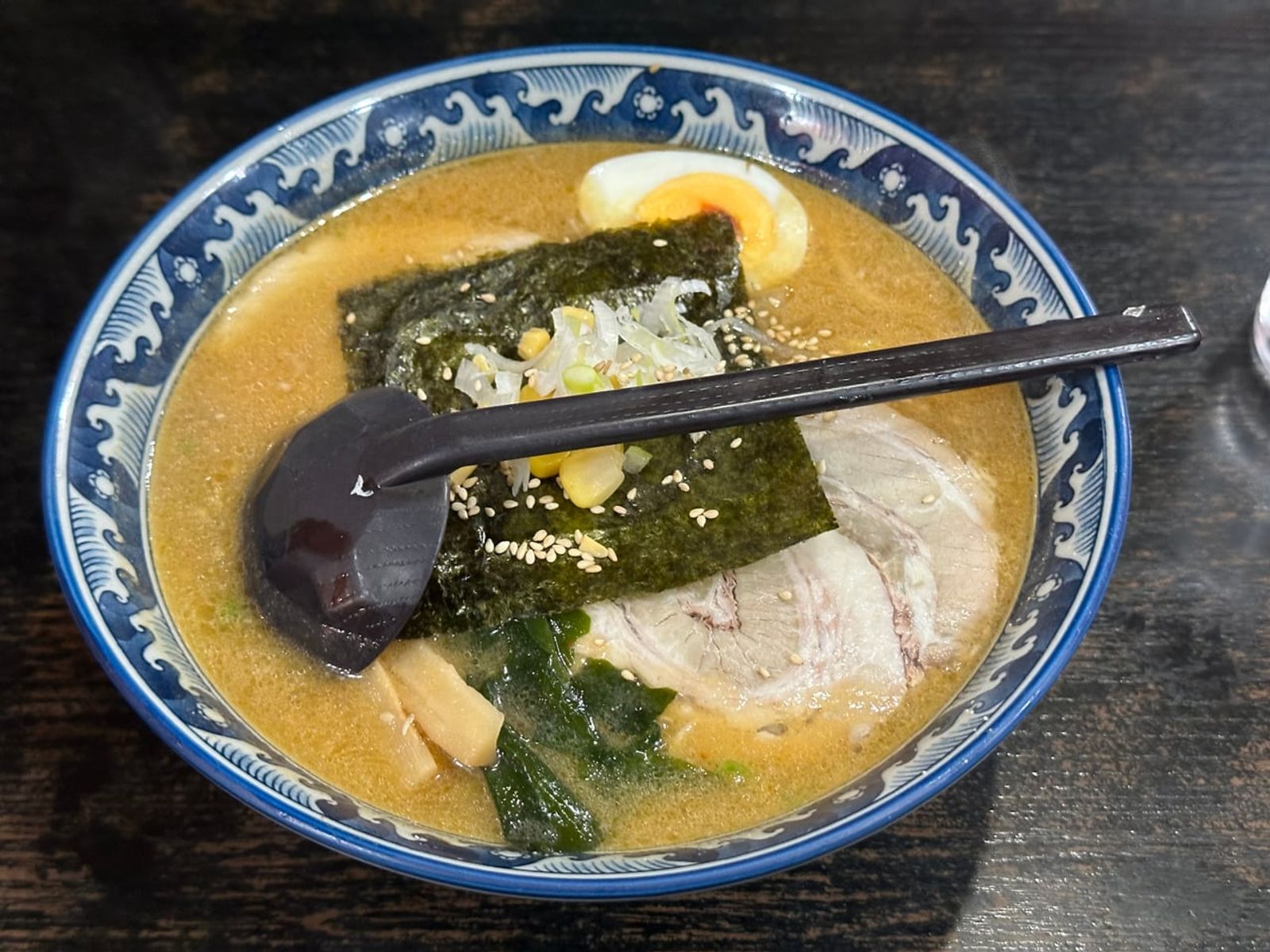
Miso ramen in Sapporo · Photo: ノボホショコロトソ / CC BY 4.0 (Wikimedia Commons)
 JapanSapporo
Sapporo Miso Ramen: How a 1950s Experiment Became Hokkaido's Winter Bowl
Sapporo ramen today means miso, yet until around 1960 most bowls in the city were soy-sauce based. Here is how miso ramen was born, why the soup wears a layer of lard and the vegetables are stir-fried, and what to know before you order.
A Ramen City That Started With Soy Sauce
Sapporo's ramen story is usually traced to 1922, when a cook from Shandong in China began serving rousi mian, hand-pulled noodles in broth, at a Chinese restaurant in the city. The recipe was later adjusted to Japanese tastes, but wartime food controls cut off ingredients and the shops disappeared. In 1946, people returning from overseas set up street stalls in Susukino selling ramen in a rich pork-bone broth, and in 1951 eight ramen shops gathered in one lane. That lane was the starting point of what Sapporo now calls its Ramen Alley (ramen yokocho). Yet in those years, Sapporo ramen was mostly a soy-sauce affair. Miso had not arrived.
The Birth of Miso Ramen: 1955 or 1958?
Miso ramen is said to have started when the owner of a Sapporo ramen shop dissolved miso into his soup. Sources disagree on the year: Japanese Wikipedia and others give 1955, while the Sapporo tourism association says 1958. Around the same time, a local noodle maker developed a medium-thick, curly, high-hydration aged noodle designed to suit miso broth, and that style is still the standard for Sapporo miso ramen. It was not an instant headline dish. Records say it became an official menu item in 1963. As magazines and word of mouth spread the name, the face of Sapporo ramen gradually shifted from soy sauce to miso.
Anatomy of a Bowl: A Lard Lid, Wok-Fried Vegetables and Minced Pork
First-timers are often surprised at how long the soup stays scalding. Many shops float a layer of lard on top to trap the heat, a practical answer to Sapporo winters that fall well below freezing. Take your first sip carefully. The other signature is the stir-fried vegetables. Onion, cabbage and bean sprouts are tossed in a wok over high heat and served with the broth, a technique credited to the same shop owner who created miso ramen. Bean sprouts were also a stand-in for onions, which were expensive just after the war. Because the original miso ramen used minced pork, many Sapporo shops still add minced meat to their miso broth.
From Sapporo to the Rest of Japan
Instant noodles did much to make miso ramen famous nationwide. By the mid-1960s, shops with "Sapporo Ramen" signs were multiplying in Tokyo, and a miso ramen chain founded in 1967 spread across the country. In 1968 an instant miso ramen modelled on the Sapporo flavour went on sale, carrying the taste into homes all over Japan at a time when miso ramen was still unfamiliar. In 2001, Hokkaido ramen was named a Hokkaido Heritage. Today it is widely known that each city has its own style: miso in Sapporo, salt in Hakodate, soy sauce in Asahikawa. Interestingly, most Sapporo shops are not miso specialists at all. They usually offer soy sauce, miso and salt side by side.
How to Eat It in Sapporo, and Ordering Tips
The easiest place for travellers is the Ramen Alley area in Susukino, where narrow lanes are lined with miso ramen counters, ideal after dinner or drinks. The Sapporo Station area and New Chitose Airport also have clusters of ramen shops, handy when you are on the move. Corn-and-butter ramen is popular with visitors, but it began at one shop in front of Sapporo Station and is not necessarily a local staple. On a first visit, try plain miso first and add butter next time. You will also notice many shops hang a noren curtain bearing a noodle maker's name. That is because noodle makers traditionally present a noren to newly opened shops.