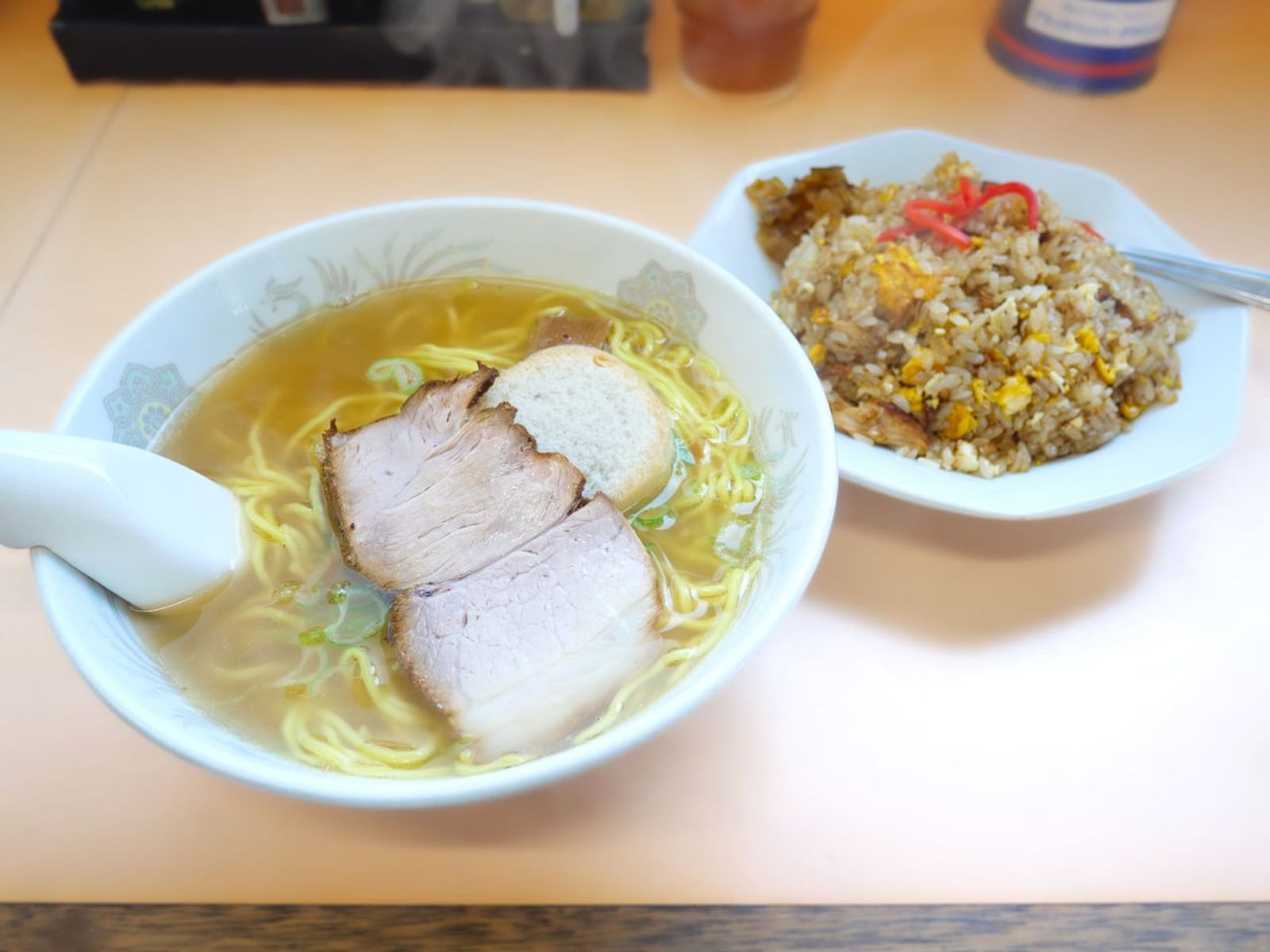
Shio ramen in Hakodate · Photo: くろふね / CC BY 4.0 (Wikimedia Commons)
 JapanHakodate
Hakodate Shio Ramen: A Clear Salt Broth From Japan's Old Treaty Port
If Sapporo is miso, Hakodate is salt. Here is how Hakodate shio ramen, a broth so clear you can see the noodles, came to be salt-based, from an 1884 "Nanking soba" advert to the day it was named "Hakodate ramen", plus how to enjoy it.
The Salt City on Hokkaido's Ramen Map
Hokkaido ramen is often sorted by city: miso in Sapporo, soy sauce in Asahikawa and salt (shio) in Hakodate. Hakodate shio ramen is defined by its clear broth. A stock based mainly on pork bones is simmered gently so it never comes to a rolling boil, then seasoned with a salt tare, leaving it clear enough to see the noodles and the bottom of the bowl. The noodles are medium-thick, straight and on the soft side. Typical toppings are chashu pork, menma (seasoned bamboo shoots), leek, spinach and either fu (baked wheat gluten) or naruto fishcake. If you are used to rich broths it may taste light at first, but the savoury depth of the stock comes through more with every sip.
An 1884 Advert for "Nanking Soba"
Hakodate opened to foreign trade in 1859 alongside Yokohama and Nagasaki, and Chinese merchants settled in the port along with Western residents. An 1884 advertisement for a Western-style restaurant run by Chinese residents of Hakodate lists "Nanking soba" at 15 sen a bowl. The advert often comes up in histories of Japanese ramen, but no evidence has been found linking it directly to today's Hakodate ramen. So the claim that Hakodate is the birthplace of Japanese ramen is best treated as one theory. Ramen culture then spread through Chinese restaurants in the Meiji and Taisho eras, and in 1932 a café menu in the city listed "ramen (shina soba), 15 sen."
Why Salt?
There is no firm answer to why Hakodate ramen became salt-based. The most common theory is that the port had many Chinese residents from southern China, so a clear, salt-seasoned Cantonese-style noodle soup became the root. The clear broth and straight noodles are seen as traces of that heritage. More recent events also helped fix the "Hakodate equals salt" image. In 1996, a major food company added a "Hakodate salt flavour" to its cup noodle line, and in 2002 the first Hakodate Shio Ramen Summit was held to promote tourism and build the brand. Old roots and new promotion together shaped the Hakodate shio ramen we know today.
The Day "Hakodate Ramen" Got Its Name
People have eaten it for generations, but the name "Hakodate ramen" is newer than you might think. It is said to date from 1971, when a ramen shop opening a branch at Hakodate Airport chose the name so tourists could remember it easily. As air travel grew, the airport became a window for promoting local food. The city changed in the meantime. After the war several noodle makers opened to supply ramen noodles, and the Daimon district in front of Hakodate Station bustled as an entertainment area. When the Seikan Tunnel opened in 1988 and the ferries linking Honshu and Hakodate were retired, Daimon's days as a busy nightlife hub faded. Hakodate ramen is a neighbourhood taste that carried on through all of that.
How to Eat It, and Where
Start with the broth. Before adding pepper or stirring in the toppings, take a spoonful to taste the clear soup on its own, then move on to the noodles. The noodles are soft and soak up liquid quickly, so eat soon after the bowl arrives. Portions at some shops are modest, which makes it easy to fit into a Hakodate food crawl alongside a seafood bowl or two. Ramen shops are spread around Hakodate Station and the morning market, the historic Motomachi and Bay Area, and the Goryokaku area. Coming down from the night view on a cold evening and finishing with a hot bowl is a very Hakodate way to end the day. There are ramen shops at Hakodate Airport too, perfect for one last bowl before you fly.