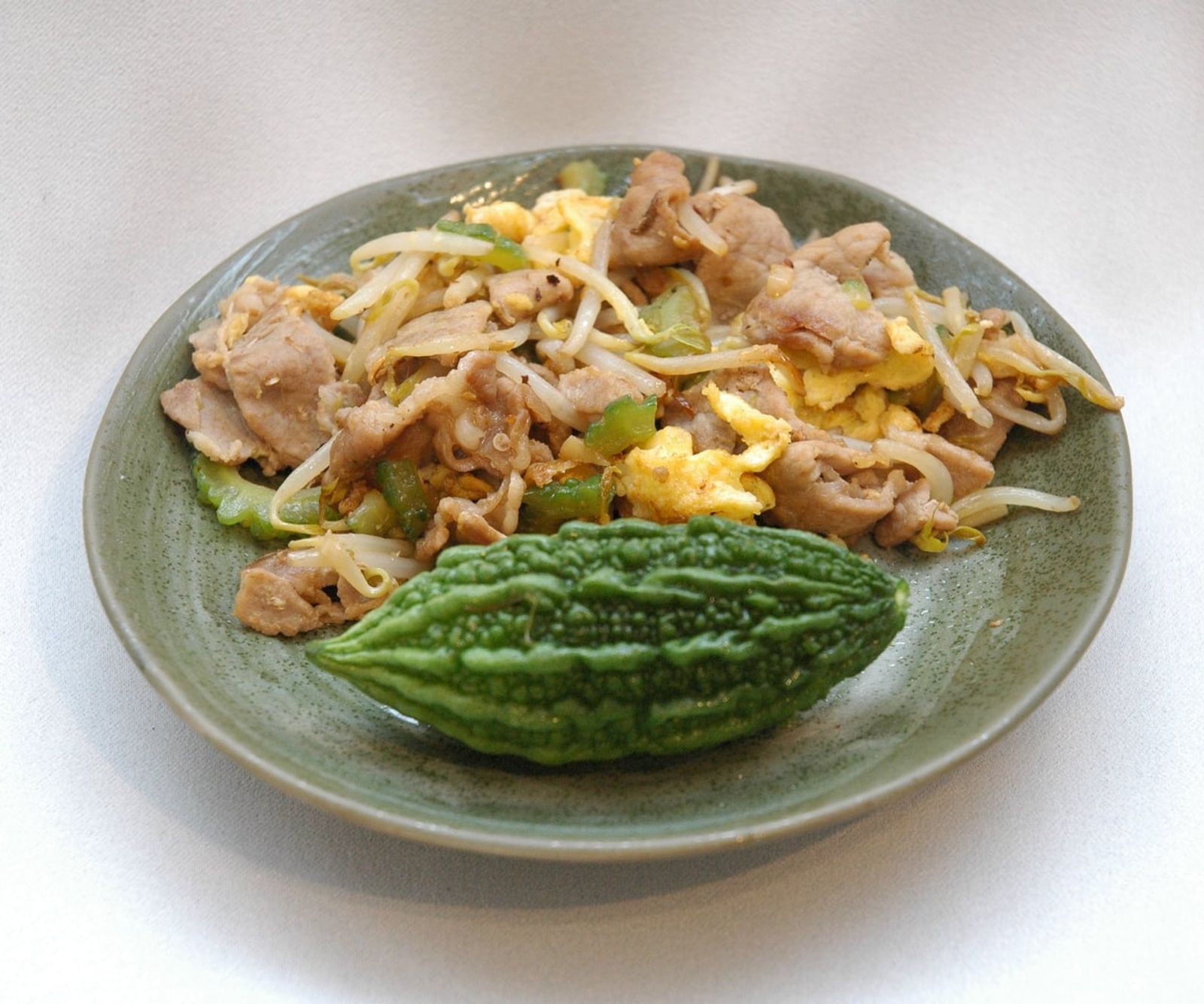
Goya champuru · Photo: User:Jpatokal / CC BY-SA 3.0 (Wikimedia Commons)
 JapanOkinawa
Champuru: Okinawa's Stir-Fry Starring Island Tofu, From Bitter Melon to "Pork"
The word you will see most on Okinawan diner menus is champuru. Here is where the name of this home-style stir-fry of seared firm island tofu and vegetables comes from, why goya champuru is so loved, how postwar canned luncheon meat ("pork") got involved, and how it differs from similar dishes.
A Dish Whose Name Means "Mixed"
Champuru is one of Okinawa's signature home dishes: tofu stir-fried in oil with vegetables and other ingredients. The word is explained as meaning "to mix" in the Okinawan language, and it is also used more broadly for stir-fried dishes in general. It is said to date back to the Ryukyu Kingdom and is a homely dish that is also served to guests. There are several theories about the name. Some say it comes from Chinese, others from the Malay and Indonesian word campur ("to mix"), and others from an onomatopoeic Okinawan word. None of these has a clear account of when or how the word arose, so none can be called settled. It is a fitting story for a seafaring kingdom where many cultures met.
The Real Star Is Island Tofu
What separates champuru from an ordinary vegetable stir-fry is the tofu. Okinawa uses shima-dofu, a large, firm island tofu that holds together well in a stir-fry. The tofu is first seared in oil until golden, then tossed with the vegetables, and that searing is seen as the key difference from a plain vegetable stir-fry. Some people even insist it is not champuru without tofu. In practice, though, some dishes are called champuru without it, notably fu champuru, made with wheat-gluten fu soaked in beaten egg, and somin champuru, made with somen noodles. Dishes are named after the main ingredient, such as tamana (cabbage) champuru or maamina (bean sprout) champuru.
Goya Champuru and May 8, "Goya Day"
The most famous champuru is goya champuru, made with bitter melon (goya). The bitter goya is stir-fried with island tofu, egg and pork, balancing bitterness with richness. It is loved as a dish that perks up the appetite in Okinawa's sweltering summers and is widely known in mainland Japan as the face of Okinawan cooking. Okinawa even has a Goya Day. May 8 was chosen in 1997 by the JA Okinawa federation (now JA Okinawa) and Okinawa Prefecture, a pun on the Japanese numbers 5 (go) and 8 (ya), timed to when shipments start to rise in May. If you are new to goya and worried about the bitterness, start with a diner's goya champuru that has plenty of egg. It softens the bitterness noticeably.
"Pork" Arrives on the Postwar Okinawan Table
Order champuru at an Okinawan diner and it often contains pink cubes of meat. That is canned luncheon meat from the United States, known in Okinawa simply as "pork". It spread during the postwar US administration and became a household staple, giving rise to a "postwar champuru" made with it. The cooking fat changed too: champuru used to be fried in lard, but vegetable oil is more common now. In this way champuru has blended Ryukyu-era home cooking with postwar American ingredients, true to its name as a dish that mixes things together, even eras. Set meals and rice balls with pork and egg are also a familiar breakfast for Okinawans.
How It Differs From Irichii, and Ordering Tips
Besides champuru, Okinawan menus also list irichii. Irichii is made by cutting ingredients into thin strips and stir-simmering them while adding stock, and unlike champuru it does not use island tofu. The classic example is kubu irichii, made with thinly cut kombu seaweed. Champuru can usually be ordered as a set meal with rice and soup. Portions at Okinawan diners tend to be generous, so if you go as a group, try sharing champuru, irichii and Okinawa soba. Seek out long-running diners around Naha's markets or in residential areas for champuru close to what Okinawan families eat at home.