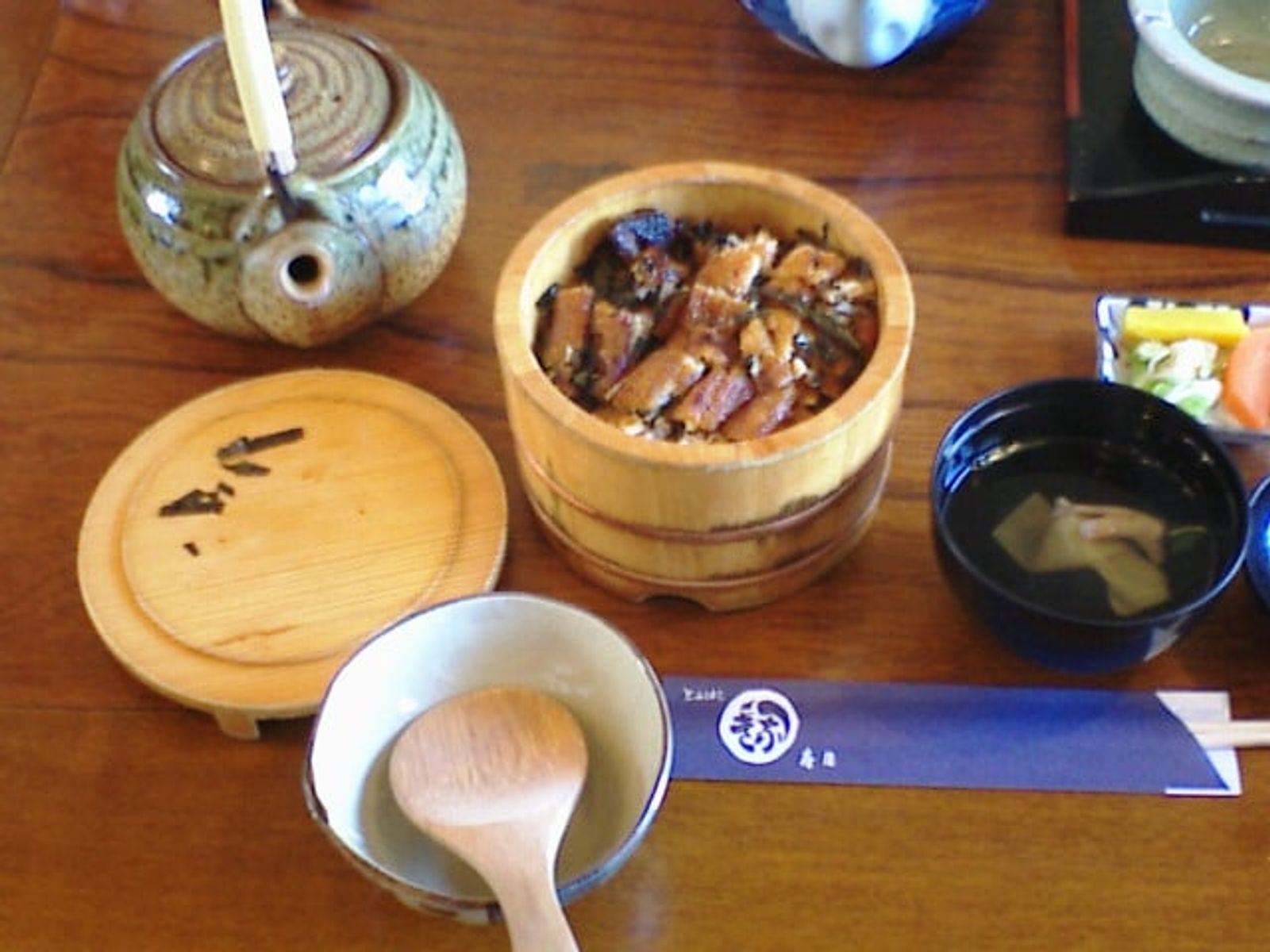
Hitsumabushi in its wooden tub with a pot of broth · Photo: Joi / CC BY 2.0 (Wikimedia Commons)
 JapanNagoya
Hitsumabushi: How Nagoya Turned One Bowl of Eel Rice Into Four Ways to Eat It
Chopped grilled eel in a wooden rice tub, eaten plain, then with condiments, then with broth poured over: that is hitsumabushi, Nagoya's signature eel dish. Here is what the name means, the competing origin stories, the proper way to eat it and what makes Nagoya-style eel different.
What the Name Means
Hitsumabushi (ひつまぶし) is grilled eel kabayaki, glazed with a sweet soy sauce, chopped into strips and laid over rice in a wooden tub called an ohitsu. Among the local dishes known as Nagoya meshi, it is considered the most special-occasion meal of all. There are two explanations for the name. One says it simply describes the eel being "mabusu" (scattered and mixed) through the rice in the ohitsu. The other points out that in the Kansai region eel rice bowls were called "mamushi" or "mabushi," so the name would mean "mabushi in a tub." Some disagree, noting that people in Nagoya pronounce mabusu as "mamusu," which would make any link with the Kansai word unlikely.
Who Invented It? Competing Origin Stories
No one knows exactly when hitsumabushi began. One theory is that it started with misshapen pieces and offcuts of kabayaki served over rice, and accounts differ on whether that happened before the Meiji era or in the lean years after World War II. Even within Nagoya there are two origin stories. A long-established restaurant in Atsuta Ward says that in the Meiji era its porcelain delivery bowls kept coming back broken, so it switched to sturdy wooden ohitsu holding several portions for people to share. Another restaurant in Nishiki 3-chome dates its version to the Taisho era. Tsu in neighboring Mie Prefecture also claims to be the birthplace, so sources disagree. In print, the name hitsumabushi appears in a Nagoya food guide published in 1964.
The Classic Way to Eat It: Four Portions, Three Flavors
What sets hitsumabushi apart from an ordinary eel rice bowl is that it comes with a sequence. The method recommended by the old restaurant in Atsuta goes like this. First, use the paddle to divide the rice in the ohitsu into four with a cross. Scoop the first quarter into your small bowl and enjoy the eel and rice as they are. Mix the second quarter with condiments such as sliced green onion, wasabi and nori. For the third, add the condiments and then pour over hot dashi broth or green tea to make ochazuke. Eat the last quarter whichever way you liked best. Most other restaurants suggest the same three styles, plain, with condiments and as ochazuke, so first-timers can simply follow this order.
Eel Grilled to Be Chopped and Mixed
Japanese grilled eel comes in two broad styles. In the Kanto style, the eel is split along the back, grilled once, steamed for about 15 minutes to release fat, then glazed and grilled again, which makes it soft and light. In the Kansai style, it is split along the belly and grilled without steaming, so more fat stays in and the aroma of the charred fat is stronger. Because hitsumabushi is chopped, mixed into rice and even finished with broth, eel with a crisp, fragrant surface is said to suit it best. For that reason many restaurants around Nagoya are known for grilling the eel directly without steaming. Methods do vary from place to place, though, so if you love a crisp texture, it is worth checking the photos or menu description before you order.
Where to Eat It and Tips for Ordering
Hitsumabushi specialists cluster around Atsuta Shrine, around Nagoya Station and in the Sakae shopping district. Many travelers combine a visit to Atsuta Shrine with hitsumabushi for lunch. The famous places get long lines around midday, so arriving right at opening or in the late afternoon cuts the wait. A typical order brings the eel rice in its ohitsu along with a plate of condiments, a pot of broth or tea, soup and pickles. Whether the ochazuke is made with dashi or green tea depends on the restaurant, so feel free to ask. Eel is an expensive ingredient even in Japan and prices are on the high side, so check whether the menu offers different sizes or amounts of eel before choosing. The dish began as something to share, but today most places serve it in single-portion tubs.