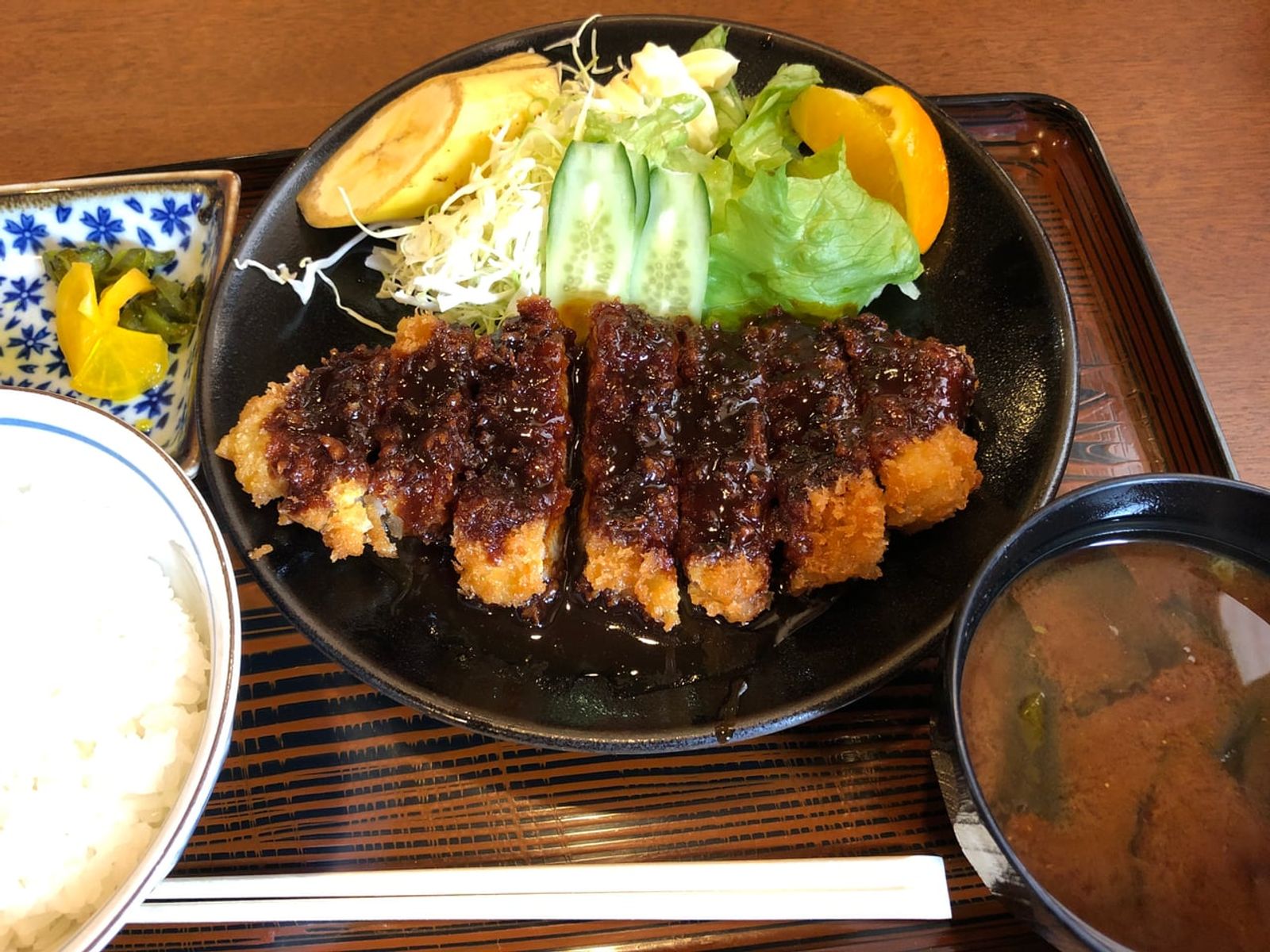
A miso katsu set meal with Hatcho miso sauce · Photo: Evelyn-rose / CC0 (Wikimedia Commons)
 JapanNagoya
Why Is Nagoya Food So Dark? Hatcho Miso, Miso Katsu and Miso Nikomi Udon
Pork cutlet drenched in thick miso sauce, udon bubbling in a clay pot: the deep reddish-brown of Nagoya cooking comes from miso made only from soybeans, above all Hatcho miso from nearby Okazaki. Here is what that miso is, the dishes built on it and how to eat them.
Mame Miso: Miso Made Only From Soybeans
Travel around Nagoya and you keep meeting food wrapped in dark brown miso sauce: pork cutlets, udon, oden, skewers. The source of that color is mame miso (soybean miso), the miso of the Tokai region centered on Aichi Prefecture. Most Japanese miso is made by mixing soybeans with koji grown on rice or barley. Mame miso uses no rice or barley koji at all; the soybeans themselves are turned entirely into koji. The result is reddish-black, with a strong salty, savory and slightly bitter taste. A scholar in the Edo period noted that people in Mikawa, today's eastern Aichi, were unusual in using red miso for their everyday miso soup. The best-known mame miso of all is Hatcho miso.
Hatcho Miso: The Miso From a Village Eight Cho From the Castle
The name Hatcho miso comes from a distance. It means the miso made in the old village of Hatcho, which lay eight cho (about 870 meters) west of Okazaki Castle in Okazaki, southeast of Nagoya. Two long-established breweries in the area still make it the traditional way. Soybeans are soaked, steamed, mashed and shaped into balls, inoculated with koji mold and left for about four days. The koji is then mixed with salt and water, packed into huge wooden vats and weighted down with piled stones, and left to age naturally for at least a year and a half to two years. The geographical indication (GI) for the name became the subject of a long dispute after an Aichi-wide cooperative was registered in 2017. In January 2025, a cooperative that includes the two Okazaki breweries was added as a producer group.
How Miso Katsu Was Born
Miso katsu is a pork cutlet topped with a sauce based on soybean miso, which each restaurant seasons in its own way with bonito stock, sugar and so on. In Nagoya the sauce tends to be thick and rich, keeping the deep color of red miso. There are several theories about its birth. The best known says it grew out of post-war food stalls where customers dipped skewered cutlets into the pot of doteni, a stew simmered in red miso. A restaurant founded in 1927 says miso katsu already existed before the war, and another theory credits a Western-style restaurant in Tsu, Mie Prefecture, with inventing it in 1965. A 1967 guidebook records a restaurant in Nagoya's Nishiki 3-chome serving pork cutlet with a Hatcho miso sauce, and by the 1970s it was widely sold in and around Nagoya. Which story is correct depends on the source.
Miso Nikomi Udon: Noodles That Are Firm on Purpose
Miso nikomi udon is udon simmered in its own small clay pot in a rich bonito broth based mainly on soybean miso, and brought to the table still bubbling. It usually contains chicken, egg, green onion, shiitake and fish cake, with ichimi or shichimi chili pepper on the side. The defining feature is the noodle. It is made from just flour and water, with no salt, so that salt from the noodles does not leach into the miso broth and make it too salty. Some old shops deliberately serve it firmer than ordinary udon, firm enough that first-timers may wonder if it is undercooked. Most origin stories trace it back to hoto from Yamanashi: one says former retainers of the Takeda clan brought it, another that women working in textile mills around Ichinomiya in the Meiji era cooked hoto-style noodles in soybean miso and the habit spread.
How to Eat Them and Where
The clay pot lid for miso nikomi udon has no steam hole. Locals use it as a small plate, scooping noodles and broth onto it to cool as they eat. Leftover broth is often finished with rice like a porridge. Firm noodles are not undercooked, so do not worry. Miso katsu usually comes with the sauce poured over the top, but some places serve skewered cutlets to dip into a pot of miso or bring the cutlet on a sizzling iron plate. Miso katsu and miso nikomi udon specialists are concentrated around Nagoya Station and in Sakae. Supermarkets in the Tokai region also stock squeeze-tube miso sauces blended for katsu, which make a handy souvenir for pouring over cutlets at home. If Hatcho miso itself interests you, you can travel from Nagoya to Okazaki and walk around the old Hatcho area where the breweries stand.