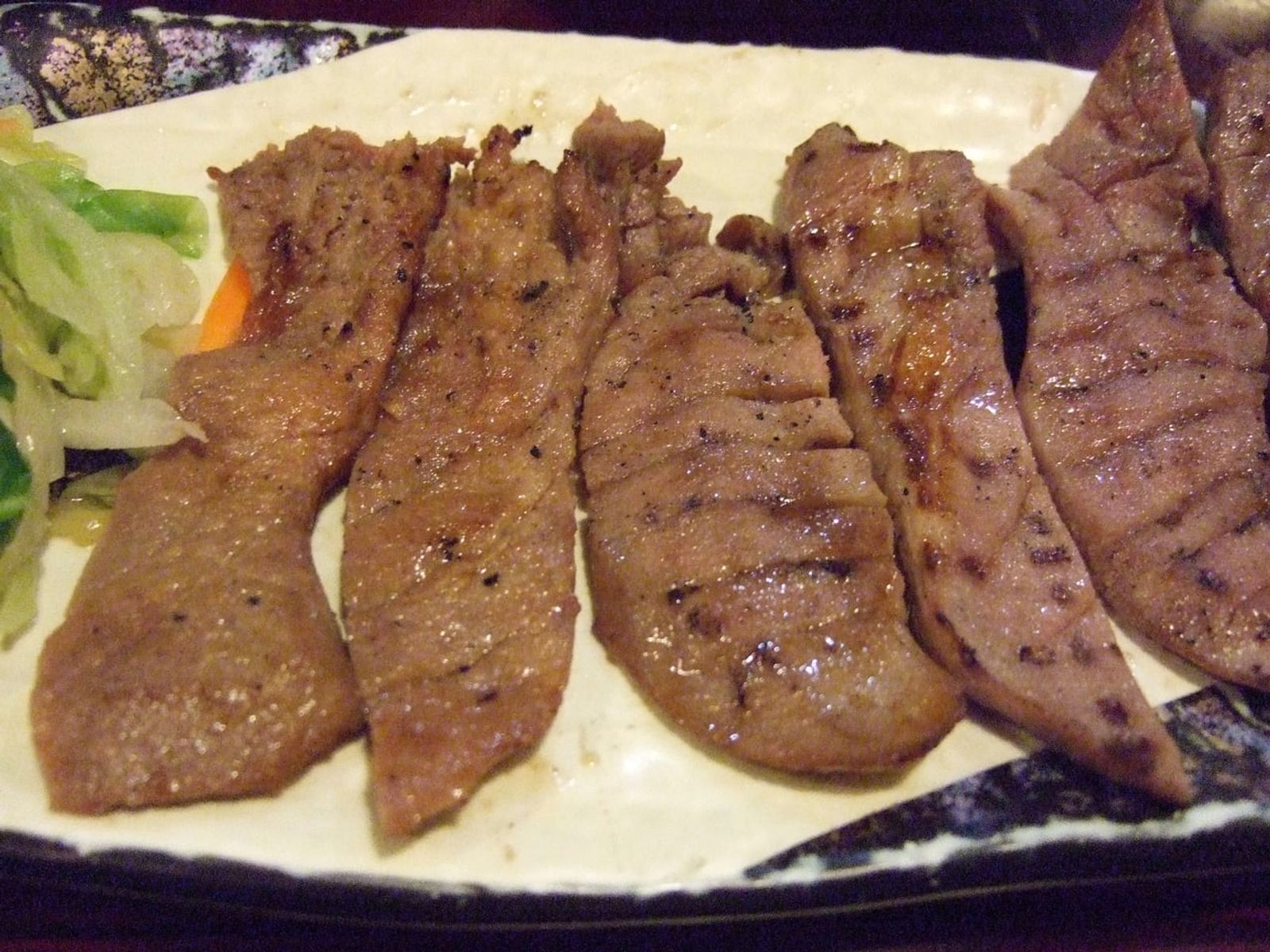
Charcoal-grilled Sendai gyutan · Photo: Sakurai Midori / CC BY-SA 3.0 (Wikimedia Commons)
 JapanSendai
Sendai Gyutan: How Charcoal-Grilled Beef Tongue Began in One Post-War Restaurant, and the Secret of the Set Meal
Thick slices of salt-seasoned beef tongue grilled over charcoal, served with barley rice, oxtail soup and miso-pickled chili: that is the Sendai gyutan set meal. Here is its history from one restaurant around 1948, where the set meal comes from, why most of the tongue is imported, and ordering tips.
Sendai Means Gyutan
Ask Japanese people to name one food that represents Sendai in Miyagi Prefecture, and many will say gyutan (牛タン), grilled beef tongue. Unlike the thin slices of tongue lightly grilled at Korean barbecue restaurants, Sendai gyutan is cut thick, scored, seasoned and rested in advance, then grilled over charcoal. The result is a springy bite that gives way cleanly, with a smoky charcoal aroma. Sendai has a huge number of gyutan specialists; the Sendai Gyutan Promotion Association counts more than 100 member restaurants. Sendai Station even has a dedicated area lined with gyutan restaurants, and gyutan is a fixture of station bento and souvenirs. It is the one food almost every visitor to Sendai ends up eating.
A History That Began in One Post-War Restaurant
The first person to serve grilled beef tongue in Sendai is said to be Sano Keishiro, a restaurant owner. Sources give two dates, 1948 and 1950: 1948 is when his restaurant opened, and 1950 is when gyutan appeared on its menu. In 1952 the restaurant moved to Inari-koji in Sendai's entertainment district and became a gyutan specialist. It took much longer for gyutan to become a local specialty rather than one restaurant's dish. Around 1980 another gyutan restaurant opened a second branch billed as a "Sendai specialty," and in 1982 the tourism divisions of Miyagi Prefecture and Sendai City, along with the chamber of commerce, reportedly asked the original restaurant to help promote grilled gyutan as a Sendai specialty. Specialists multiplied after that, turning Sendai into today's "city of gyutan."
Barley Rice, Oxtail Soup and Miso Chili: The Set Meal
Sendai gyutan is usually ordered as a "gyutan teishoku," a set meal. The classic lineup is charcoal-grilled tongue served with barley rice, a clear oxtail soup simmered for hours, miso nanban (green chili pickled in miso) and crunchy asazuke (lightly pickled vegetables). There is a history behind the combination. The pairing of barley rice, asazuke and miso nanban is said to reflect the days of food shortages and the cooking of Yamagata Prefecture, the original owner's home. When rice was precious, rice mixed with barley was natural, and the sharp miso chili cuts through the richness of the tongue. Add a soup made from oxtail, and you have the set meal as it is served today.
Salt, Aging and the Imported-Tongue Story
The standard Sendai gyutan is salt-seasoned. Some restaurants offer a sauce or miso version, but salt is overwhelmingly the most common. The seasoned tongue rests in the refrigerator for several days to let the flavor soak in before it hits the charcoal, and unlike in Korea, it is not eaten with lemon juice. The Sendai way is to enjoy the tongue's own flavor with nothing but salt and charcoal smoke. There is a surprising fact, too: most beef tongue used in Sendai is imported. Domestic tongue is scarce and expensive, so it is hardly used; most comes from the United States, Australia and New Zealand, with recent imports from France, Italy and Ireland as well. That is why gyutan specialists were hit hard by Japan's domestic BSE crisis in 2001 and the US BSE problem in 2003, and those crises led to the founding of the promotion association mentioned above.
Where to Eat It and How to Order
The cluster of gyutan restaurants inside Sendai Station is handy right after you arrive or just before you leave, so it is always busy. Many specialists are also found downtown around Ichibancho and Kokubuncho, so if the station is packed, try heading into the city. Many places have lines at lunch and dinner. Most places have you choose the amount of tongue in your set meal. Some list it as "so many slices, so many pieces," so check the quantity on the menu before choosing. Some restaurants offer extra barley rice. When eating, a bite of tongue with a little miso nanban gives a nice balance; the miso chili is quite hot, so start with just a tiny bit. Some places also serve gyutan skewers, stewed gyutan or gyutan sausages, and vacuum-packed gyutan is a popular souvenir.