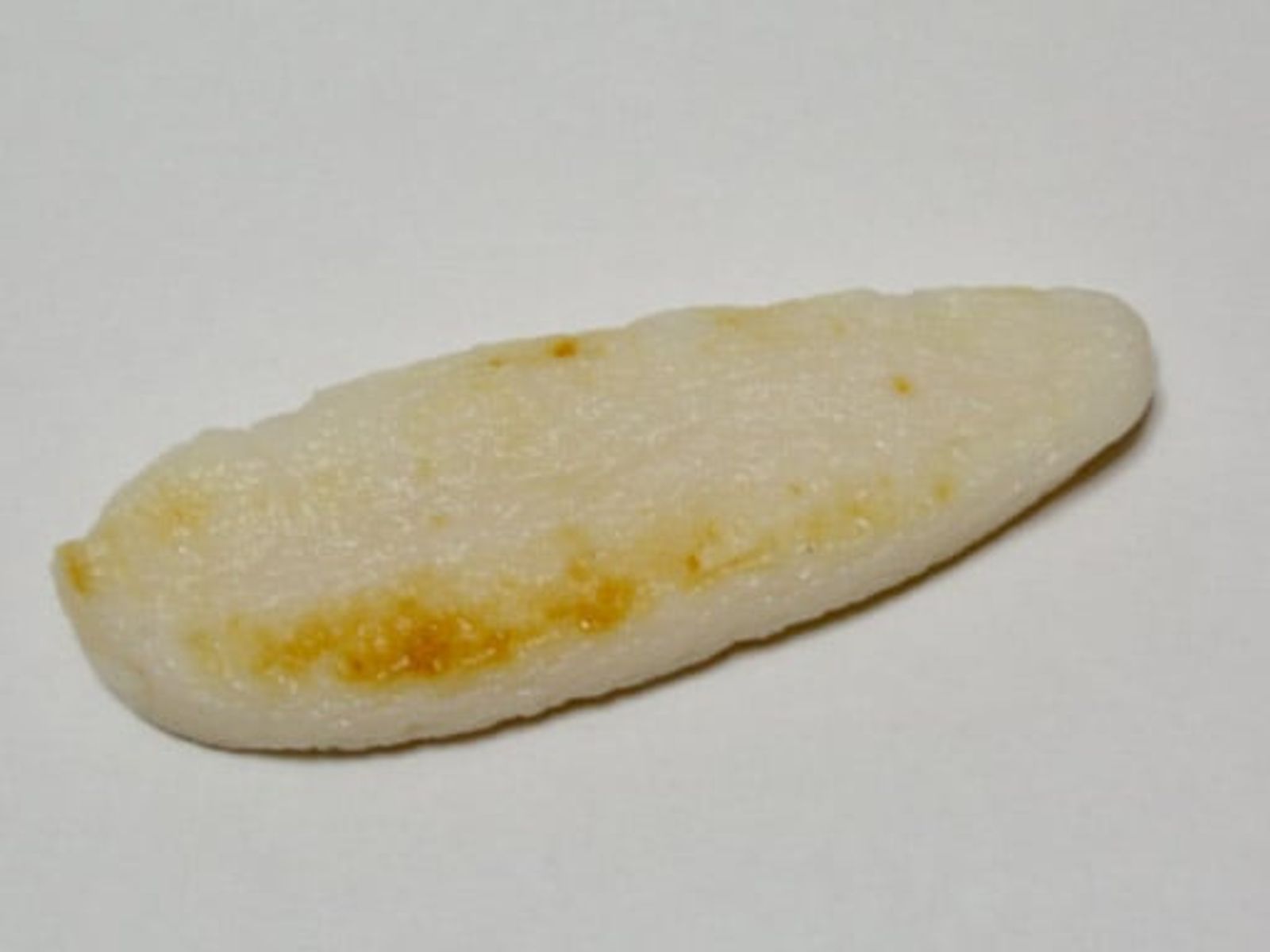
Bamboo-leaf-shaped sasa-kamaboko · Photo: SEKIUCHI / CC BY-SA 3.0 (Wikimedia Commons)
 JapanSendai
Sasakama: The Bamboo-Leaf Fish Cake Born of a Flounder Glut, Named After the Date Family Crest
Golden-grilled fish cake shaped like a bamboo leaf, sasa-kamaboko is the signature souvenir of Sendai and Miyagi. Here is how it began with a flounder glut in the Meiji era, how its name came from the Date family crest, how to enjoy it and where you can try grilling your own.
What Sasa-Kamaboko Is
Sasa-kamaboko, or sasakama for short, is a fish cake made by finely grinding white fish, kneading it with salt and other seasonings, shaping it like a bamboo leaf (sasa) and grilling it. The outside is browned to a golden, fox-fur color, while the inside is soft and springy with a clean bite. It is made from white fish such as kichiji (broadbanded thornyhead), and flavored with bonito, mirin, sake, sugar, egg white and so on. Unlike deep-fried fish cakes such as Korea's Busan eomuk, it is only grilled, so the delicate natural sweetness of the fish and a gentle toasted aroma come through. There are also versions with cheese, green onion or shellfish. It is a staple at every souvenir shop in Sendai Station and around Miyagi, and for many Japanese it is one of the first things that comes to mind as a Sendai souvenir, alongside gyutan.
It Began With a Flounder Glut
Sasa-kamaboko dates back to the Meiji era. Beach-seine fishing along the coast around Sendai reportedly caught so many fish that the surplus became a problem, since there was no way to ship them far or keep them cold. Around 1902 to 1903, flounder (hirame) were caught in huge numbers in the waters from Yuriage to Kinkasan, and fish shops turned the surplus into fish cakes; this is generally considered the origin of sasa-kamaboko. The first versions are said to have had a weak, soft texture, like fish cakes made from cod or croaker. So makers chose fresher fish, refined the seasoning, shaped the paste like a leaf, skewered it on bamboo and grilled it, a method that also made it keep better. An effort not to waste surplus fish gave birth to a local specialty.
A Name Taken From the Date Family Crest
At first the fish cake had no fixed name. It was called "konoha kamaboko" (leaf kamaboko) for its leaf shape, "tenohira kamaboko" (palm kamaboko) because it looked like a palm, or "bero kamaboko" (tongue kamaboko) because it resembled a tongue. The name stuck when a fish cake shop founded in 1935 began selling it as "Sendai specialty sasa-kamaboko." The name comes from the bamboo leaves (sasa) on the crest of the Date family, rulers of the Sendai domain, known as "bamboo and sparrows" (竹に雀). Putting a symbol of the Date family, so familiar to people in Sendai, into the name helped it become a quintessentially Sendai specialty. The name itself carries a piece of Sendai history.
"Sasakama" the Trademark, and July 7
Interestingly, the short form "sasakama" (笹かま) is a registered trademark. Only manufacturers belonging to the Miyagi Prefecture kamaboko association federation, plus one major fish cake company headquartered in Tokyo, may use it. That company began selling sasakama in 1967, and negotiations allowed Sendai's makers to use the name as well, leading to the current arrangement. In 2013, July 7 was designated "Sasakama Day." It comes from the fact that Tanabata, the star festival, is also called "Sasa no Sekku," the bamboo-leaf festival. Sendai is also famous for its Sendai Tanabata Festival in August, so streets decked in bamboo decorations and bamboo-leaf fish cakes go naturally together. If you visit Sendai in summer, try sasakama alongside the Tanabata decorations.
How to Enjoy It, and Grilling Your Own
Sasa-kamaboko is tasty straight out of the package, but warming it briefly in a toaster oven or frying pan crisps the surface again and brings back the toasted aroma. Many people dip it lightly in soy sauce and wasabi, or mayonnaise, and enjoy it with beer or local sake. Splitting it and tucking in cheese or cucumber is another easy pleasure. In places such as Sendai and Matsushima, some shops let you grill skewered sasakama paste over a fire yourself. Freshly grilled sasakama has a fluffiness that packaged ones lack, and it makes a great travel memory. When buying it as a souvenir, check the storage instructions and expiration date. Many products need refrigeration, and import rules for processed fish differ by country, so check your home country's quarantine regulations before taking it abroad.