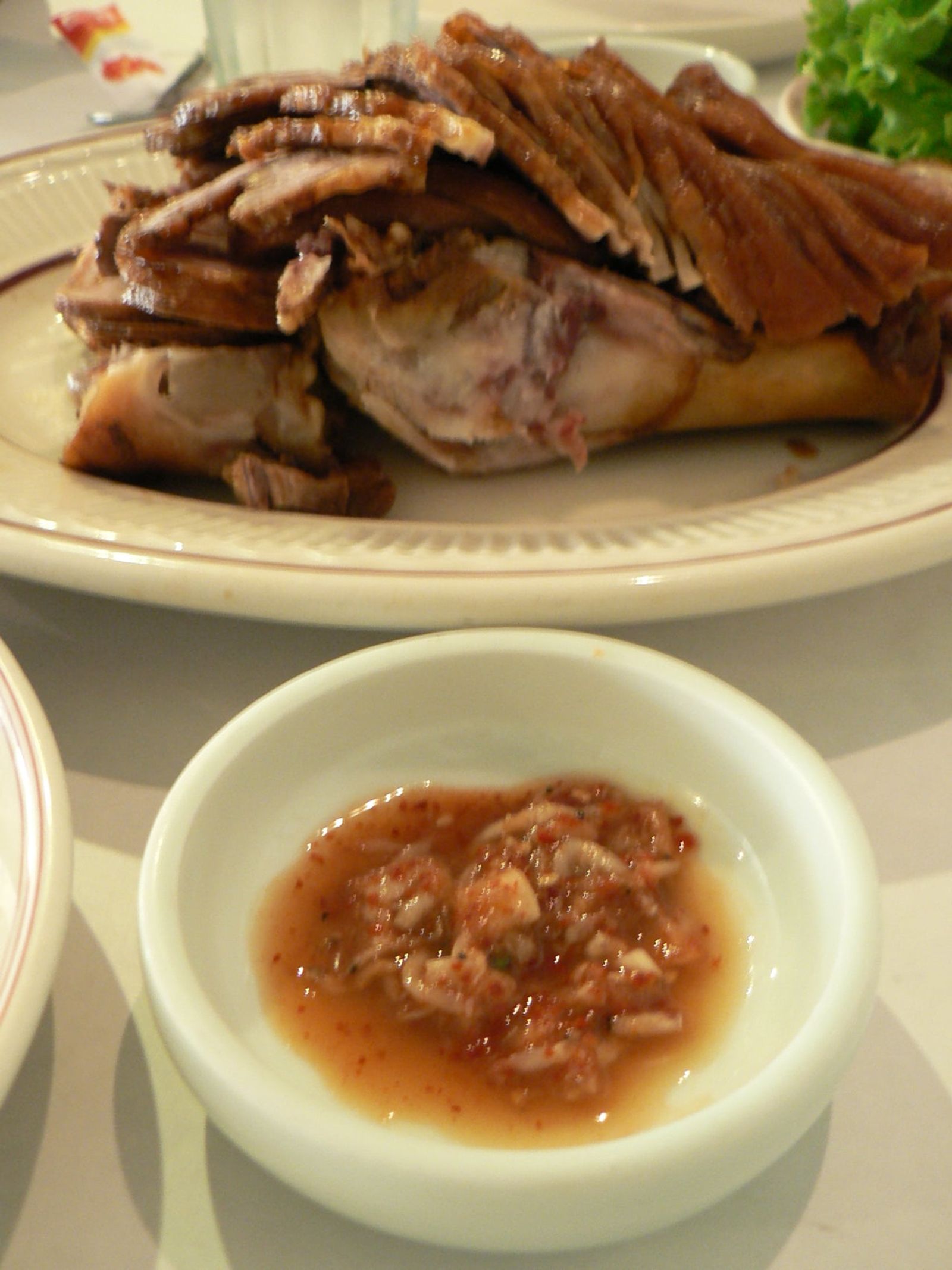
Jokbal with salted shrimp · Photo: stu_spivack / CC BY-SA 2.0 (Wikimedia Commons)
 KoreaSeoul
Jangchung-dong Jokbal: How Refugees' Home Cooking Became Seoul's Pork Trotter Street
Pork trotters braised in soy-based stock and sliced thin are one of Korea's favourite late-night foods. Here is how a jokbal street took shape in Jangchung-dong, its link to the nearby arena, and how to eat it with salted shrimp.
What Is Jokbal?
Jokbal is made by simmering pork trotters and lower legs for a long time in a stock of soy sauce, ginger, garlic and aromatics, then deboning and slicing the meat thin. The skin is chewy and the meat tender, and it tastes good even cold, which makes it a favourite for sharing over drinks or ordering in late at night. Boiled pig's feet were eaten in many regions, but Jangchung-dong in Seoul's Jung-gu is widely credited with turning jokbal into the restaurant dish Koreans know today. That is why "Jangchung-dong" still appears on jokbal shop signs all over the country. Along with Sindang-dong and its tteokbokki, it is one of the best examples of a Seoul neighbourhood name becoming practically part of a dish's name.
Home Cooking From Refugee Grandmothers
Jangchung-dong jokbal is tied to refugees who came south around the Korean War. One media outlet says that in the early 1960s, grandmothers from Pyongan and Hwanghae provinces began selling the pork trotter dish they had loved back home to make a living, and the shops that opened then laid the foundation of the street. A travel information site tells a slightly different story. It says a restaurant owner who sold bindaetteok and dumplings recalled the trotters her mother made each winter in her hometown of Gwaksan, North Pyongan, and served them as a cheap snack with drinks, and that two jokbal shops opened a year apart in a nearby building. The people and dates vary between sources, but they agree that it began as the food of refugees from the North.
A Street That Grew With the 1963 Arena
Many accounts credit the neighbouring Jangchung Arena with making the street famous across Seoul. The arena opened in 1963 and regularly hosted basketball, volleyball and the professional wrestling matches the whole country was crazy about at the time. After the matches, hungry crowds reportedly poured into the jokbal shops, which were cheap and generous with portions. Word spread, and from the late 1970s into the early 1980s more and more jokbal restaurants opened until they formed a proper street. Early Jangchung-dong jokbal was said to be closer to the salty, clean-tasting northern style built on soy sauce, and over the years it shifted toward the slightly sweet seasoning common today. Even now, when a game or concert ends at the arena, you can see people heading straight for the jokbal street.
How to Eat Jokbal
When you order jokbal, it usually arrives as a platter of sliced meat with saeujeot (salted shrimp), lettuce and other leaves, garlic, chilli and ssamjang. The most basic way is to dip a slice lightly in the salted shrimp, whose saltiness cuts the richness. You can also wrap a slice in lettuce or a perilla leaf with garlic and ssamjang. Portions are usually small, medium and large, and even a small platter is generous, so two people should start with the smallest. Skin-heavy pieces and leaner pieces come mixed together, so pick what you like. Many shops on the Jangchung-dong street also serve side dishes such as bindaetteok and green onion pancakes, so you can taste a whole spread of refugee-era food culture at one table.
Getting There and Tips
The Jangchung-dong jokbal street runs along Jangchungdan-ro in Jung-gu, across the main road and narrow alleys you reach by walking down from Jangchung Arena. The arena is close to Exit 5 of Dongguk University Station on Line 3. Seoul has designated the street a specialty food street, and the number of shops still operating varies by source, though it is smaller than it once was. Most places open from around lunchtime until late at night, but hours and closing days differ from shop to shop, and parking is difficult. Namsan, Jangchungdan Park and walking trails are nearby, so a good plan is to walk Namsan during the day and finish with jokbal in the evening. You can ask for takeaway to eat at your hotel, and leftovers taste fine cold the next day without reheating.