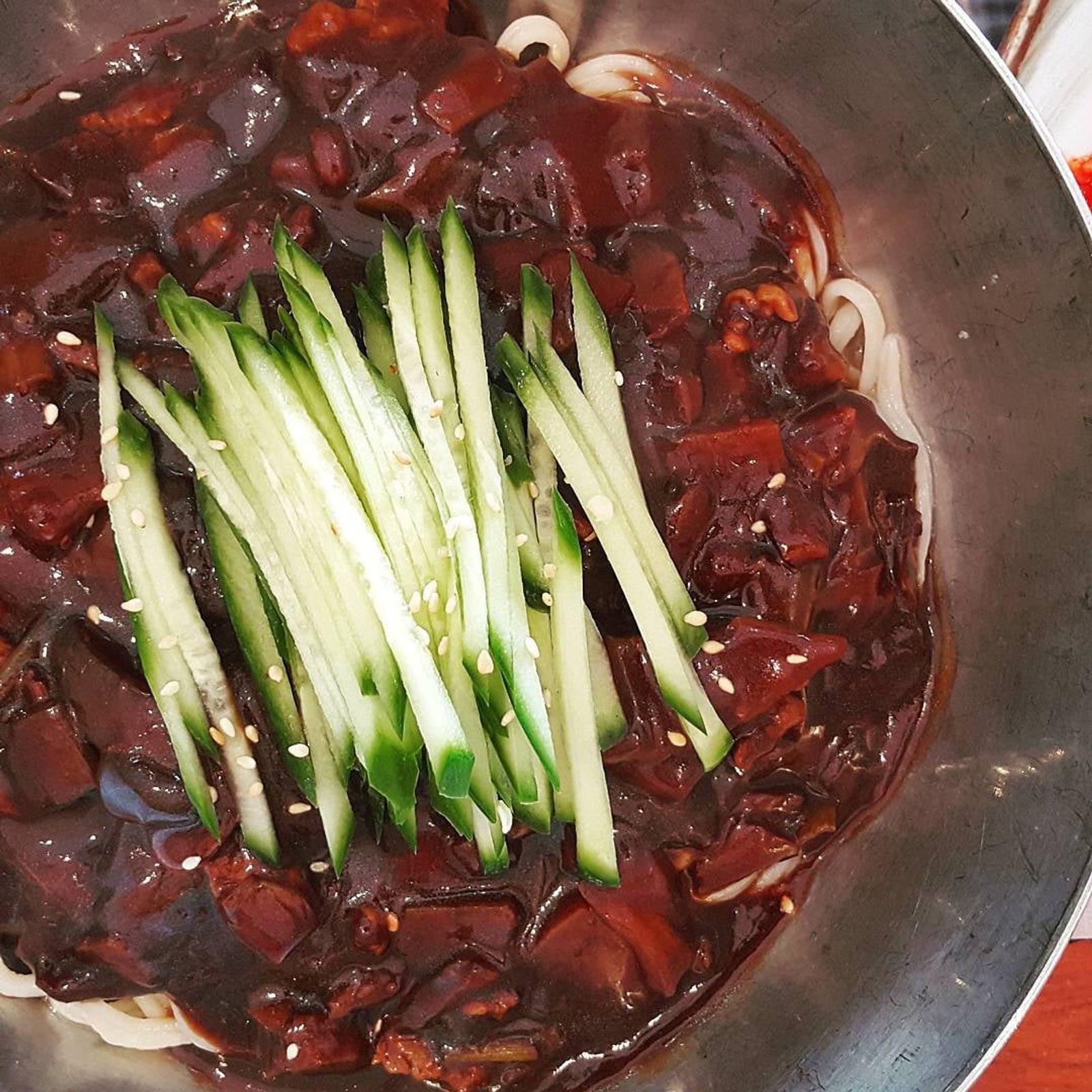
Korean-style jjajangmyeon · Photo: Debbie Tingzon / CC BY 2.0 (Wikimedia Commons)
 KoreaIncheon
Incheon Chinatown, Home of Jjajangmyeon: From Dockworkers' Noodles to a National Dish
Jjajangmyeon, the black bean noodles every Korean knows, is said to have started in Incheon after the port opened in 1883. Here is how Shandong immigrants' food became Korean jjajangmyeon, what to see at the Jajangmyeon Museum, and how to order in Chinatown.
The 1883 Port Opening and the Birth of Chinatown
Incheon became Korea's gateway to foreign trade when its port opened in 1883. The following year, the area that is now Seollin-dong in Jung-gu was designated a concession for Qing Chinese residents, and merchants and labourers from nearby Shandong across the sea arrived in large numbers, creating Chinatown. Many of these Chinese immigrants were dockworkers who hauled cargo at the port. Doing such hard work, they needed food that was cheap, quick and filling, and the noodles they had eaten back home did the job. Chinatown still has its red paifang gates, Chinese-style buildings and a Chinese school, and it is considered the best place to feel what Incheon was like in the port-opening era.
Fried Bean Paste Over Noodles
Jjajangmyeon descends from zhajiangmian (炸醬麵) of Shandong. As the characters suggest, it is bean paste (醬) fried in oil (炸) and served over noodles (麵). Chinese dockworkers in Incheon are said to have fried chunjang bean paste and tossed it with noodles, and that is generally regarded as the starting point of Korean jjajangmyeon. There is no direct record of it being sold at the docks right when the port opened in 1883, however, so sources describe the exact starting point a little differently. What is clear is that Chinese restaurants opening in Chinatown around 1905 put the dish on their menus, and it caught on with Koreans as well as the Chinese community. One of the best-known of those restaurants closed in 1983, and its building is now the Jajangmyeon Museum.
Caramel Chunjang and Onions: How It Became Korean
Jjajangmyeon became clearly different from Chinese zhajiangmian after Korea's liberation. In the mid-1950s a chunjang made with added caramel came out, giving the sauce the sweetness and glossy black colour it has today. In the 1960s cooks began adding plenty of onion and potato to keep costs down, and a government campaign promoting wheat-flour food to cut rice consumption helped drive the dish's golden age. As a result, jjajangmyeon became both a special treat for graduation days and moving days and the most common delivery food in the country. For a long time only the spelling "jajangmyeon" was officially accepted, but in 2011 the National Institute of Korean Language recognised "jjajangmyeon" as well, reflecting how people actually say it.
What to See at the Jajangmyeon Museum
In the heart of Chinatown, the Jajangmyeon Museum opened on 28 April 2012 as Korea's first museum devoted to the dish. It occupies a restored building that housed one of the Chinese restaurants opened around 1905, and it has six permanent galleries plus one for special exhibitions. The exhibits start with the lives of Chinese immigrants in the port-opening era and the birth of jjajangmyeon, then move on to a recreated 1960s Chinese restaurant kitchen and a diorama of a family eating jjajangmyeon on graduation day. It packs more than a century of everyday history into one bowl of noodles and is popular with families. Opening hours and admission may change, so check Incheon Jung-gu's official information before you go.
How to Order in Chinatown
Chinatown sits right in front of Incheon Station, the terminus of Seoul Subway Line 1, so it makes an easy day trip from Seoul. Chinese restaurants line the streets, and there is more to choose from than basic jjajangmyeon. Ganjjajang has the sauce stir-fried to order without water or starch and served on the side, so the onions stay crisp and the wok flavour comes through. Some restaurants also serve a white jjajang made without chunjang, tossing the noodles with stir-fried seasoned meat, and describe it as close to the port-era original. In a Korean-Chinese restaurant, the classic move is to share jjamppong (spicy seafood noodle soup) or tangsuyuk (sweet and sour pork) alongside your jjajangmyeon. Weekend lunch lines get long, so arrive early or see the museum and the nearby fairy-tale village first and eat a late lunch.