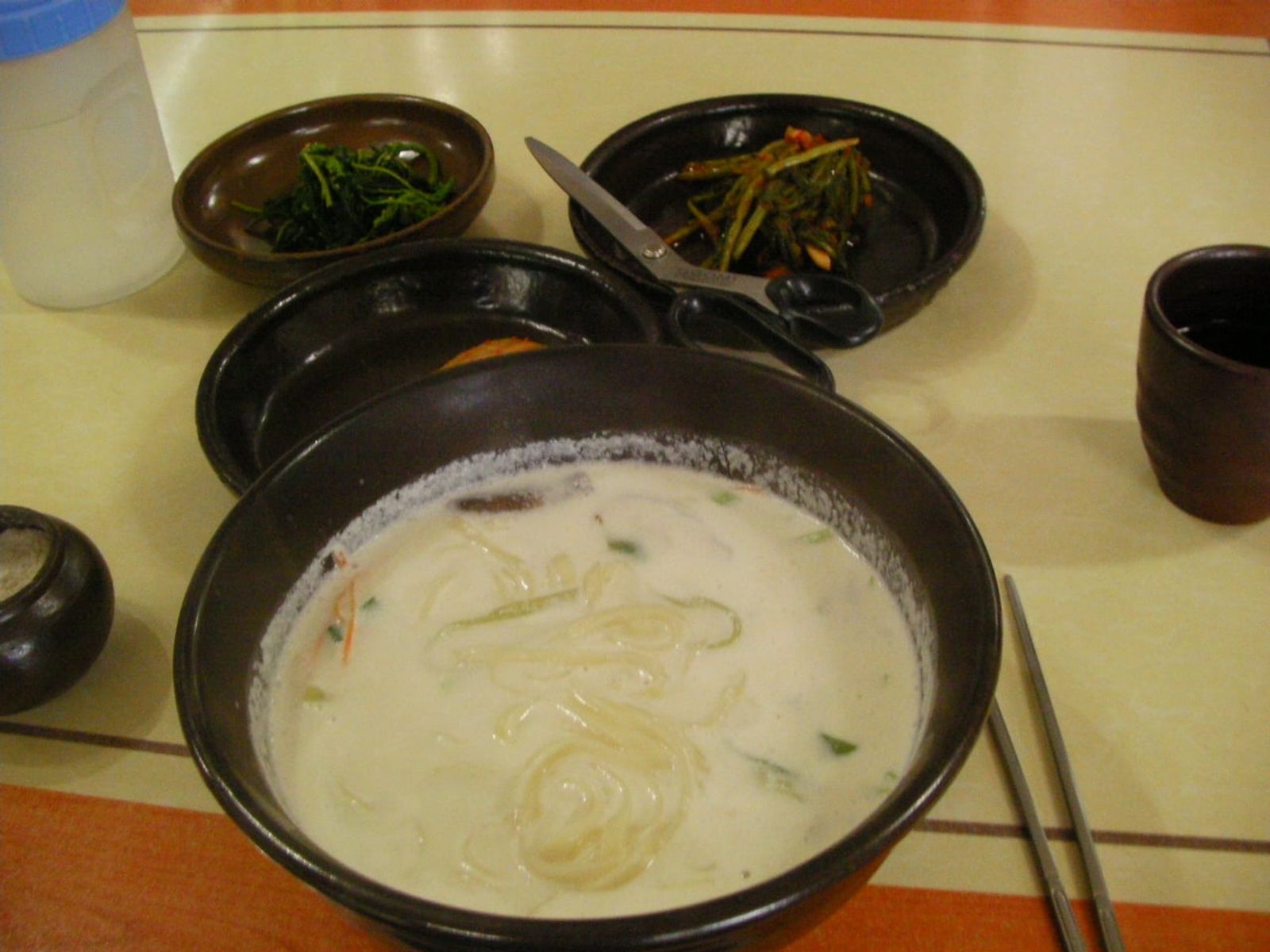
Jat-guksu in pine nut broth · Photo: pcamp / CC BY 2.0 (Wikimedia Commons)
 KoreaGyeonggi
Gapyeong Pine Nuts: Hand-Picked From 30-Metre Trees, and the Noodles and Porridge They Make
Gapyeong in Gyeonggi Province, a little over an hour from Seoul, is known as Korea's largest pine nut producer. Here is how pine nuts grow and are harvested, why Gapyeong's became famous, dishes like pine nut noodles and porridge, and how to visit the pine forest.
How Pine Nuts Grow
Pine nuts are the seeds of the Korean pine (Pinus koraiensis). It looks similar to the ordinary Korean red pine, but you can tell them apart easily: red pine needles come in bundles of two, Korean pine needles in bundles of five. Its cones are much thicker and longer than ordinary pine cones and are called jatsong-i, and between every scale sits a pine nut in a hard shell. Once the shells and inner skins are removed, a single cone yields only a small amount, so pine nuts have long been considered a precious ingredient. Korean cooking uses them whole as a garnish or finely ground to add richness to porridge, broths and sauces. A few pine nuts floating on sujeonggwa (cinnamon punch) or sikhye (rice punch) is a familiar sight.
Why Gapyeong Became Pine Nut Country
More than 80 percent of Gapyeong County is forest, and much of it is Korean pine. A 2013 report put Gapyeong's pine plantations at over 25,000 hectares and its share of national pine nut production at about 40 percent. Grown in cool, high mountain areas, Gapyeong pine nuts are praised for being large and glossy. Historical records show the connection too. The 15th-century geography in the Annals of King Sejong and the 18th-century map collection Haedong Jido are said to list pine nuts among Gapyeong's local products. Gapyeong pine nuts were registered as a geographical indication forest product by the Korea Forest Service in 2009, and in 2011 Gapyeong was designated a special pine nut industry zone, building the nut into the county's signature industry.
A Harvest Picked by Hand 30 Metres Up
One reason Gapyeong pine nuts are prized is the way they are harvested. The cones grow near the tops of Korean pines that are more than 30 years old and 25 to 35 metres tall, and they are said to be harvested only by people who climb the trees and pick the cones by hand. Shaking them down by machine is difficult, so skilled hands are essential. The harvest takes place in autumn. The cones are dried and threshed to collect the nuts in their shells, which are then cracked to pick out the kernels. All this handwork is why pine nuts cost more than most other nuts by weight. In Gapyeong you can buy both pijat, still in the shell, and baekjat, already shelled.
Jat-guksu, Jatjuk and Other Gapyeong Pine Nut Dishes
Gapyeong's signature pine nut dish is jat-guksu, noodles in a milky broth made from finely ground pine nuts. It is described as distinctive because ground pine nuts go not only into the broth but also into the noodle dough. It looks a bit like kongguksu (cold soybean noodles) but is richer and nuttier, and it is especially popular cold in summer. It is said to have been created about 30 years ago by a restaurant owner in Gapyeong. Jatjuk, porridge made by grinding pine nuts with rice, is smooth and nutty and has long been considered a restorative food for when you feel run-down. Gapyeong also makes makgeolli with pine nuts, and many travellers pair their jat-guksu with a bottle. Pine nut tofu, jelly and snacks are popular souvenirs as well.
Visiting the Pine Forest and Buying Tips
To experience pine nut country first-hand, walk the Jat Hyanggi Pureun Forest on the slopes of Chungnyeongsan (in Sang-myeon and Jojong-myeon). At 450 to 600 metres above sea level, about 50,000 Korean pines make it the largest such forest in Korea. It was planted in the early 1930s as a seed orchard to produce high-quality seeds and opened to the public in 2014. Trails range from a children's course to an adult course of just over 4 km, and it is closed on Mondays. When buying pine nuts, shops run by local cooperatives or pine nut processors, and products with the geographical indication mark, are reliable choices. Pine nuts are high in oil and go rancid if left at room temperature for long, so seal them and keep them in the fridge or freezer once home. Gapyeong is reachable from Seoul on the Gyeongchun Line subway or the ITX-Cheongchun train, making it a popular day trip combined with Nami Island and Jaraseom.