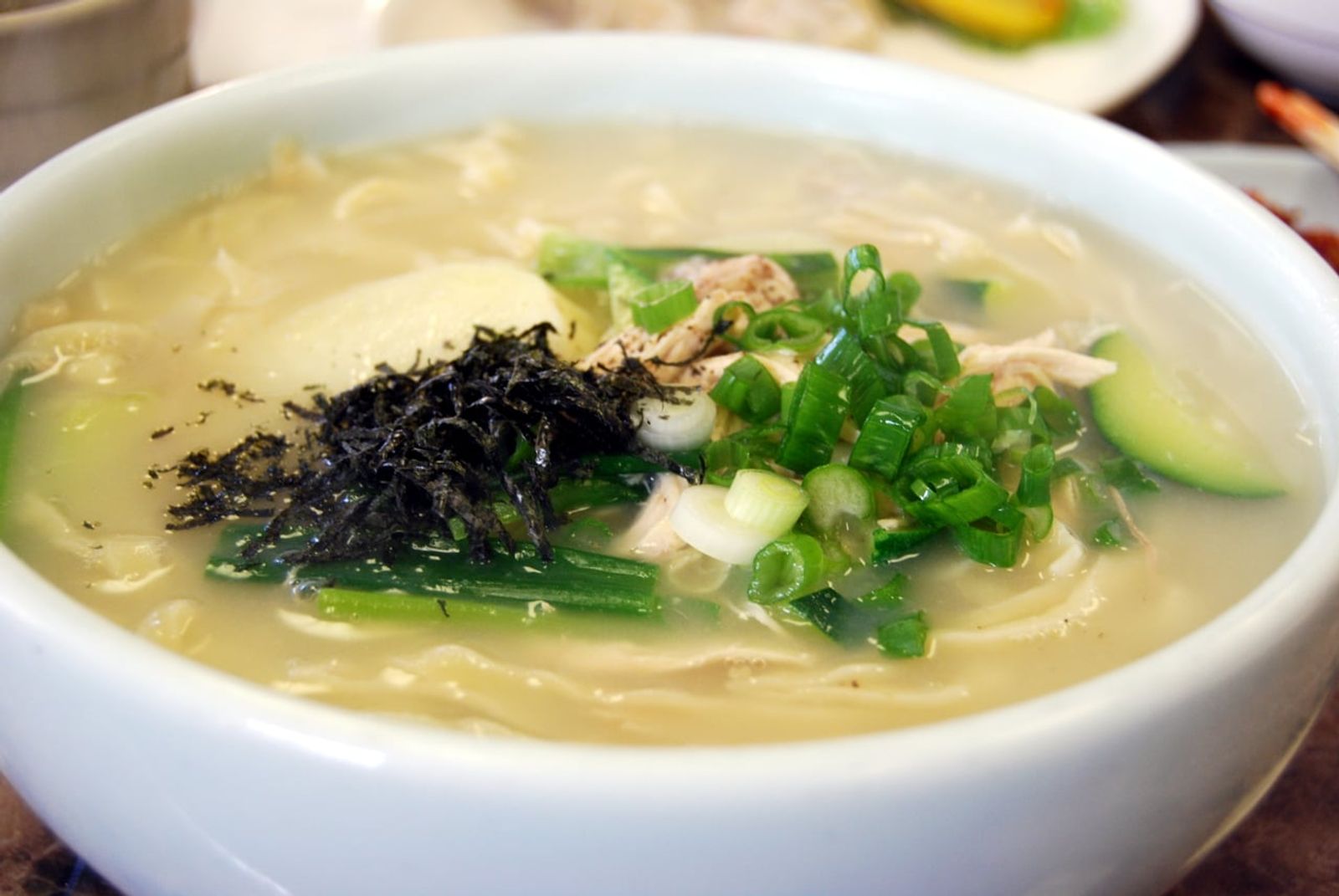
A hot bowl of kalguksu · Photo: by jslander / CC BY 2.0 (Wikimedia Commons)
 KoreaDaejeon
Daejeon Kalguksu: How Railways and Aid Flour Made the "City of Knife-Cut Noodles"
Daejeon is said to have more kalguksu restaurants per person than any other major Korean city, and in 2026 the city named kalguksu one of its official "Tastes of Daejeon". Here is how a railway city became a noodle city, the history of the dish, and how to choose among its many styles.
Why Daejeon Is the "City of Kalguksu"
Kalguksu is a noodle soup made by rolling out wheat dough, cutting it into noodles with a knife and boiling them in broth. It is eaten all over Korea, but Daejeon's love of it shows in the numbers. A piece citing data from December 2023 puts the number of kalguksu specialty restaurants in Daejeon at 727, or 5.0 per 10,000 residents, the highest among Korea's seven major metropolitan cities. A 2013 survey by Jung-gu district alone counted more than 570. On 14 April 2026, after a survey involving 4,314 residents, the city named bread, kalguksu and dubu duruchigi its three official "Tastes of Daejeon". It was the first complete overhaul since the city chose its "Six Flavours of Daejeon" in 2000, and it made kalguksu officially one of the city's signature foods.
A Railway City and Aid Flour
Railways and flour are the most commonly cited reasons Daejeon has so much kalguksu. The city grew as a rail hub where the Gyeongbu and Honam lines split, and after the Korean War large quantities of aid flour from the United States and elsewhere are said to have arrived at Daejeon Station by train. A former mayor explained that a depot for distributing aid wheat across the country was located at the station and many flour mills sprang up nearby, and that explanation is now accepted almost as settled fact. There is also a story that in the 1960s and 70s, labourers on projects such as land reclamation along the west coast, who were paid in flour instead of wages, resold it around Daejeon Station. Add a government campaign promoting flour-based food to cut rice consumption, and cheap, filling kalguksu quickly became everyday food.
Kalguksu Was Once a Summer Dish
Today kalguksu is eaten year-round, but it was not always so. When wheat was scarce, kalguksu was a seasonal dish eaten only around the sixth lunar month, when wheat was harvested, and it was closer to a summer food: noodles rinsed in cold water with a clear broth poured over. The modern method of cutting rolled dough with a knife is said to first appear in a 1934 cookbook, Ganpyeon Joseon Yori Jebeop. Kalguksu became a year-round everyday food only after aid flour spread widely following the Korean War. That Daejeon, which is not a wheat-growing region, became famous for it is tied to the flour distribution of exactly that period. An official at the Daejeon Jung-gu Cultural Center has said that kalguksu holds the history of a city that grew up with the railways, and the diversity of a place where people from Chungcheong, Yeongnam and Honam mixed.
The Many Kinds of Daejeon Kalguksu
The biggest appeal of Daejeon kalguksu is its variety. There are said to be more than 20 kinds: meat kalguksu in a rich beef bone or meat broth, refreshing versions made with clams and seafood, spicy eolkeuni kalguksu with chilli powder, nutty perilla seed kalguksu, red bean kalguksu, eojuk kalguksu made with freshwater fish and more. Even within one type, the broth and noodles differ from place to place, so much so that every Daejeon local seems to have a favourite spot of their own. Part of the Daejeon way is choosing side dishes too. People often order suyuk (boiled pork or beef), jokbal, dumplings or gimbap to share, and some mix kalguksu noodles into the sauce left from spicy small octopus or dubu duruchigi. Eolkeuni kalguksu is fairly spicy, so if you are sensitive to heat, start with a clear broth.
Where to Eat and When to Go
Long-established kalguksu restaurants cluster in the old downtown that runs from Daejeon Station along Jungang-ro to Eunhaeng-dong and Daeheung-dong. Get off at Daejeon Station, walk the old downtown, have kalguksu for lunch, tour bakeries in the afternoon and eat dubu duruchigi for dinner, and you can taste all three "Tastes of Daejeon" in a single day. Kalguksu places get especially busy at lunch, and some close early, so aim to arrive around 11 a.m. Jung-gu has held kalguksu-themed festivals since 2017, and a noodle festival took place at the Expo Hanbit Tower plaza in November 2025. Festival dates change every year, so check announcements from the city and Jung-gu district office. A bowl of kalguksu is generous, so if you want to try several places, share with companions or go easy on the side dishes.