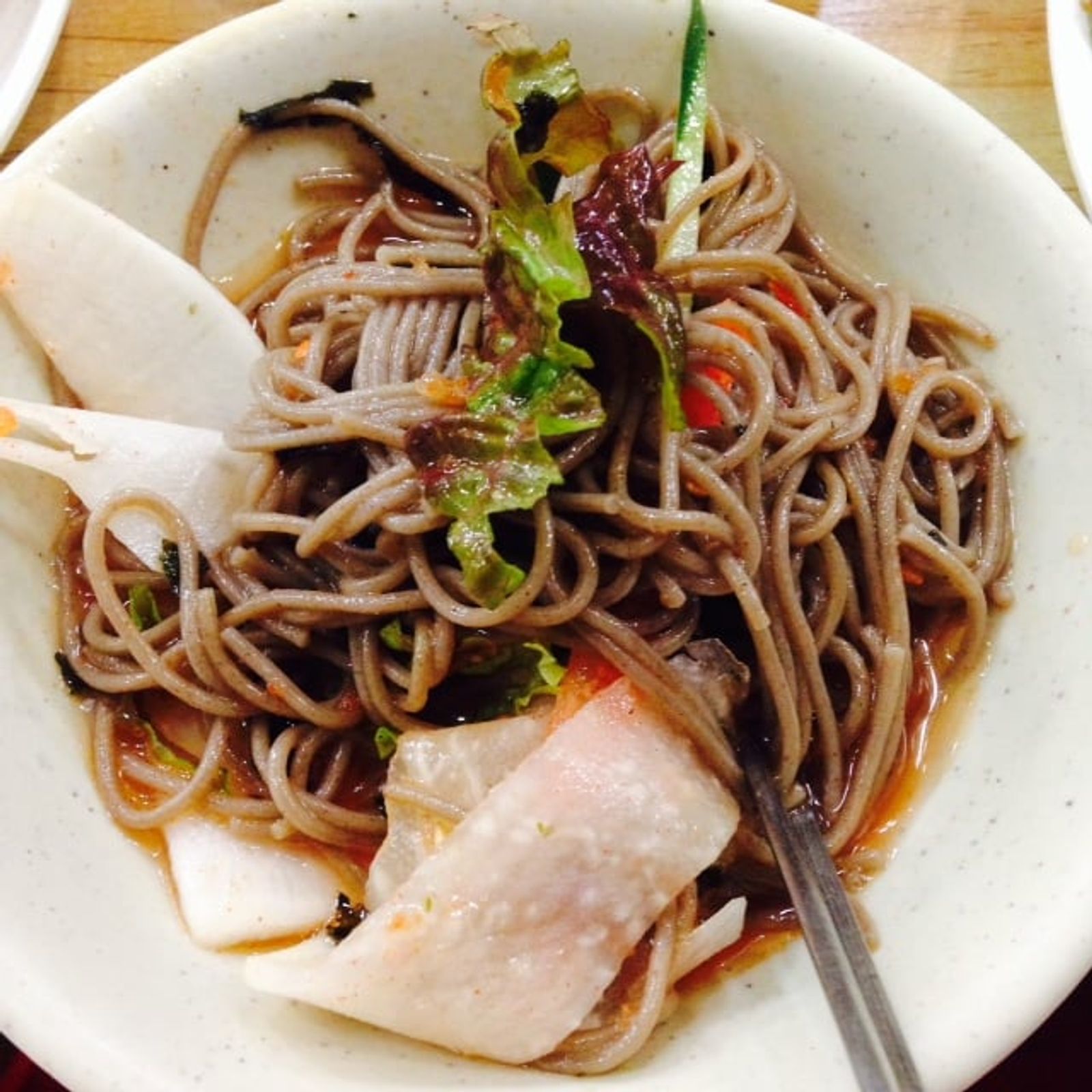
Makguksu in Chuncheon · Photo: Db9023 / CC BY-SA 3.0 (Wikimedia Commons)
 KoreaGangwon
Chuncheon Makguksu: Gangwon's Buckwheat Noodles, Where You Decide How Much Broth
Makguksu is buckwheat noodles served in cold kimchi juice or broth, a Gangwon specialty. Here is how buckwheat and Gangwon go together, how the dish became Chuncheon's go-to meal out after the Soyang Dam opened, and the local way of pouring the broth yourself.
Noodles Made "Just Like That"?
Makguksu is a dish of noodles made from buckwheat flour, boiled, rinsed in cold water and served in kimchi juice or broth. It is considered a local specialty of Gangwon Province, especially Chuncheon. Toppings include kimchi, cucumber, a boiled egg, crumbled seaweed and sesame, and many restaurants add a dollop of spicy sauce. The name is usually explained as "noodles made just like that and eaten just like that," or simply "roughly made noodles." In other words, this was not fine dining but everyday food that families could make at home and eat right away. Part of its charm is a rustic quality: the buckwheat is often ground with some of the hull, giving darker noodles that break easily in the mouth.
Buckwheat, Gangwon and Where Makguksu Came From
Buckwheat grows well even in cool, poor soil, so buckwheat noodles developed in mountainous Gangwon and in the northern provinces of Hamgyeong and Pyeongan. Buckwheat is thought to have been grown in Korea since before the fifth century. There are several stories about how makguksu began. One says the government encouraged buckwheat farming during the famines that followed the Japanese invasions of the 1590s. Another traces it to the buckwheat dough soup eaten by slash-and-burn farmers in the mountains. The earliest known printed use of the word makguksu is a newspaper article from 1934. It was originally a late-night snack for winter evenings, and people only began eating it year-round from the 1970s.
Soyang Dam, the Gyeongchun Line and a Chuncheon Staple
Tourism had a lot to do with makguksu becoming Chuncheon's signature dish. After the Soyang River multipurpose dam was completed in 1973, the dam and its lake were developed as a tourist area, and more and more visitors arrived from Seoul and the capital region by rail lines such as the Gyeongchun Line. As they made a habit of eating makguksu in Chuncheon, it settled in as the city's go-to meal out. Makguksu restaurants are still everywhere, downtown, along the road to Soyang Dam and on the outskirts of the city. Other towns across Gangwon have well-known makguksu restaurants of their own. Since 1996, Chuncheon City and a local broadcaster have run a Dakgalbi and Makguksu Festival.
Soupy or Mixed: Eating It the Gangwon Way
In much of Korea you order soupy or mixed makguksu separately, but many places in Gangwon do not bother with the distinction. Your noodles arrive topped with sauce, with a jug of cold broth on the side: pour in a little and it is bibim (mixed) makguksu, pour in a lot and it is mul (soupy) makguksu. Plenty of people mix the noodles with the sauce for a few bites first, then add broth and finish it as a soup. If vinegar, mustard and sugar are on the table, add them to taste. Pure buckwheat dough breaks apart easily, so wheat flour is often mixed in, and one common description puts the ratio at about seven parts buckwheat to three parts wheat. The buckwheat content varies by restaurant, so if you want a strong buckwheat flavor, it is fine to ask how much is used.
Ordering Tips and Where to Try It
If you are in a group, consider jaengban makguksu: noodles for two or three people heaped on a large platter with generous toppings of vegetables and meat, all mixed together. Many makguksu restaurants also serve boiled pork (suyuk) or potato pancakes, so order one on the side if noodles alone will not fill you up. In Chuncheon, finishing a dakgalbi meal with a bowl of makguksu to cleanse the palate is a popular combination. You can find makguksu all over downtown Chuncheon, and many people seek out long-running restaurants near Soyang Dam or on the outskirts of the city. The Gyeongchun Line subway and ITX trains make Chuncheon an easy day trip from Seoul, which is why tasting dakgalbi and makguksu together is such a popular food itinerary. Buckwheat is harvested in autumn, so autumn and winter are a nice time to try noodles made from the new crop.