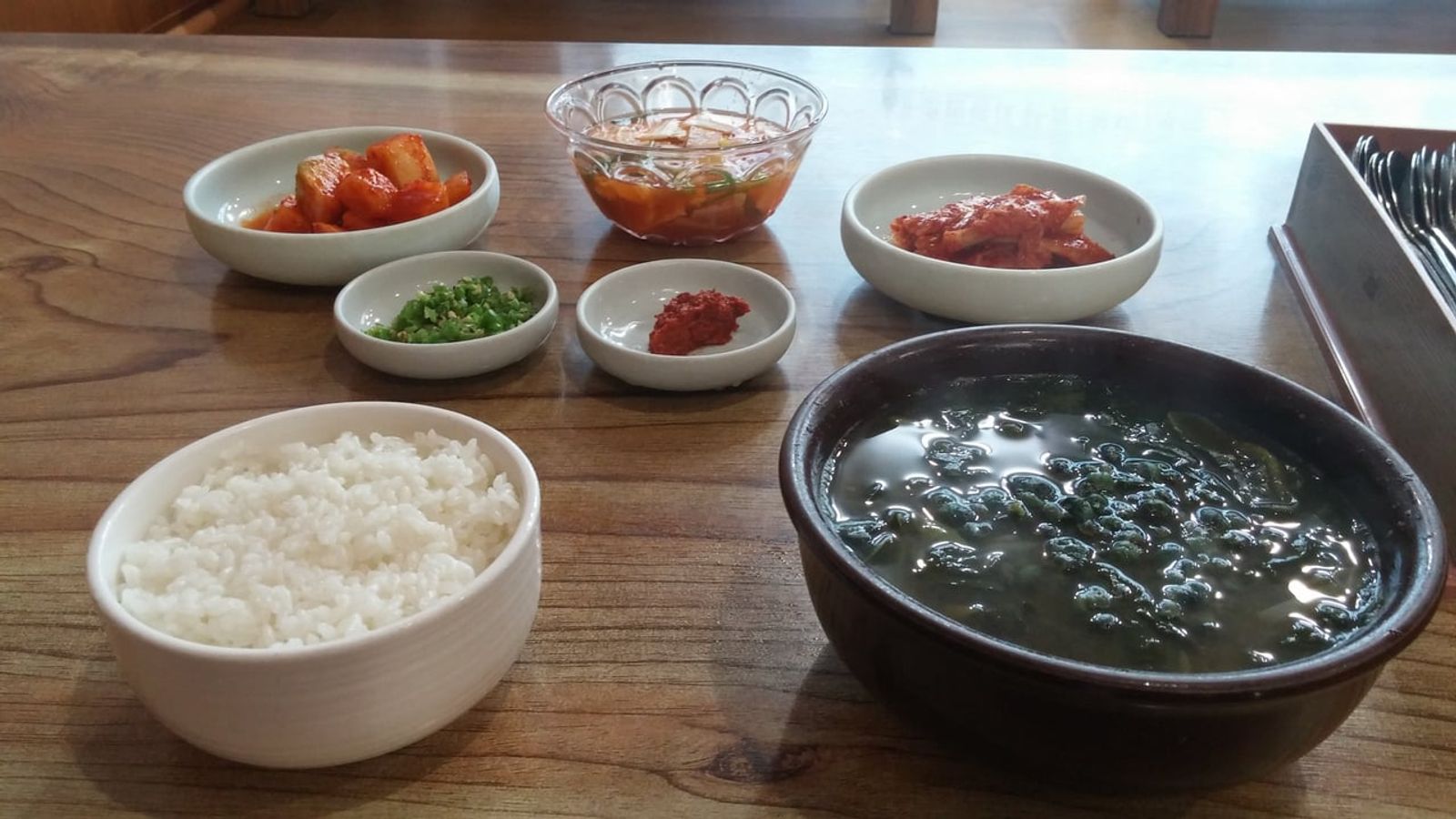
A table set with freshwater snail soup · Photo: Jocelyndurrey / CC BY-SA 4.0 (Wikimedia Commons)
 KoreaNorth Chungcheong
Olgaengi-guk: Chungcheong's Freshwater Snail Soup With Doenjang and Mallow
If you see an olgaengi-guk sign in North Chungcheong, think freshwater snail soup with doenjang. Here are the snail's many regional names, the Chungcheong-style broth made with doenjang and mallow, the olgaengi soup street in Goesan and the best season to eat it.
Olgaengi Is Chungcheong for Freshwater Snail
Olgaengi is the Chungcheong word for daseulgi, the small freshwater snail that clings to the beds of rivers and streams. It is called olgaengi or olbaengi in Chungcheong, godi in North Gyeongsang and daesari in Jeolla. The standard Korean word is daseulgi, but for people in North Chungcheong, only olgaengi really brings the taste to mind. North Chungcheong is the one province of Korea with no coastline, so freshwater ingredients from its clear rivers were an important source of protein, and these snails were easy to gather along the riverbanks in summer. You can still see people collecting them at places like Chungju Lake and the Namhan River. Boil the snails, pick out the meat and make a soup with it, and you have olgaengi-guk.
Doenjang and Mallow: The Chungcheong-Style Broth
Doenjang (Korean soybean paste) is what makes or breaks olgaengi-guk. It is dissolved in the bluish-green water the snails were boiled in, then vegetables such as mallow or garlic chives go in with the snail meat. Boiling the snails tints the broth a pale green, so this soup has an unusual color for a doenjang soup and a flavor that is slightly bitter yet refreshing. The recipe varies by region. In Chungcheong, snails are added to a doenjang soup with mallow and the result is called olgaengi-guk, while in Gyeongsang people are commonly said to prefer godi-tang, thickened with ground perilla seeds. Many places in North Chungcheong sell it as olgaengi haejangguk, "olgaengi hangover soup," because the clean, cooling broth is especially loved the morning after a night of drinking.
The Olgaengi Soup Street in Goesan
One of the best-known places for olgaengi-guk in North Chungcheong is Goesan. In the center of Goesan-eup, near the intercity bus terminal, a cluster of olgaengi soup restaurants has earned the area the nickname Olgaengi-guk Street. It is listed in Korea Tourism Organization travel information, and several restaurants have kept the tradition going for many years. The restaurants here take pride in making their own doenjang. Most use soybean paste aged at least three years, and some reportedly use paste aged eight years. The longer it ages, the deeper and more savory it becomes, softening the slight bitterness of the snails. Some places coat the snail meat in flour and egg before adding it to keep it plump and springy, so it is fun to compare how the broth and toppings differ from one restaurant to the next.
When It Tastes Best
Freshwater snails are gathered in larger numbers once the rivers warm up, but sources differ on the exact peak season. Some name May and June, while others put the gathering season from summer into autumn. The restaurants on Goesan's olgaengi street say the soup is at its best in autumn, because that is when mallow tastes best. That does not mean you cannot eat it at other times. Most restaurants keep cleaned snails in store and serve olgaengi-guk all year round, as a warming bowl in winter and as a restorative meal in summer. If you want to try gathering snails in a river yourself, check the water depth and current and look for signs about restricted areas. Some rivers limit snail gathering to protect the population.
Ordering Tips and Where to Try It
If the menu says olgaengi-guk, olgaengi haejangguk, daseulgi-guk or daseulgi haejangguk, they are all the same family of dishes. It usually comes as a set with a bowl of rice and side dishes, which makes it a good breakfast or lunch. Taste the broth on its own first, then add your rice; the snail meat is tiny, so it is easiest to eat it by the spoonful along with the broth. Some restaurants also offer side dishes such as seasoned snails or snail pancakes. Besides the soup street in Goesan-eup, you can easily find olgaengi-guk across North Chungcheong wherever the Namhan River and the Dalcheon Stream flow, including Chungju, Danyang and Jecheon. Goesan pairs well with mountain and valley trips such as the Sanmagi Old Trail and Hwayang Gugok, and every late autumn the Goesan Kimjang Festival offers a taste of the region's autumn food all in one place.