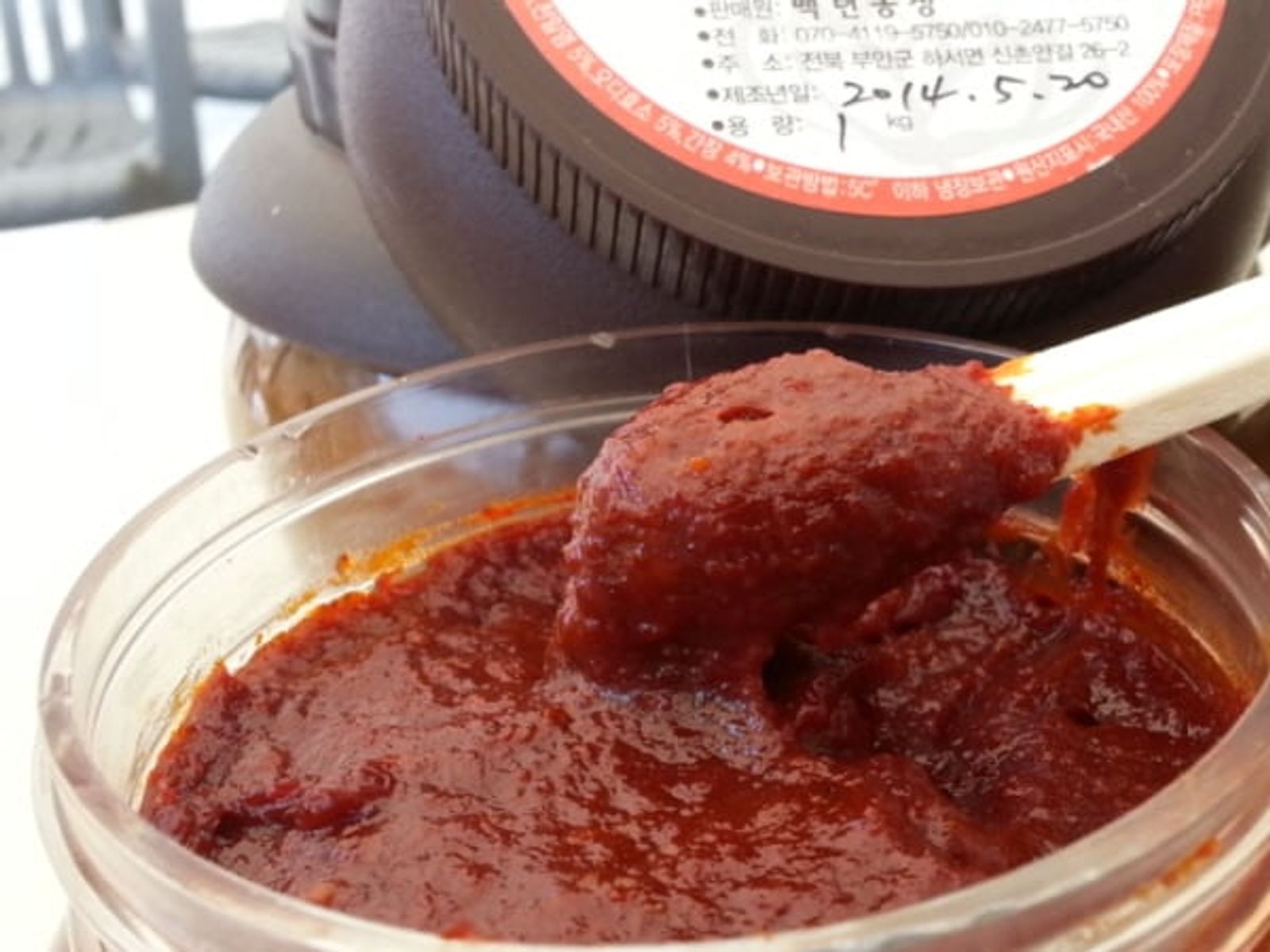
Gochujang · Photo: 온맘으로 / CC BY 4.0 (Wikimedia Commons)
 KoreaNorth Jeolla
Sunchang Gochujang: From a Royal Legend to King Yeongjo's Favorite, How One County Became Synonymous With Chili Paste
For Koreans, gochujang means Sunchang in North Jeolla. Here is the legend of King Taejo tasting it, Sunchang gochujang in Joseon-era writings, the water and climate behind it, and the traditional gochujang village and fermented sauce festival where its makers gather.
What Gochujang Is, and Why Sunchang
Gochujang is a red, spicy fermented paste made by mixing rice or barley, rice-cake flour or thick porridge with fermented soybean powder (meju), chili powder and salt. Its character comes not just from heat but from the sweetness of the grain and the savory depth of the soybeans, and it turns up all over Korean cooking, from bibimbap and tteokbokki to stews, seasoned vegetables and dipping sauces. Many regions make gochujang, but the place name Koreans associate with it first is Sunchang in North Jeolla, so much so that "Sunchang gochujang" is almost a byword for the paste itself. Sunchang is a small county in the south of the province, yet with its legends, old written records and a village of artisans who still make sauces today, it is a special stop for travelers curious about Korea's fermented sauce culture.
The Legend of Yi Seong-gye and Manilsa Temple
Sunchang gochujang comes with a famous legend involving Yi Seong-gye, King Taejo, founder of the Joseon dynasty. At the end of the Goryeo period, he was on his way to Manilsa Temple in Sunchang to visit his teacher, the monk Muhak, who was praying there for ten thousand days. He stopped at a farmhouse for lunch and could not forget the taste of the paste served with it, so after becoming king he had it sent to the palace as tribute. The food in the story is said to have been chosi, the forerunner of Sunchang gochujang. This is a legend handed down through generations, not something confirmed by historical records. Chili peppers are understood to have arrived and spread on the Korean peninsula well after the end of Goryeo, so it was likely a different paste from the spicy gochujang we know, and the tale is best enjoyed as a story. Even so, it captures Sunchang's long-held pride as a county known for its sauces.
Sunchang Gochujang in Joseon-Era Writings
Unlike the legend, Sunchang gochujang left its name in several late Joseon texts. The earliest is usually said to be Somun saseol by Yi Si-pil (1657–1724), which reportedly describes a way of making Sunchang gochujang distinct from other regions. Gyuhap chongseo calls gochujang a specialty of Sunchang and records the method, ingredients and quantities in detail, and Ojuyeonmun jangjeon sango notes that the gochujang of Sunchang and Cheonan was famous throughout the country. The Diaries of the Royal Secretariat (Seungjeongwon ilgi) contain an intriguing entry, too. A record from the 30th year of King Yeongjo's reign says the king preferred the gochujang made by the family of Jo Jong-bu, an official of the Office of the Inspector-General, to that of the royal pharmacy. Because Jo Jong-bu is known to have belonged to the Sunchang Jo clan, this is thought to have been Sunchang gochujang, though interpretations differ.
Water and Climate Behind the Flavor
When people explain the taste of Sunchang gochujang, they often list five factors: the meju, the timing of the batch, the ingredients, fermentation and natural conditions, and they call the last one the most important. Sunchang has long been known for its excellent water, once called a county of "jade streams." Its climate is also described as ideal for fermentation, with an average annual temperature of 12.4°C, humidity of 72.8 percent and around 77 foggy days a year. There is even a saying that when Sunchang people make gochujang in Seoul, it never tastes quite right, and locals believe the flavor comes not just from human hands but from the land and the air. Today large food companies also run gochujang factories in Sunchang, making it a home of fermented sauces where traditional family producers and modern plants operate side by side.
The Traditional Gochujang Village and the Sauce Festival
The heart of a Sunchang visit is the Sunchang Traditional Gochujang Folk Village in Sunchang-eup. The county created it in 1997 to revive the traditional sauce industry, gathering gochujang artisans who had been scattered around the area into one place. So rather than an old village where families have always lived, it is a themed village of renowned sauce-making households. It started with 54 households, and 32 remained as of a 2024 report. Rows of earthenware sauce jars outside every house are a sight in themselves, and you can taste and buy not only gochujang but doenjang, soy sauce and vegetables pickled in gochujang. The Sunchang Fermented Sauce Festival, devoted to jang, had been held for 19 years as of 2024, and during the festival you can try hands-on sauce-making and all kinds of sauce-based dishes. When buying gochujang, sample before you choose, since heat, sweetness and aging time vary from house to house. Sauces are heavy, and many shops offer parcel delivery, so ask if luggage space is a concern.