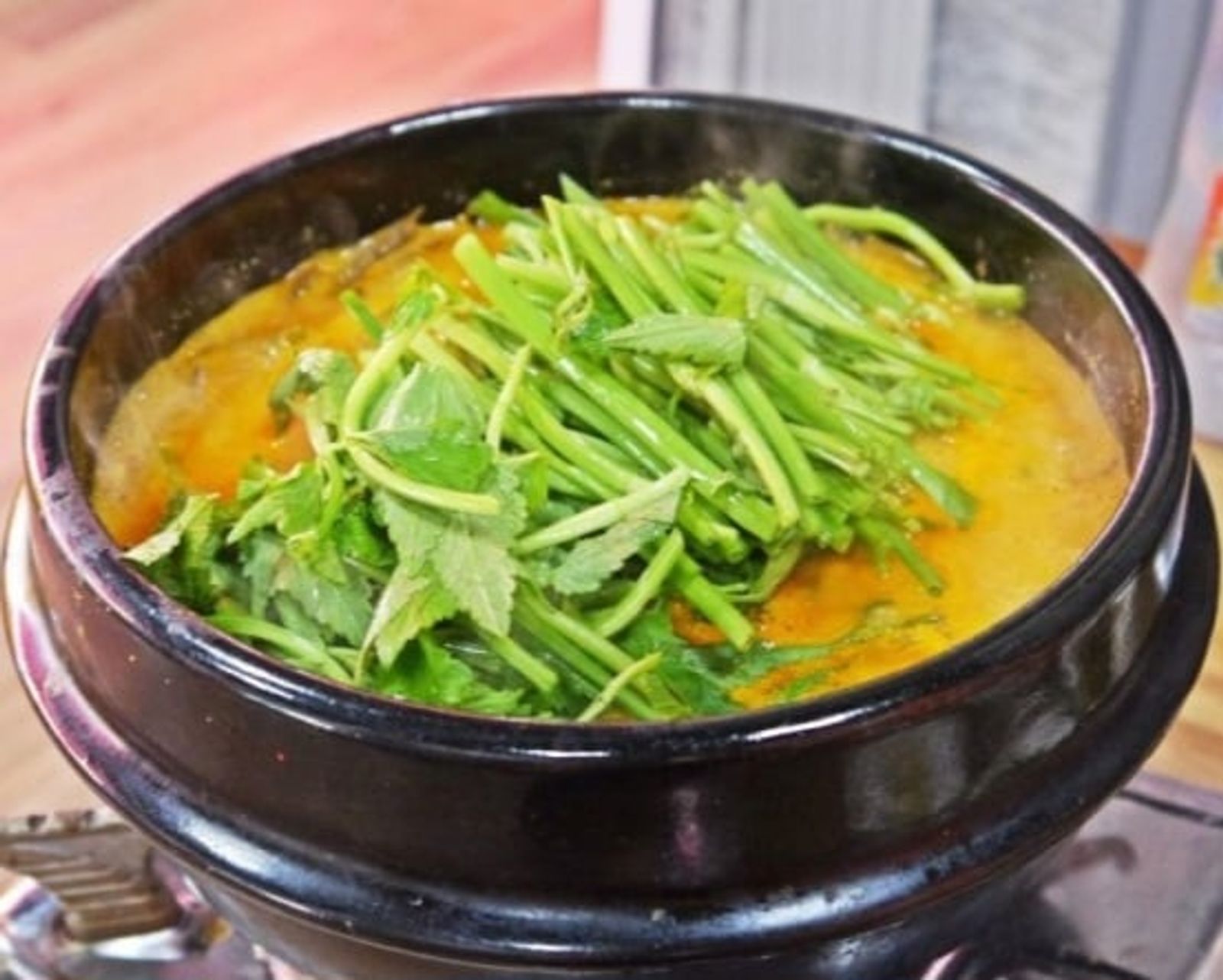
Gwangju-style duck soup topped with water parsley · Photo: 동네부기 / CC BY-SA 2.0 kr (Wikimedia Commons)
 KoreaGwangju
How to Eat Gwangju Duck Soup: Perilla Broth, Water Parsley and a Tangy Dip
Gwangju's duck soup is known for its thick broth loaded with ground perilla seed and a mountain of water parsley. Here is how the duck soup alley came to be, what gives the broth its flavor, how to eat it with parsley and a perilla-chili dip, and tips for ordering.
A Dish Gwangju Calls Its Own
Oritang is duck chopped into pieces and simmered with vegetables. It is eaten in Gyeonggi and South Jeolla too, but it is best known as a local dish of Gwangju. In 2003 the city chose duck soup as one of the "Five Flavors of Gwangju," alongside hanjeongsik, Mudeungsan barley rice, Songjeong tteokgalbi and Gwangju kimchi, and it is also among the "Seven Flavors of Gwangju" chosen around 2019. Some people picture duck soup as a clear broth, but Gwangju style is different. It is thick and nutty with lots of ground perilla seed stirred in, and it comes topped with a heap of water parsley (minari). First-timers are often surprised by how much green covers the pot, and that parsley is the key to enjoying the dish.
A Duck Soup Alley Born Near the Terminals
The place that comes to mind first for Gwangju duck soup is the Yudong Duck Soup Street, which spans Yu-dong and Sinan-dong in Buk-gu. According to Gwangju local cultural archives, people here began cooking duck soup in the 1970s. In the 1970s and 1980s the area was close to the Gwangju Express Bus Terminal, the Jungang Express Bus Terminal and Gwangju Station, so lots of people passed through, and nearly 30 duck soup restaurants are said to have opened. In 2020 the city designated it a specialty street for duck dishes. Some sources describe around 20 shops operating today. As for why duck soup took off in Gwangju, there are explanations such as the growth of large-scale duck farming in Jeolla in the 1960s and 70s, and a story about a duck farmer from Naju who expanded into Gwangju, but none of this is confirmed by solid records.
The Secret of the Thick Broth: Perilla
Local archives say Gwangju duck soup began as wild mallard simmered with water parsley and ground perilla seed. Restaurants today usually build the broth by simmering chopped duck for a long time with doenjang (soybean paste), chili, ground perilla, garlic and ginger. One travel outlet describes simmering it for more than four hours, and some shops pride themselves on grinding their own perilla seed for the broth. Perilla softens duck's characteristic gaminess and makes the broth nutty and thick. With doenjang and chili added, it tastes both spicy and hearty, so first-timers often fall for the broth before the meat. It is thick enough to be filling with rice stirred in, and it suits chilly weather especially well.
Blanch the Parsley, Dip It in Perilla Chojang
Once the soup starts to boil, take a handful of the parsley on top and swish it in the broth like shabu-shabu. Cook it too long and it loses its crunch and fragrance, so pull it out as soon as it wilts. Some places let you order extra parsley, so ask if you run low. The dipping sauce is part of the fun too. You mix ground perilla seed and chojang (vinegared gochujang) from the table on your own small plate; one suggested ratio is about 1 part perilla to 1.5 parts chojang. Dip the parsley and duck meat in this tangy, sweet and nutty sauce, and enjoy the broth by the spoonful separately. Some people finish by adding rice to the leftover broth after the meat and parsley are gone.
Ordering and Travel Tips
Duck soup is a hot-pot style dish cooked in a large pot and shared, so it is best to go with others. Portions and settings differ by restaurant, so tell them how many of you there are and ask what size they recommend. The broth is rich with perilla and doenjang, so if you are worried about spice, mention it when you order. Yudong Duck Soup Street is in the northern part of central Gwangju, near Gwangju Station, so it is easy to fit into a city sightseeing day. Among the Seven Flavors of Gwangju, Songjeong tteokgalbi is around Gwangju Songjeong Station and lettuce-wrapped twigim around Chungjang-ro, so you can spread them out along your route. With its hot, rich broth, it is especially good in cold weather.