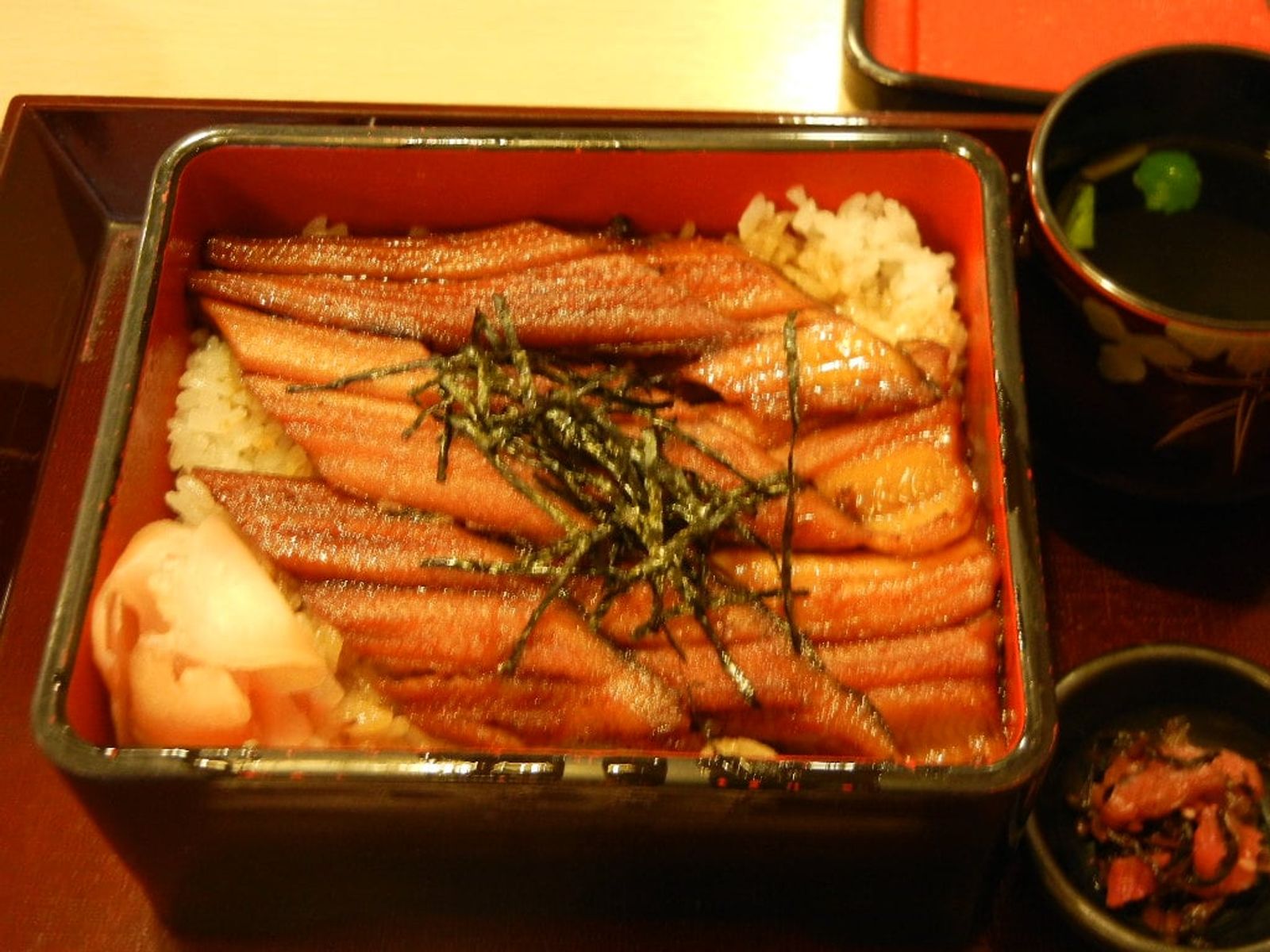
Anagomeshi on Miyajima · Photo: NY066 / CC BY-SA 3.0 (Wikimedia Commons)
 JapanHiroshima
Miyajima Anagomeshi: The Conger Eel Rice That Began as a Station Bento
Alongside oysters, Miyajima’s signature dish is anagomeshi: rice covered with conger eel grilled in a sweet-savory glaze. Here is why Seto Inland Sea conger was so prized, how the dish was born as a station bento in 1901, and how and where to eat it.
Miyajima’s Other Signature Dish
Anagomeshi is conger eel (anago) cleaned, brushed with a sweet-savory glaze and grilled, then laid tightly over rice cooked with the sauce. It is a local dish that began at Miyajimaguchi in Hiroshima Prefecture and is sometimes introduced, together with oysters, as one of "Miyajima’s two great foods." It looks like unagi (freshwater eel) rice, but it tastes much lighter and cleaner. Miyajima is the island home of Itsukushima Shrine, famous for its great torii gate standing in the sea, and Miyajimaguchi is the mainland gateway where you catch the ferry across. So anagomeshi became a meal for pilgrims and tourists to eat before boarding the ferry or after touring the island. Today it is known nationwide as one of Hiroshima’s signature specialties.
Conger Raised by the Fast Seto Currents
Conger eel has been plentiful and popular in the waters around Miyajima since long ago. This stretch has some of the faster currents in the Seto Inland Sea, so the conger here is said to have excellent flavor and tenderness and to fatten well, and it was prized as "Seto anago." The Geihan Tsushi, a gazetteer of the Hiroshima domain compiled in 1825 during the Edo period, lists conger alongside rockfish and sillago, noting that they "are all caught around this island and taste fine." Conger is caught with longlines or traps. Its peak seasons are mid-January and summer, and mid-January conger is said to be the very best. It is also a fish rich in vitamin A.
Born as a Station Bento in 1901
The story told of its origin goes like this. In the mid-Meiji era, a merchant who dealt in rice on Miyajima opened a teahouse on the approach road in front of Miyajimaguchi Station. Inspired by the conger rice bowls eaten by local fishermen, he devised a soy-flavored rice cooked in broth made from conger bones and heads, and it won praise for its depth of flavor. When the Sanyo Railway’s Miyajima Station (today’s JR Miyajimaguchi Station) opened in 1897, he decided to sell boxed meals at the station. In 1901, four years after the line opened, he launched "anagomeshi," soy-flavored rice packed with conger on top, as an ekiben, a station bento. This is known as the start of anagomeshi. In the Showa 30s (1955–1964), dozens of sightseeing and school-trip buses crowded into Miyajimaguchi and it became famous as a "bus bento," and after NHK broadcast the scene, other shops reportedly began selling anagomeshi too.
How It Differs From Unagi, and How to Eat It
Anagomeshi is made much like unagi. The conger is split along the back, the bones, head, tail and fins are removed, and it is skewered and first grilled plain, then grilled again while being brushed repeatedly with a sweet-savory glaze of reduced sugar, soy sauce, mirin and sake until it shines. It is cut into pieces about 3 cm long and laid over rice cooked with a little of the sauce. In some areas shops serve "ni-anago," simmered in the sauce instead of grilled. Conger is less fatty than unagi, so it tastes fresher and the flesh flakes softly. Take a big spoonful together with the sauce-soaked rice to really taste the conger’s savory richness. Many places serve pickled ginger on the side, which is good for refreshing your palate between bites. The sweetness of the sauce and the grilling vary from shop to shop, so comparing them is part of the fun.
Where to Eat It and Where to Buy It
As of 2017 there were 4 shops serving anagomeshi in Miyajimaguchi and 12 on Miyajima island, and each tastes a little different. You can eat at a shop on the Miyajimaguchi side, where the ferry terminal is, before boarding, or choose one while strolling the island’s shopping streets. Some serve it in a bowl like a donburi, others in a lacquered box. Buying it as a bento to carry around is also very much in the spirit of anagomeshi. The original bento has been sold not only at Miyajimaguchi Station but also at places such as Hiroshima Station, so some travelers buy one before boarding the shinkansen and eat it on the train. Some shops get long lines at lunchtime, so heading out a little early is a good idea.