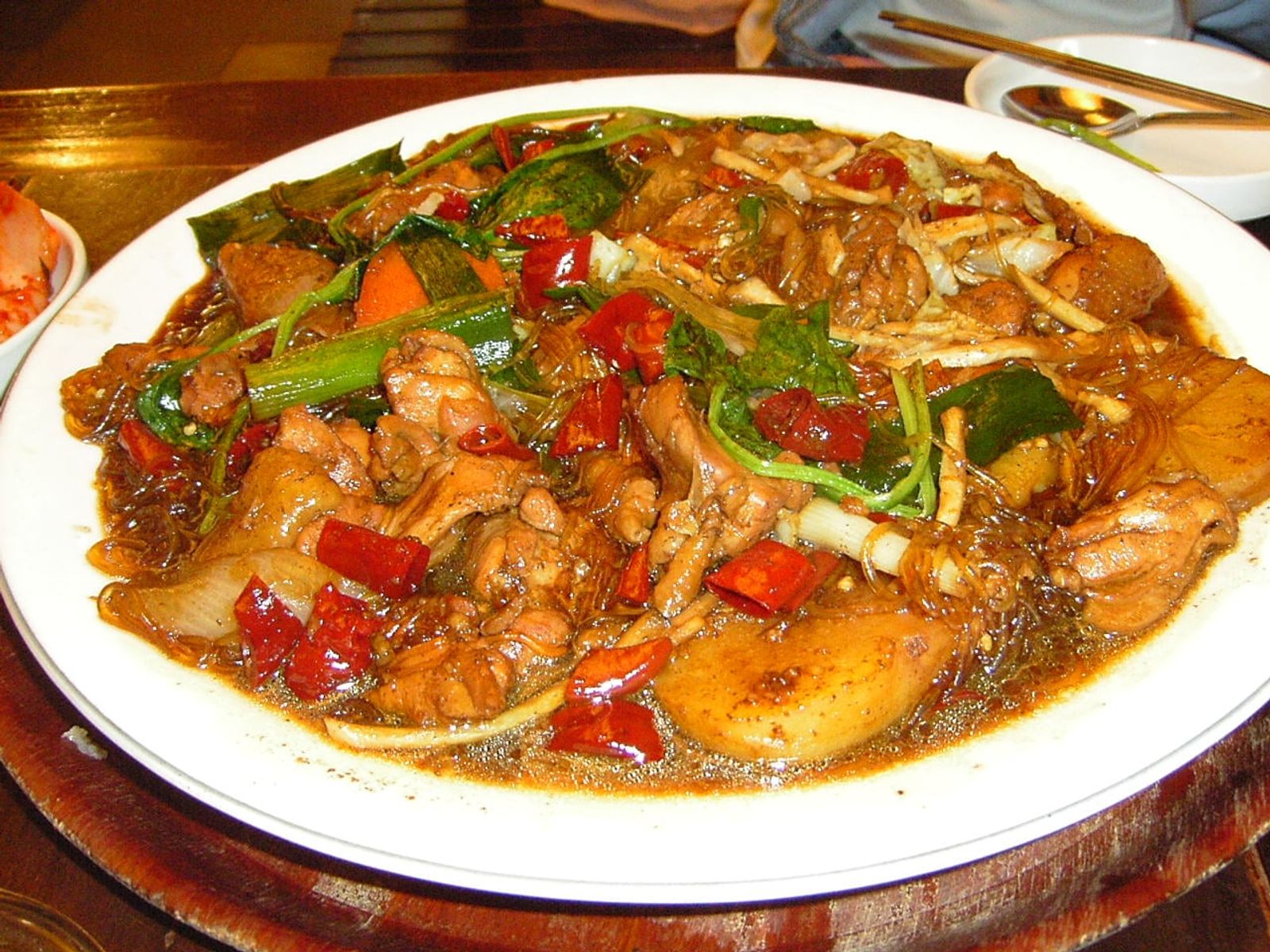
Andong jjimdak · Photo: takoradee / CC BY-SA 3.0 (Wikimedia Commons)
 KoreaNorth Gyeongsang
How Old Is Andong Jjimdak? From a Market Chicken Alley to a National Favorite
Its name evokes Andong, the old heartland of Korea's scholar-aristocrats, but Andong jjimdak is a fairly young dish born in Andong's old market in the 1980s. Here is how fried chicken became garlic chicken and then jjimdak, how it spread nationwide via Seoul, and how to enjoy it in Andong.
Ancient Aristocratic Dish or Modern Invention?
Andong is famous for Hahoe Village and its Confucian academies, so it is easy to assume Andong jjimdak is an old aristocratic recipe. Several origin stories do circulate. One says people living inside the old city walls, the "an-dongne" or inner neighborhood, steamed chicken on special days and called it "an-dongne jjimdak." Another says a restaurant in the chicken alley of Andong's old market kept adding whatever ingredients regulars asked for in the 1970s and 80s. A third says the alley's merchants invented it to compete with the spread of Western-style fried chicken shops. Most sources lean toward the last two: a modern dish created by market traders. It is undeniably an Andong dish, but it is not an ancient one.
From Fried Chicken to Garlic Chicken to Jjimdak
According to local records, in the early 1970s Andong Market (today's Old Market) had a "tongdak golmok," or whole-chicken alley, where five shops sold raw chicken and also fried whole birds. They doubled as makgeolli bars, and regulars included soldiers from the nearby base, taxi drivers and laborers, along with young couples coming from a cinema close by. In the late 1970s garlic chicken appeared, loaded with garlic to cut the greasiness, and became a treat for picnics and birthdays. Jjimdak followed in the 1980s as a more generous dish, and by the late 1980s glass noodles, potatoes and carrots had been added, giving it its present form. One chicken could feed several people and work as both a drinking snack and a side dish, which helped it catch on.
Going National by Way of Seoul
Andong jjimdak became known nationwide around 2000. A businessman from Andong opened a jjimdak restaurant in Seoul, and it reportedly took off after appearing on a TV program in 2001. In the aftermath of the Asian financial crisis, people looking to start a business opened jjimdak shops one after another, so many brands of "Andong jjimdak" appeared across the country and some grew into franchises. The interesting part is that the boom came back home. Folklore researchers note that a dish that was not especially famous even in Andong was validated in the Seoul area, spread nationwide, and then transformed the chicken alley in Andong itself. They also suggest that people see it as a traditional dish because Andong's image as the home of the yangban aristocracy has been layered onto the food.
What Goes In and What It Tastes Like
Andong jjimdak is chopped chicken braised in a sauce built mainly on soy sauce and mullyeot, a Korean rice or corn syrup. Potatoes, carrots, onions, green onions, garlic and shiitake mushrooms go in along with wide glass noodles, and Cheongyang chilies or dried red peppers add heat. Each bite is sweet, salty and then sharply spicy at the finish. A little sauce is left at the bottom, and many people mix it into their rice. There are regional twists. In Daegu, Gumi and Gyeongsan you will also find redder, hotter versions made with gochujang or chili powder, and cheese-topped jjimdak is now common for younger diners. If you want to taste the original, start with the plain, dark soy sauce version.
Tips for Eating It in Andong
In Andong, the best-known place for jjimdak is the jjimdak alley in Andong Old Market in the old town center. True to its roots as the old chicken alley, it is lined with jjimdak restaurants and has become a sight in its own right. Jjimdak is usually ordered by the whole chicken, and the portion is generous enough that two or three people often share one. Whether half portions are offered or the spice level can be adjusted varies by restaurant, so if you are sensitive to heat, ask for it less spicy when ordering. The glass noodles soak up sauce and go soft quickly, so fish them out first, then finish by mixing a bowl of rice into the leftover sauce. It is also worth pairing your visit with other Andong foods such as salted mackerel (gangodeungeo) or heotjesatbap.