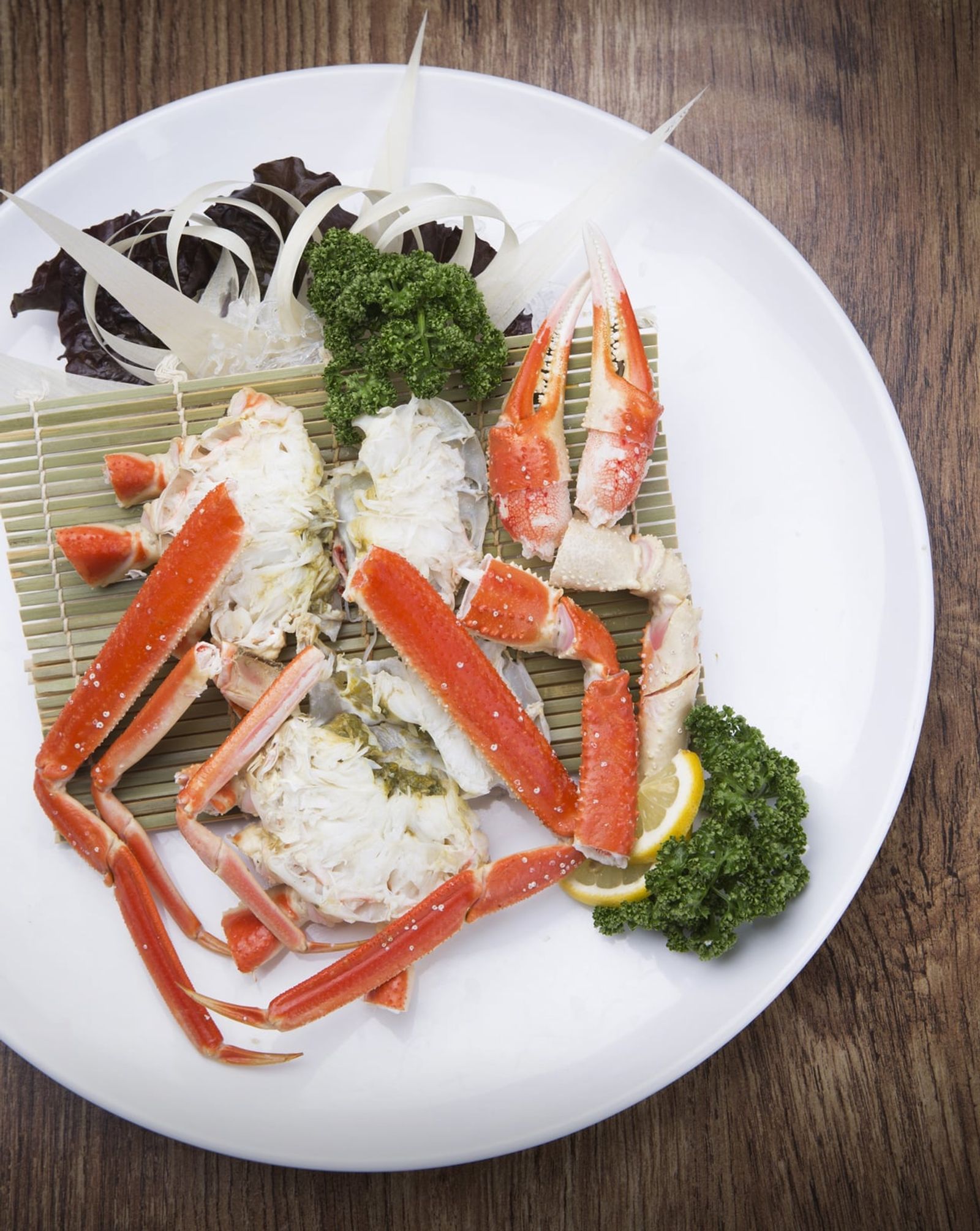
Steamed snow crab · Photo: leejungdong / CC0 (Wikimedia Commons)
 KoreaNorth Gyeongsang
Yeongdeok Snow Crab Explained: The Name, the Rivalry and the Season
The "dae" in daege does not mean big. Here is the long rivalry between Yeongdeok and Uljin, why snow crab can only be caught from December to May, why females and small crabs are off-limits, and how to choose and eat crab at Ganggu Port.
The "Dae" Is for Bamboo, Not Big
Daege, scientific name Chionoecetes opilio, is the snow crab, a cold-water species. The name is often misread as "big crab," but it actually comes from its legs, which are long and jointed like bamboo (dae). It is large, though: the shell is about 13 to 15 cm wide, among the biggest of Korea's crabs, and males are much larger than females. Snow crab lives on cold mud and sand bottoms from a few dozen to more than a thousand meters deep and is found off Korea, Japan, Kamchatka and Alaska. In Korea it is caught mainly off Yeongdeok and Uljin in North Gyeongsang, which is why it was long known as "Yeongdeok crab." A folk explanation also says it was once called jukhae (竹蟹), bamboo crab, after an island where bamboo grew.
Yeongdeok or Uljin? A Long-Running Rivalry
Yeongdeok and Uljin have long competed over which is the true home of snow crab. Yeongdeok County designated Chayu Village in Gyeongjeong-ri, Chuksan-myeon, as the "original village of Yeongdeok snow crab," while Uljin promotes itself through Hupo Port. Reports say Yeongdeok residents protested loudly when the 2000s drama Dae Jang Geum showed Uljin crab being served to the king, and one article mentions that the two even went to court over the crab's name. In reality their fishing grounds overlap. Around Wangdolcho, an undersea reef between the two counties, it is said that a crab becomes Uljin crab if an Uljin boat catches it and Yeongdeok crab if a Yeongdeok boat does. A 2005 newspaper article also noted that as the market grew around Ganggu Port in Yeongdeok, crabs caught elsewhere were traded as Yeongdeok crab once they passed through Ganggu. For travelers, either way you are tasting East Sea snow crab.
December to May: Closed Season and Peak Season
Snow crab cannot be caught year-round. Under Korea's fisheries resources law, fishing is banned every year from June 1 to November 30, so the season runs from December to the following May (in one zone of the East Sea the ban ends earlier, on October 31). The closed period overlaps with spawning and molting. So when is it best? Sources vary. A 2005 newspaper article named February and March as the peak, explaining that early-winter crabs have just molted and are not yet full, and that flavor drops after April; another article calls January to April the tastiest period. Broadly, your best chance of meaty crab is from midwinter to early spring. Crabs sold from tanks in summer or autumn are often imported, so check the country-of-origin label.
Females and Small Crabs Are Off-Limits
Snow crab is also protected year-round in certain cases. Egg-bearing females, called ppangge ("bun crab") in Gyeongsang dialect because the belly flap is round like a steamed bun, carry tens of thousands of eggs each and may not be caught at any time of year. The same applies to young crabs with a body length of 9 cm or less. Catching, keeping, distributing or selling them can bring up to two years in prison or a fine of up to 20 million won. If anyone offers you ppangge, politely decline. It also helps to know the look-alikes. Red snow crab (hongge) is a different species living deeper, around 1,000 meters down; its shell is thicker and redder and it has less meat, but it is cheaper. At the other end, "bakdal daege" is the name for top-grade, meat-packed snow crab with a hard, darkish shell, and it commands the highest price.
Choosing and Eating Crab at Ganggu Port
If you eat snow crab in Yeongdeok, the crab street around Ganggu Port is the classic spot. You usually pick crabs from a tank, they are priced by weight and size, and the restaurant steams and cuts them for you. Prices swing widely with the season and the catch, so look around a few places and check the price per kilogram, the steaming charge and whether there is a separate table charge. A 2005 article advised that while big crabs cost much more, the difference in taste is not that large, so choosing several medium crabs can be good value. Snip the leg shells with scissors and slide the meat out, eat the body meat and the rich innards, then finish by mixing or frying rice in the shell with the leftover innards. Many places also serve ramyeon cooked with the leftover shells.