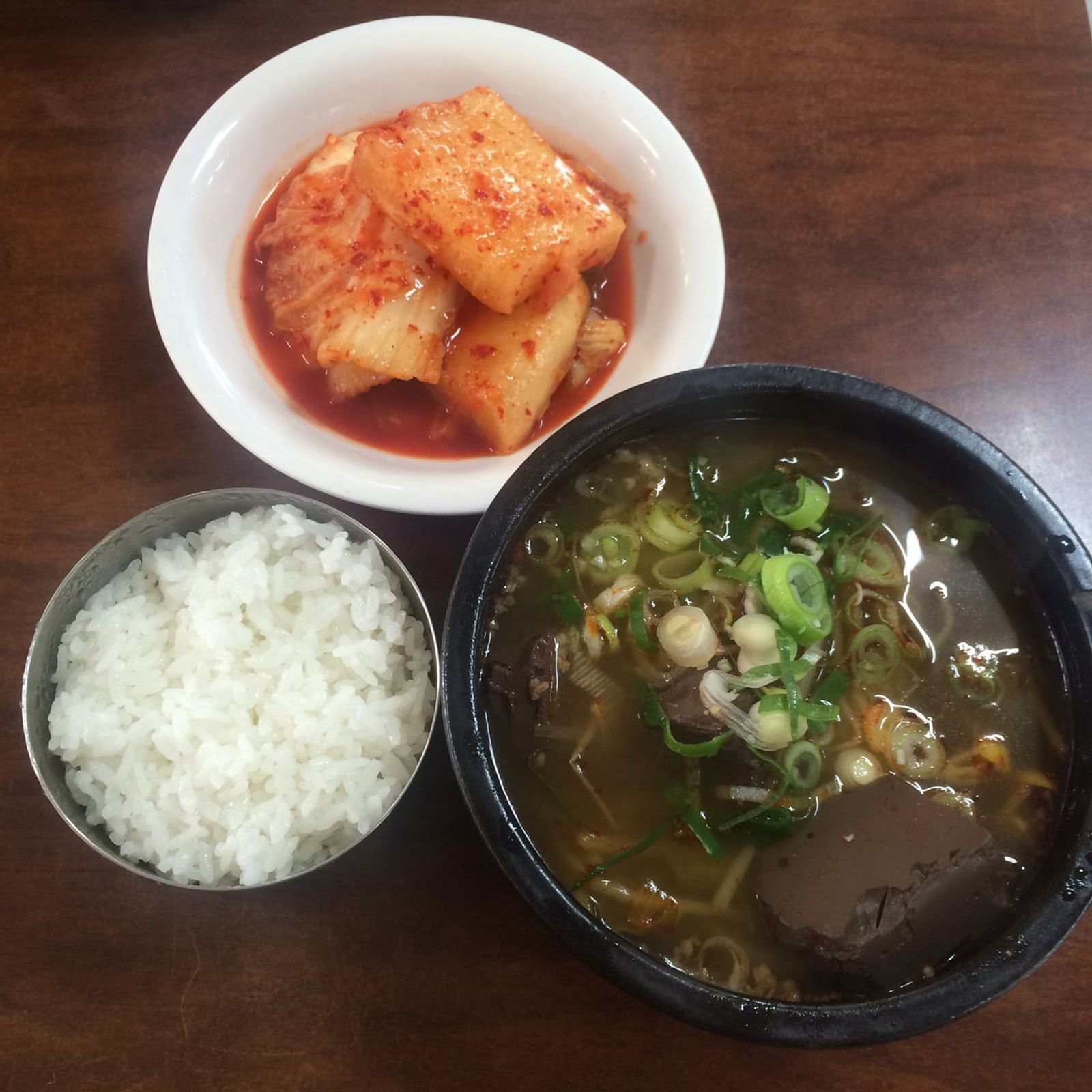
Ttaro-gukbap with rice and soup served separately · Photo: chomjong / CC BY 2.0 (Wikimedia Commons)
 KoreaDaegu
Ttaro-gukbap: Rice on the Side and Daegu's Fiery Beef Soup Praised in 1929
It is called ttaro-gukbap because the rice comes separately (ttaro) instead of being dropped into the soup. Here is how this red beef soup, first on the list of the Daegu 10 Flavors, got its name, how it relates to "Daegu tangban," the spicy beef soup praised in a 1929 magazine, and how to eat it.
What It Is: Daegu-Style Yukgaejang With Blood Pudding
Ttaro-gukbap is a rice soup in which the soup and rice are served in separate bowls rather than combined. Daegu's version starts with Daegu-style yukgaejang, a broth simmered from beef bones and brisket with plenty of green onion and radish, and adds seonji, congealed ox blood, so it is cooked rather like a blood-pudding hangover soup. Some people call it ttaro-gukbap when it contains seonji and yukgaejang or beef gukbap when it does not. The broth is stained red with chili powder and oil, but many say it tastes cleaner and lighter than it looks, thanks to the sweetness of the green onion and radish. Some places add vegetables such as taro stems. Daegu people eat it as a hangover cure or simply as a hearty meal, and it sits at the top of the city's official Daegu 10 Flavors list.
Why "Ttaro"?
In the past, gukbap was usually served with the rice already in the hot soup. In Daegu, however, serving them separately became the norm, and the practice became the name of the dish. In other words, ttaro-gukbap is named for how it is eaten, not how it is cooked. A story often told is that during the Korean War, upper-class refugees who had fled to Daegu found it undignified to eat rice soaked in soup the way servants did, and ordered "rice separately, soup separately." Another local article says that before one long-established Daegu soup restaurant, there was no such name, just gukbap. Either way, the name seems to have taken hold in Daegu between the late 1940s and the Korean War years, though accounts of exactly how it started differ.
"Daegu Tangban" in 1929
Daegu-style yukgaejang, the root of ttaro-gukbap, was already famous in the Japanese colonial period. The December 1929 issue of the general-interest magazine Byeolgeongon ran a feature on celebrated local foods from across the country, including an essay by a writer signing as "Dalseongin" titled "The Pride of Daegu: Daegu Tangban." It describes a spicy soup made by simmering lots of meat for a long time in a big cauldron and adding plenty of chili powder and beef fat, and commentators say it could describe today's yukgaejang. The meaning of the name "Daegu-tang" is debated. One theory reads it as 代狗湯, "soup in place of dog," because beef replaced dog meat; another reads it as 大邱湯, simply "Daegu soup," a soup that developed in Daegu. There is also the view that it was a dish for sweating out Daegu's hot, humid summers with something fiery and hot.
The Broth and What Is In It
A bowl of ttaro-gukbap holds tender boiled beef, large chunks of radish, green onion cooked until silky, and seonji. A layer of red oil, rather like chili powder fried in fat, floats on top and gives it a hearty kick, while the sweetness of the green onion and the savory depth of the beef broth support it from below. The seonji has a springy bite and deepens the broth. If blood pudding is not for you, ask for it without seonji, or choose yukgaejang or beef gukbap instead. Spice levels vary but it is generally quite hot, so if you are sensitive, keep kkakdugi (radish kimchi) and water close and take your time. Because Daegu people also eat it as a hangover soup, many of the old restaurants open early in the morning.
What to Do With the Rice on the Side
The nice thing about ttaro-gukbap is that you choose how to eat it. You can take a spoonful of rice at a time and dip it in the broth, or tip all the rice into the soup from the start. Mixing it in cools the broth and softens the flavor, while keeping it separate lets you enjoy piping-hot soup and fluffy rice to the end. There is no right answer, and plenty of people eat a few spoonfuls separately and mix in the rest to have both. Daegu has several ttaro-gukbap restaurants that have been running for decades, so it fits neatly into a Daegu 10 Flavors tour alongside makchang and napjak-mandu. Grilled makchang on your first night and ttaro-gukbap the next morning to settle your stomach is a combination even locals recommend. The amount of seonji and the heat vary between restaurants, so check the menu before ordering.