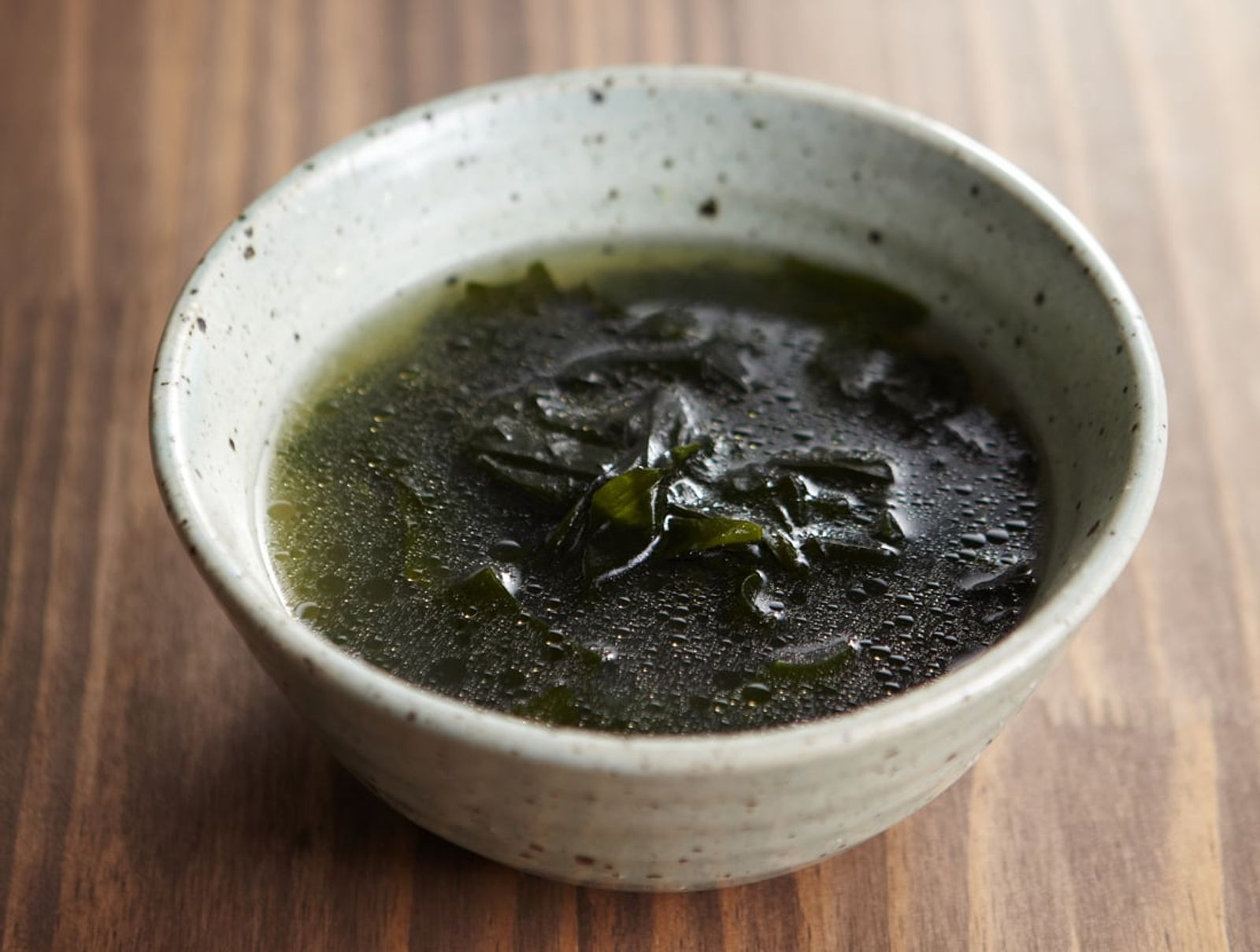
Miyeok-guk (seaweed soup) · Photo: 국립국어원 / CC BY-SA 2.0 kr (Wikimedia Commons)
 KoreaUlsan
Ulsan Seaweed and Miyeok-guk: The Story of Gwagam, the "Seaweed Rock"
Koreans eat miyeok-guk, seaweed soup, after giving birth and on birthdays. Here is the old tale of a whale eating seaweed after calving, the story of Gwagam, a seaweed rock off Ulsan tied to a Goryeo-era local lord and the royal inspector Park Mun-su, and the customs and taboos around the soup.
The Soup of Birthdays and Childbirth
Miyeok-guk is a clear soup made with sea mustard (miyeok). Soaked dried seaweed is usually stir-fried in sesame oil and garlic, then simmered in a beef or fish stock; it is mild and not spicy. In Korea new mothers traditionally eat it with rice after giving birth, because seaweed is rich in calcium and iodine and has long been thought to aid recovery. In the Joseon period, it is said, before a new mother ate her first meal, one corner of the room was cleaned and three bowls each of rice and seaweed soup were set out for Samsin Halmeoni, the goddess believed to grant children, after which the mother ate them herself. Today eating miyeok-guk on the morning of your birthday is almost a given for Koreans, sometimes explained as a way of thanking your mother for giving birth to you. One of the oldest sources of that seaweed is the sea off Ulsan.
Seaweed Taught by a Whale?
An old tale linking seaweed to postpartum care features a whale. In Ojuyeonmun jangjeon sango by the late-Joseon scholar Yi Gyu-gyeong, one entry tells of a man who saw that a whale that had just calved had a belly full of seaweed, and so learned that seaweed helps mothers recover. It has also long been said that the Tang-dynasty compendium Chuxueji records that people of Goguryeo fed seaweed to new mothers after seeing whales heal themselves by eating it after giving birth. These are legends, of course, not scientific fact. Still, a story that brings whales and seaweed together fits strangely well with Ulsan, a whale city with prehistoric whale petroglyphs and a whaling port, and a famous seaweed producer as well. If you eat miyeok-guk in Ulsan, keep the tale in mind.
Gwagam, the Seaweed Rock Under the Sea
Off Panji Village in Gangdong-dong, Buk-gu, Ulsan, lies a rock called Gwagam (藿巖), literally "seaweed rock." Also known as the Yangban Stone or Park Yun-ung Stone, it was designated an Ulsan City Monument in 2001. According to Heungnyeo seungnam, published in 1937, and other records, Park Yun-ung, a local lord at the end of Silla and the start of Goryeo, was rewarded for helping Wang Geon found Goryeo with land east of Ulsan and the right to harvest seaweed from 12 seaweed rocks in the area. The right passed down through the Ulsan Park clan until, under King Yeongjo of Joseon, the royal inspector Park Mun-su heard the villagers' complaints and had the rocks returned to the state. When the seaweed harvest then failed three years in a row, one of the 12 rocks was handed back to the Park clan, and their ownership reportedly lasted until the Japanese colonial period. The rock is also valued as evidence for the economic history of late Joseon.
Ulsan's Sea and Its Seaweed
The waters around Gwagam are described as ideal for seaweed, with suitable water temperatures, and its seaweed is said to have been sent to the king as tribute. The Ulsan area is known to have been the second-largest seaweed producer after Jeju in the Joseon era, and seaweed is still harvested around Gwagam today. Wild seaweed that grows on rocks along coasts such as Gangdong is often called dol-miyeok, "rock seaweed," and is prized above the farmed kind. In seaweed season, fishing villages on the east coast spread freshly harvested seaweed out to dry by the sea. The Gangdong coast from Jeongja Port toward Panji Village is lined with pebble beaches and makes a pleasant seaside outing. Dried rock seaweed is light and keeps well, making a good souvenir; check the origin label when buying at local markets or fishing-village shops.
Taboos and Sayings Around Seaweed Soup
Seaweed comes with plenty of folk customs. Seaweed bought before a birth was traditionally never haggled over, and the strands for the soup were not cut, because people believed bargaining would bring a difficult labor and cutting the seaweed would cut short the baby's fortune. On the other hand, "eating seaweed soup" is an idiom meaning you failed an exam. One explanation is that slippery seaweed suggests "slipping." Another links it to the 1907 disbandment of the Korean Empire's army: the word for disbanding, haesan (解散), sounds the same as haesan (解産), childbirth, after which seaweed soup is eaten. So families of students avoid the soup before big exams, and some restaurants do not serve it on the day of the national college entrance exam. If a friend has a birthday while you are traveling, sharing a bowl of miyeok-guk is a very Korean experience.