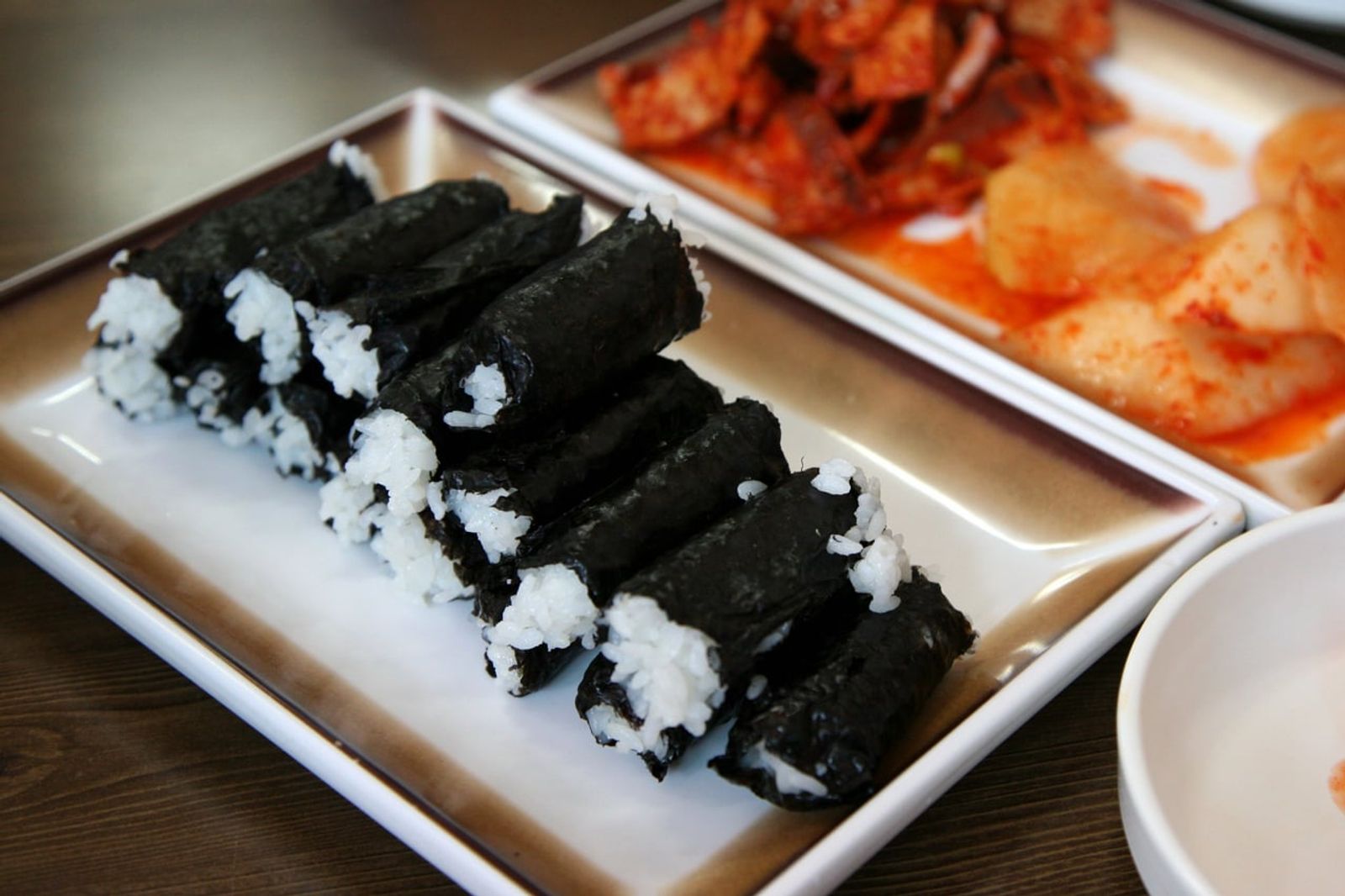
Chungmu gimbap with radish kimchi and spicy squid · Photo: Junho Jung (Flickr) / CC BY 3.0 (Wikimedia Commons)
 KoreaSouth Gyeongsang
Chungmu Gimbap: How a Fisherman's Lunch Became Tongyeong's Signature Dish
Chungmu gimbap is finger-sized rolls of plain rice in seaweed, served with spicy squid and radish kimchi on the side. Here is the fishermen's trick of keeping lunch from spoiling at sea, the days when it was sold at the ferry pier, how a 1981 event in Seoul made it famous nationwide, and how to eat it.
Plain Rice Rolls With Side Dishes Apart
Chungmu gimbap is a local dish from Tongyeong in South Gyeongsang, formerly the city of Chungmu. Unlike ordinary gimbap, it has no fillings: just rice rolled in seaweed into thin, finger-sized rolls. Instead it comes with spicy dressed squid (or baby octopus or fish cake) and chunky radish kimchi such as seokbakji or kkakdugi on the side, and many places add a soup such as dried radish-greens soup. Eating it is simple. Alternate a bite of plain roll with a bite of the sweet-spicy squid or crunchy radish kimchi. The rolls themselves are barely seasoned, so the flavor only comes together with the sides. In the past the side dishes were served so generously that they outweighed the rice, but these days they are usually portioned to match the rolls.
A Lunch That Would Not Spoil at Sea
Chungmu gimbap is said to date from around the 1930s. Fishermen setting out from Chungmu Port packed gimbap for lunch, but they often worked all day without a proper break, and in summer the fillings quickly spoiled in the hot sun. So, the story goes, they began rolling only rice in the seaweed and packing the less perishable spicy side dishes separately. English-language sources tell a similar tale: a wife packed the rice rolls and side dishes separately so her fisherman husband's lunch would not spoil, and other fishermen copied her. Either way, the point is the same. The simple structure, with the fillings kept apart, was less a matter of flavor than of practical wisdom for keeping food safe at sea.
"Pier Gimbap" Sold at the Ferry Landing
At first, the story goes, these rolls were called "baenmeori gimbap," pier gimbap. Before highways such as the Namhae Expressway were built, the slow ferries running from Yeosu or Mokpo to Busan stopped at Chungmu on the way, and the rolls were sold in large numbers to passengers near the ferry pier as a meal. You could buy them during a short stop and take them aboard, and they kept well for hours, so they were made for travelers. The moment often credited with making Chungmu gimbap famous nationwide is Gukpung 81, a huge cultural festival held on Yeouido in Seoul in 1981. An elderly woman vendor from Hangnam-dong in Tongyeong reportedly brought a large load of Chungmu gimbap to the event, where it was a hit, and shops selling it soon appeared in Seoul and across the country.
From Chungmu to Tongyeong: An Old City in the Name
You will not find a city called Chungmu on today's maps. In 1995 Chungmu City merged with Tongyeong County to form the present Tongyeong City. The dish, however, kept the name Chungmu gimbap, reminding visitors of the city's former name. Chungmu itself comes from Chungmugong, the posthumous title of Admiral Yi Sun-sin, who fought famous battles in these waters. No one is sure which shop is the original. So many places in Tongyeong hang "original" signs that people joke it is impossible to tell the real one. The long-established Chungmu gimbap shops are clustered around Gangguan, where the old ferry terminal stood, and it is said that when the terminal was turned into a plaza, what had once been a single restaurant split into several.
Eating Chungmu Gimbap in Tongyeong
In Tongyeong, the area around the Gangguan cultural plaza is the easiest place to find Chungmu gimbap. It is ordered by the portion and can be eaten in or taken away. Since it was invented to be carried, taking it aboard a ferry to islands such as Hansando or Yokjido, or eating it by the sea after walking around Dongpirang mural village, is a very Tongyeong way to enjoy it. The spicy squid varies in heat and sweetness from shop to shop, and the radish kimchi in sourness, so comparing a few is part of the fun. The seaweed softens over time, so eat it fairly soon. Add Tongyeong's other specialties, such as honey bread (kkulppang) and oyster dishes, and your Tongyeong food trip is complete. You can buy Chungmu gimbap in Seoul and across Korea, but eating it by the sea in Tongyeong is something else.