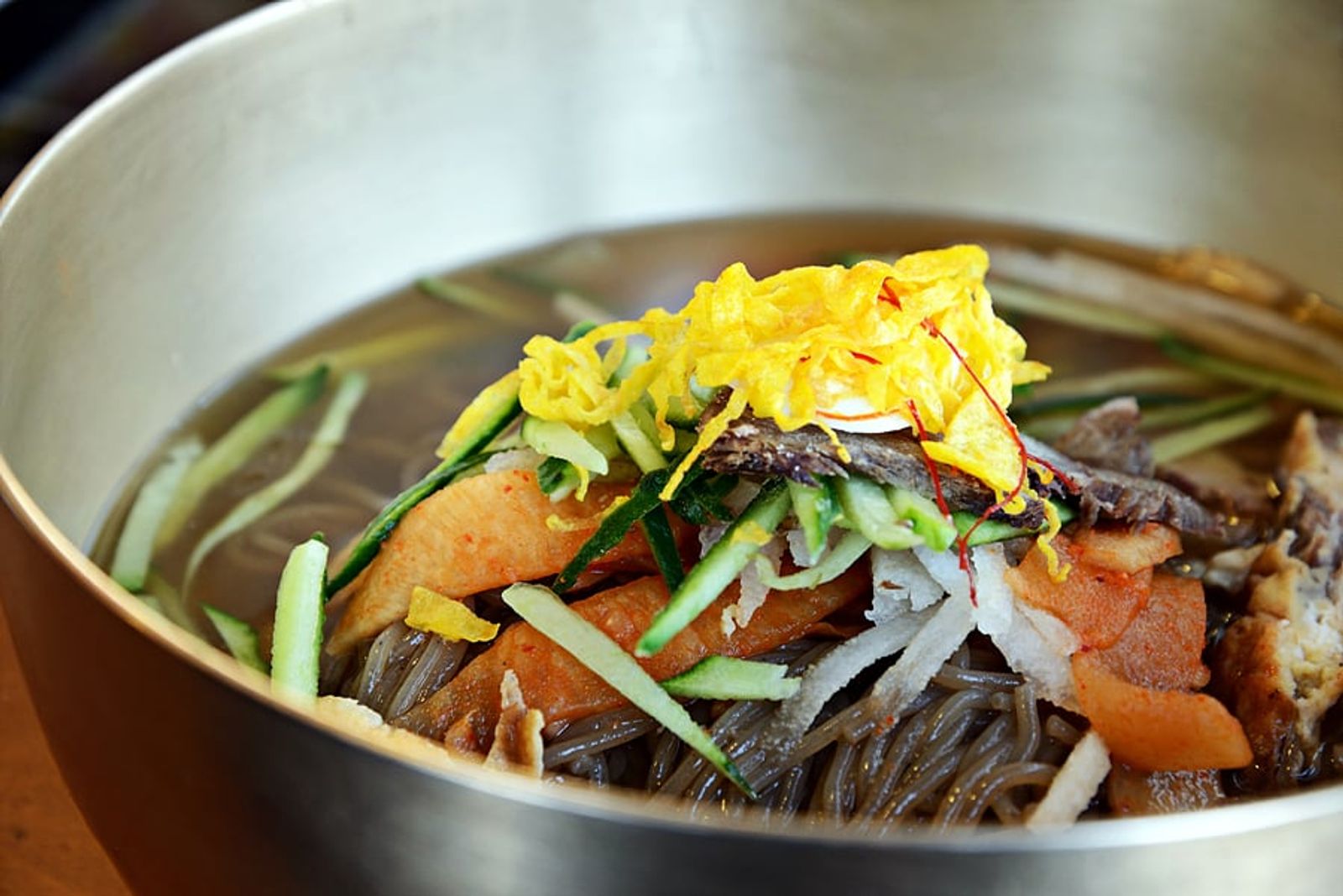
Jinju naengmyeon topped with beef jeon and egg ribbons · Photo: croxriver / CC BY 2.5 (Wikimedia Commons)
 KoreaSouth Gyeongsang
Jinju Naengmyeon: The Southern Cold Noodle Once Ranked Beside Pyongyang's
Naengmyeon usually means Pyongyang or Hamhung, but a North Korean publication once named "Pyongyang naengmyeon and Jinju naengmyeon" as the finest. Here is the late-night dish born in Jinju's gisaeng houses, how it vanished after a 1966 fire and was revived in the 2000s, and what sets it apart: a seafood broth and strips of beef jeon.
"Pyongyang Naengmyeon and Jinju Naengmyeon"
In Korea, naengmyeon usually means Pyongyang naengmyeon, buckwheat noodles in cold broth, or Hamhung naengmyeon, chewy noodles tossed in a spicy sauce. But Jinju in South Gyeongsang has long had a celebrated cold noodle dish of its own. After inter-Korean exchanges began, a passage became known from a 1994 North Korean book on folk traditions, which states in its section on food customs that "the finest of all naengmyeon are Pyongyang naengmyeon and Jinju naengmyeon." That a southern city's noodles were named alongside the North's signature dish shows how famous Jinju naengmyeon once was. Jinju was the leading city of western Gyeongsang in the Joseon era and is still the hub of western South Gyeongsang, known for the Namgang River and Jinju Fortress. Jinju naengmyeon is drawing attention again as a reflection of the city's rich food culture.
A Late-Night Dish From the Gisaeng Houses
Jinju has long been known for its gisaeng (female entertainer) culture. After the fall of Joseon, gisaeng who left government service and cooks who had prepared food for official banquets ran entertainers' guilds and restaurants, and Jinju naengmyeon is said to have been a favorite late-night snack for guests at these establishments. Some see its elaborate garnishes and painstaking broth as traces of that banquet culture. Until the 1960s several naengmyeon restaurants thrived around Okbong-dong in Jinju. After a major fire at Jinju's Central Market in 1966, however, the tradition appears to have been lost. For years afterward Jinju naengmyeon lived only in the memories of local people, and to outsiders even the name was unfamiliar.
Revival in the 2000s and the Debate
What brought Jinju naengmyeon back was that North Korean passage. A culinary researcher who heard of the line "Pyongyang naengmyeon and Jinju naengmyeon" recreated the dish in the early 2000s, defining features considered to be the original: buckwheat noodles, a broth blended with seafood stock, and strips of beef jeon. Jinju City actively promoted it for tourism and presented it at local food festivals as a dish unique to Jinju. There are critics, of course. Since the tradition had been broken since the 1960s, quite a few people question how faithfully today's version recreates the old taste, especially the quality of the noodles. Chain restaurants now serve it, so you can try it not only in Jinju but across the country. Knowing that it is a revived dish makes both the taste and the story more interesting.
Seafood Broth and Beef Jeon: What Sets It Apart
The broth is Jinju naengmyeon's defining feature. A clear beef broth, skimmed of fat, is blended with a seafood stock made from anchovies, clams, dried pollack, mussels and shiitake. In the past, cooks reportedly dipped a red-hot iron into the broth again and again to remove the anchovies' fishiness and aged it for about two weeks, though this is no longer done. The noodles are made from buckwheat with added sweet potato starch. The garnish is the other signature. Whereas Pyongyang and Hamhung naengmyeon are topped with thinly sliced pickled radish, Jinju naengmyeon gets shredded or chopped ripe napa cabbage kimchi and long strips of yukjeon, thin beef pan-fried in egg batter. Add pear, cucumber, beef, shiitake and rock tripe mushrooms, egg ribbons, pine nuts and sesame, and the bowl looks spectacular. The savory yukjeon in particular has become a symbol of the dish.
Enjoying Jinju Naengmyeon in Jinju
The original Jinju naengmyeon is the cold-broth (mul) version, but many places also serve a spicy mixed (bibim) version with the same garnish. For a first try, go for mul naengmyeon to appreciate the subtle seafood aroma of the broth. Dip the yukjeon lightly in the broth and eat it with the noodles for extra richness; many people also order a separate plate of yukjeon. Taste the broth first, then add vinegar or mustard bit by bit to your liking. As a cold noodle it looks like a summer dish, but in Jinju people eat it year-round. A bowl after touring Jinju Fortress and the Namgang River is an easy plan, and if you come during the Jinju Namgang Yudeung (Lantern) Festival in autumn, it pairs well with the festivities. Popular restaurants get very busy during the festival, though, so allow plenty of time. You can see Jinju naengmyeon signs in Seoul and elsewhere, but a bowl in Jinju lets you taste the story too.