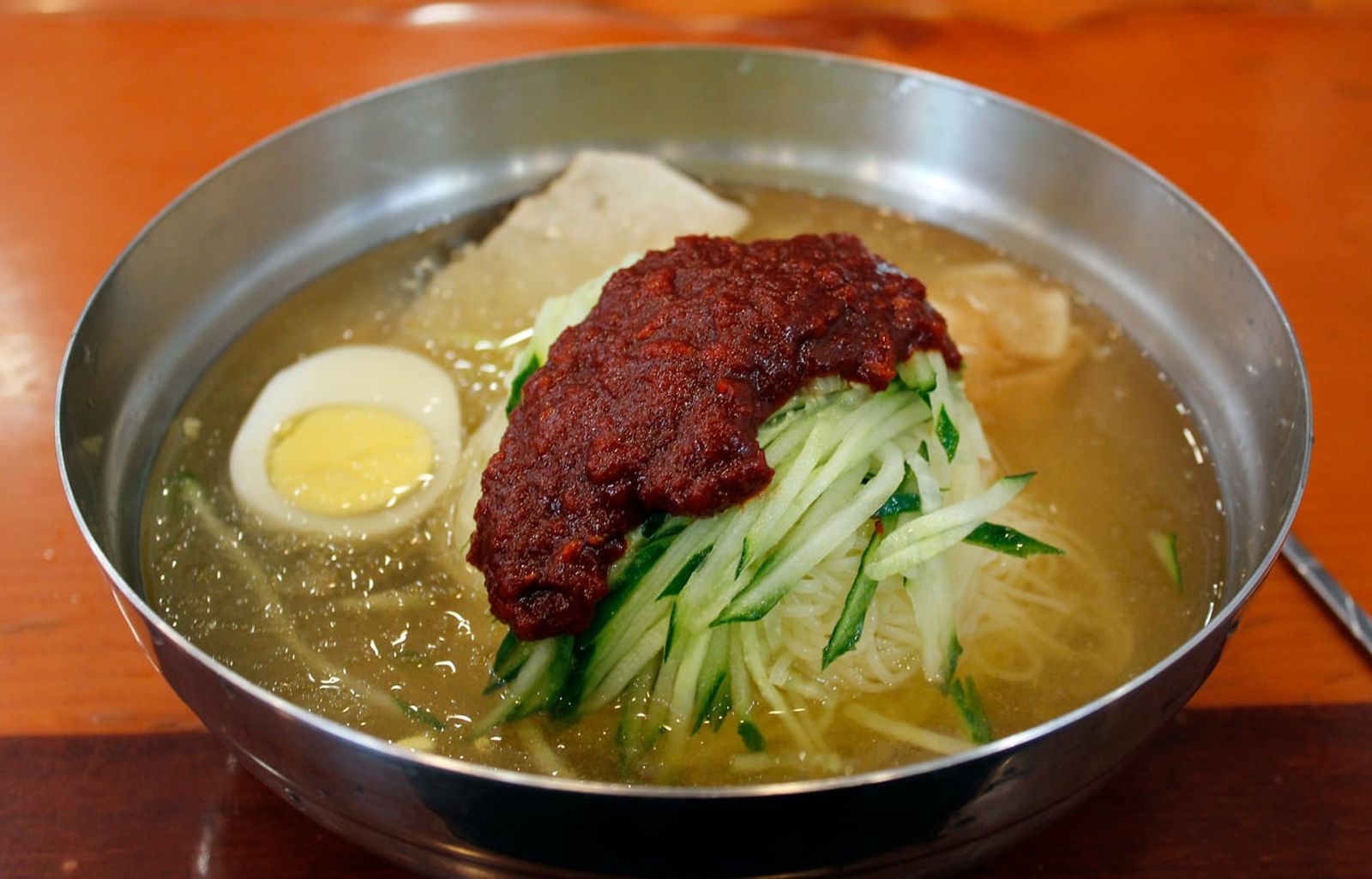
Mul milmyeon · Photo: Minseong Kim / CC BY-SA 4.0 (Wikimedia Commons)
 KoreaBusan
Busan Milmyeon: The Wheat-Flour Naengmyeon a Refugee City Created
In summer, Busan reaches for milmyeon instead of naengmyeon. Here are the competing origin stories, from wheat-flour noodles made by war refugees when buckwheat was scarce, to a mother and daughter from Hamhung, to a link with Jinju via the 1925 move of the provincial office, plus how it differs from naengmyeon and how to enjoy it.
Cold Noodles Made From Wheat
Milmyeon is a Busan specialty, and as the name ("wheat noodles") suggests, wheat flour is the main ingredient. Noodles made from wheat flour mixed with potato or sweet potato starch are served in a chilled broth made by simmering pork or beef bones with medicinal herbs and vegetables. It resembles naengmyeon, but naengmyeon uses buckwheat flour while milmyeon uses wheat and starch, so the noodles are chewier and smoother. There are two main kinds: mul milmyeon, noodles in icy, slushy broth, and bibim milmyeon, tossed in a spicy gochujang-based sauce. Some places also serve ssuk milmyeon, tinted green with mugwort. In Busan's hot, humid summers the cold broth and tangy flavor are a relief, and lines outside milmyeon restaurants are a common summer sight.
Refugees, Wheat Flour and the Origin Debate
The best-known origin story involves the Korean War. Huge numbers of refugees came south to Busan, and naengmyeon was a northern dish traditionally made from buckwheat, which was hard to get in Busan. So, the story goes, they made naengmyeon with wheat flour supplied through American aid, and that was the beginning of milmyeon. A more specific version says a mother and daughter from Hamhung in South Hamgyeong Province opened a naengmyeon restaurant in Busan and created milmyeon there, and one long-established Busan noodle house claims to be the original, though that claim is disputed. Either way, as a dish in which refugees remade their hometown noodles from Busan's ingredients, milmyeon is often described as carrying the history of wartime Busan.
Another Theory: It Came From Jinju
There is another intriguing claim. Jinju in South Gyeongsang has long had a cold wheat-noodle dish in anchovy broth, and according to this view, when the South Gyeongsang provincial office moved from Jinju to Busan in 1925, the dish came along and developed into today's milmyeon. The provincial capital really did move from Jinju to Busan at that time, and the argument is that food culture may have moved along with the people. So there are several theories about milmyeon's origin, and none has been settled. Taken together, though, they suggest milmyeon was born when northern refugees' naengmyeon culture, the noodle traditions of South Gyeongsang and the postwar spread of wheat flour met in the port city of Busan. Today you can find milmyeon restaurants beyond Busan, across South Gyeongsang and in other regions too.
How It Differs From Naengmyeon
The biggest difference from naengmyeon is the noodles. Because wheat flour mixed with potato or sweet potato starch replaces buckwheat, they are springier and smoother, and chewiness comes before the nutty aroma of buckwheat. The broth is more strongly seasoned than Pyongyang naengmyeon, with a pronounced sweet-and-sour taste, and some places add herbal medicine ingredients for a distinctive aroma. Price is another difference. Made with flour and starch, it is generally cheaper than naengmyeon, which made it an everyday working-class dish. Jeju also has milmyeon, but the Jeju style uses 100% wheat flour for thick noodles like gogi-guksu and a broth of anchovies or pork, and is said to taste lighter than the Busan version. The same name can mean different things in different places, so comparing them is fun.
How to Enjoy Milmyeon
When your mul milmyeon arrives, take a sip of the broth first, then add vinegar and mustard little by little to taste. The noodles are long and chewy, so ask staff to cut them once or twice with scissors, or cut them yourself. Bibim milmyeon is hot and sweet, so a cup of the warm broth served with it, or some cold milmyeon broth, helps soothe your mouth. If you cannot decide between the two, order one of each and share. Milmyeon is famous as summer food, but in Busan you can eat it year-round. Many places also sell dumplings, which turn it into a filling meal. It is cheap and comes out quickly, making it a good lunch while sightseeing in areas such as Haeundae or Nampo-dong. Together with dwaeji-gukbap it is often named one of the two bowls you must try in Busan, so work it into your plans.