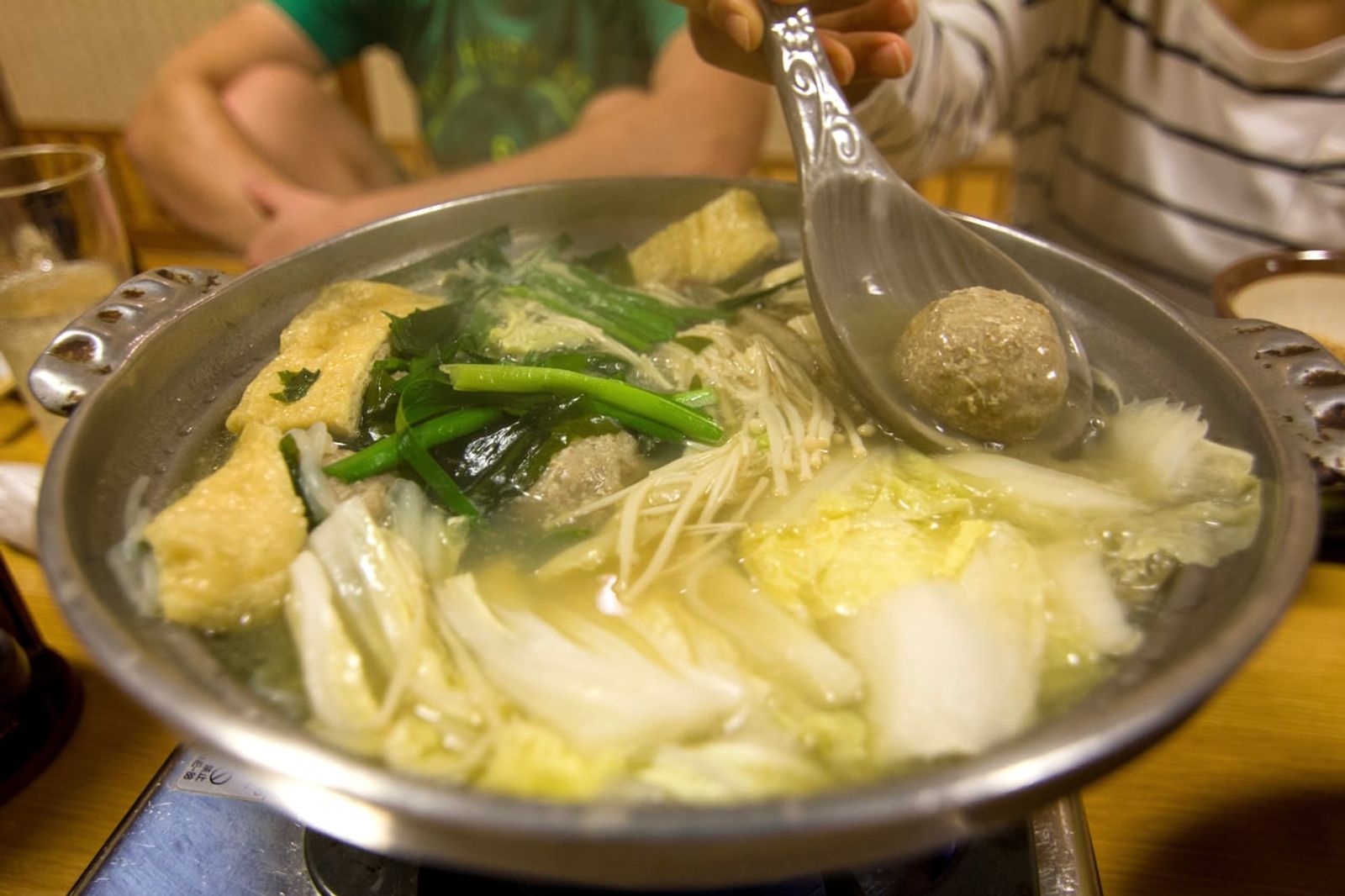
Chanko nabe · Photo: George N / CC BY 2.0 (Wikimedia Commons)
 JapanTokyo
Chanko Nabe: How the Sumo Wrestlers' Hot Pot Became Ryogoku's Signature Dish
Ryogoku, home of Tokyo's sumo arena, the Kokugikan, is packed with chanko nabe restaurants. Here is why sumo wrestlers started sharing one pot, the old superstition about chicken, the main broth styles and how Ryogoku became chanko town.
Where Does the Word "Chanko" Come From?
Chanko nabe is the hot pot that sumo wrestlers have long eaten in their stables, or heya. The origin of the word "chanko" is disputed. The best-known theory links it to a word for "father": young wrestlers called the senior who cooked for them "chan," and "ko" was added. There is also a story that the Meiji-era grand champion Hitachiyama called his veteran cook "chanko." Other theories say it comes from the name of a pot brought from China to Nagasaki in the early Edo period, or that it combines with a Chinese word for "pot." None has been confirmed, and explanations differ from source to source.
Why Wrestlers Started Sharing One Pot
Until the middle of the Meiji era, wrestlers are said to have been served individual meals. Around 1909, however, the popularity of grand champion Hitachiyama brought a sudden rush of new recruits, and setting out separate trays for everyone became impractical. The solution, according to the usual account, was one big pot that everyone ate from together. A hot pot let wrestlers eat large amounts of meat, fish and vegetables at once, which suited athletes who needed to build size. In the stables, junior wrestlers still take turns cooking chanko, and seniors traditionally eat first. During the COVID years of 2020 to 2023, however, sharing a single pot was put on hold.
The Chicken Superstition: "Never Put Your Hands Down"
Chicken became the traditional chanko meat because of a very sumo superstition. A chicken stands on two legs like a person, so it came to symbolize never putting your hands on the ground in the ring, in other words, never losing. Four-legged animals such as cattle and pigs were avoided because they suggested touching down with your hands, which means defeat. Beef and pork reportedly began appearing in chanko around 1965. Today the fillings range widely, from seafood and pork to fish cakes and meatballs, but sources from around 2021 still describe a custom of eating chicken chanko at New Year for luck. If you see "soppu-daki" on a menu, it is the chicken-broth chanko that carries on this tradition.
Choosing by Broth: Soppu-daki, Salt and Miso
Chanko flavors are said to fall broadly into two camps, clear chiri-nabe style and seasoned yose-nabe style, and are sometimes divided further into mizutaki, stock-based broth, shio (salt) and miso. "Soppu-daki" is chanko made with a broth of simmered chicken bones seasoned with soy sauce, and the great Showa-era grand champion Taiho reportedly said that soppu-daki is the foundation of chanko. "Soppu" is said to derive from the word "soup." On a first visit, try the chicken soppu-daki or a light salt broth to taste chanko at its most basic, then move on to miso next time. Ingredients and broths vary so much from shop to shop that there is no single "correct" chanko, which is part of the fun.
Eating Chanko in Ryogoku
Chanko restaurants cluster especially around Ryogoku Station on the JR and Toei Oedo lines, where the Kokugikan stands, and chanko has become Ryogoku's signature dish. According to the Sumida City Tourism Association, chanko restaurants in Ryogoku multiplied after the Kokugikan moved there from Kuramae in Taito City in 1985. Many are said to have been opened by retired wrestlers. Many places sell chanko by the pot for two or more, so it is best enjoyed in a group. As with most Japanese hot pots, the classic finish is to add udon or rice to the leftover broth. If you visit in January, May or September, when Tokyo hosts the grand sumo tournaments, you can combine a day at the matches with a chanko dinner.