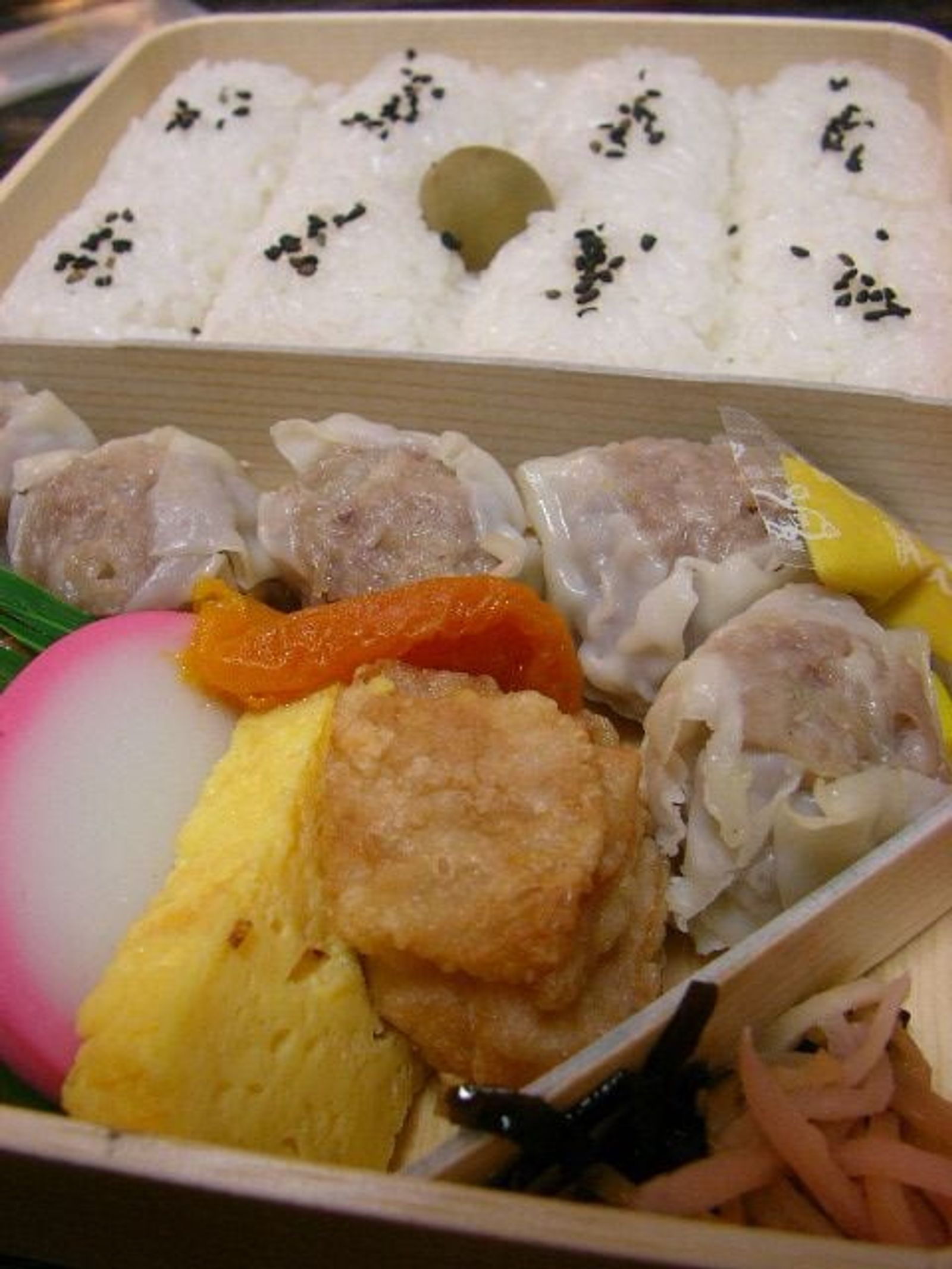
A Yokohama shumai bento · Photo: jetalone / CC BY 2.0 (Wikimedia Commons)
 JapanYokohama
Yokohama Shumai: The Dumpling Designed to Taste Good Cold on a Train
Yokohama ranks as the Japanese city that spends the most on shumai. Here is the story of Yokohama's dumplings: the Chinatown that grew up with the opening of the port, the "tasty even when cold" shumai born at a station kiosk in 1928, and the unusual spelling "shiumai."
Nankinmachi, Born with the Opening of the Port
The story of Yokohama shumai begins with the opening of the port in 1859. Chinese people who could read and write kanji, many from Guangdong, served as interpreters and middlemen between Western merchants and the Japanese, and the area near the foreign settlement where they lived is described as the beginning of today's Chinatown. For a long time the area was called Nankinmachi. The name Chukagai (Chinatown) took hold after the first Zenrinmon gate, built in February 1955, was inscribed with "中華街." Today more than 600 shops are packed into roughly 500 meters square, making it one of the largest Chinatowns in Japan, and buying steamed shumai to eat while you walk is a standard part of a visit.
Yokohama's First Shumai: 1899?
The place usually credited with first making and selling shumai in Japan is a Chinese restaurant in Isezakicho, Yokohama, in 1899. Even Japanese Wikipedia phrases this as "it is said," so it is best treated as a widely told account rather than settled fact. In Nankinmachi at the time, shumai was reportedly served as a small starter before the main dishes. Fillings vary by region in China, with mutton and leek in the north and pork and glutinous rice in the south, and what took root in Yokohama was pork shumai close to Cantonese dim sum. Nobody then could have guessed it would become Yokohama's signature souvenir.
1928: A Station Kiosk Creates Shumai That Tastes Good Cold
It was the railway that made Yokohama shumai famous nationwide. A company that started in 1908 as a kiosk inside Yokohama Station wanted to create "a specialty only Yokohama has," noticed the shumai served as starters in Nankinmachi and reportedly worked with a Chinatown dim sum chef to develop its own. According to the official website of Yokohama's Nishi Ward, its "famous shiumai" was born in 1928. The key was that it would be sold at the station and eaten on the train. To make it tasty even when eaten cold, without reheating, dried scallop was added to the pork for extra savoriness, and the dumplings were made small enough for one bite. In 1950, "Shiumai Girls" selling shumai on the station platforms became a popular sight.
Why "Shiumai," and Yokohama's Love of Shumai
Shumai is usually written "シューマイ" in Japanese, but Yokohama's best-known station bento product spells it "シウマイ" (shiumai). There is a fun story behind this: the company's first president came from Tochigi Prefecture and could not quite pronounce "shu," saying "shiu" instead, and that became the product name. It is a company anecdote, so enjoy it as such. Yokohama's love of shumai shows up in the numbers, too. In figures based on the Ministry of Internal Affairs' Family Income and Expenditure Survey for 2015 to 2017, Yokohama spent the most on shumai among prefectural capitals and designated cities. It is a city where buying shumai for holidays, guests or trips home is a settled custom.
Two Ways to Enjoy Shumai in Yokohama
The first is to eat freshly steamed shumai in Chinatown. You can buy a few from the steamers billowing in front of the shops and eat as you stroll, or sit down at a restaurant and order Cantonese dim sum such as shrimp shumai. Mustard and soy sauce are the standard Japanese accompaniments. The second is to buy a shumai bento or a boxed set at Yokohama or Shin-Yokohama Station and eat it cold on the shinkansen or train. Because it was designed from the start in 1928 to taste good cold, it holds up without reheating. Try both and you will taste the whole journey of Yokohama shumai. Even for cooked foods, check your home country's import rules before bringing any back.