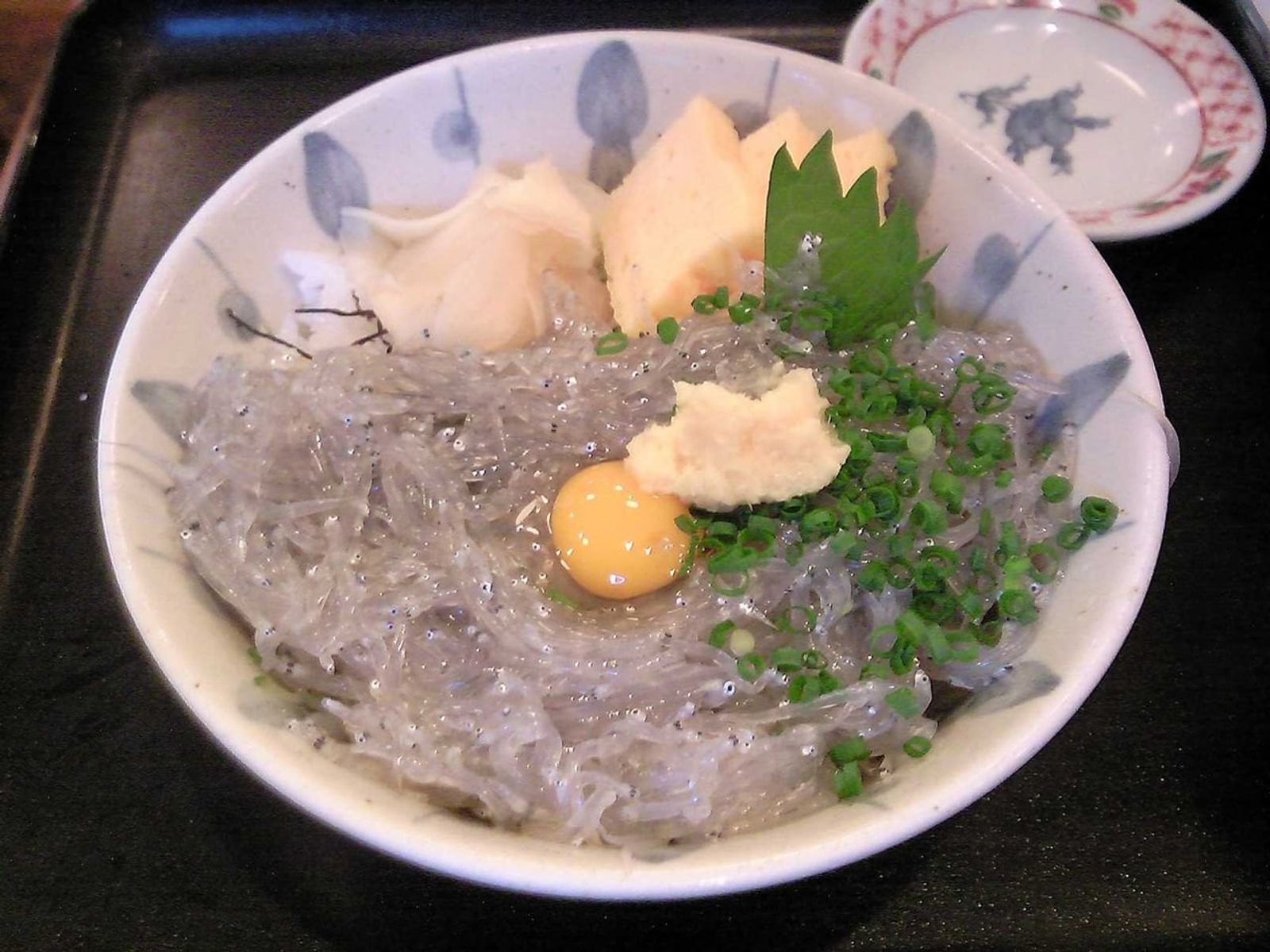
Raw shirasu-don · Photo: Ishimochi / CC BY-SA 3.0 (Wikimedia Commons)
 JapanKamakura
Shirasu-don: When Can You Actually Eat Raw Whitebait on the Shonan Coast?
Shirasu-don is the dish everyone tells you to try in Kamakura and Enoshima. But did you know raw shirasu is unavailable from January to early March? Here is what shirasu actually is, the closed season and peak months, the difference between raw and boiled, and how to order.
Shirasu Is Not a Single Fish
Shirasu is not the name of a single species. According to Kanagawa Prefecture's fisheries materials, it is a general term for the young of sardine-type fish whose bodies are slender and so lightly pigmented that they look white. The shirasu caught in Kanagawa are the young of three species, Japanese anchovy (katakuchi-iwashi), Japanese sardine (maiwashi) and round herring (urume-iwashi), and anchovy has recently made up a larger share. So the mix varies a little by season and by day. To forecast catches, the Kanagawa Prefectural Fisheries Technology Center regularly collects shirasu from around the prefecture and checks which species are present. Think of them as the same family of tiny fish that many Asian cuisines dry or stir-fry as whitebait.
Closed Season: January 1 to March 10
This is the most important thing to know when planning a trip. According to Kanagawa Prefecture, shirasu fishing in Sagami Bay has a closed season from January 1 to March 10, to protect young ayu (sweetfish), which spend the winter at sea before heading up the rivers. Raw shirasu is unavailable during this period, and many restaurants switch to shirasu processed earlier or other dishes. There are two main seasons: spring from April to June, and summer to autumn from July onward. When fishing resumes on March 11, customers flock in search of the year's first raw shirasu. If raw shirasu-don is your goal, go between mid-March and the end of the year. On a winter trip, enjoy kamaage (boiled) shirasu-don instead.
Raw, Kamaage and Shirasu-boshi
Shirasu changes name and flavor depending on how it is prepared. "Nama-shirasu" is raw, translucent grayish shirasu straight from the sea, with a slightly sticky texture and a faint bitterness. It spoils very quickly, so you can only really enjoy it near the coast on the day it is caught, which is why people come to Shonan for it. On days when bad weather keeps the boats in, there may be no raw shirasu even in season. "Kamaage" is shirasu briefly boiled in salted water, white and fluffy and the easiest to enjoy. Dried further, it becomes "shirasu-boshi," and spread thin and dried in sheets like nori, "tatami-iwashi." According to Kanagawa Prefecture, fishers process and sell much of their catch themselves in these forms. Many restaurants also serve "nishoku-don," a bowl topped half with raw and half with boiled shirasu.
The "Shonan Shirasu" Brand
Shirasu in Sagami Bay is caught with funabiki-ami, a boat seine. Boats tow a net around a school of shirasu and haul it in slowly, taking care not to damage the tiny fish. Because the fishing grounds lie just off the beaches, freshly caught shirasu may be landed several times a day. Raw shirasu and processed products caught in Sagami Bay by fishers belonging to the Kanagawa shirasu boat seine fishing council are certified under the Kanagawa brand as "Shonan shirasu." The catch is shrinking, however. Kanagawa estimates that the annual catch once exceeded 600 tons but has recently been about 300 tons, roughly half. If you get to try raw shirasu, count yourself lucky.
Where and How to Eat It
Restaurants serving shirasu-don cluster around Koshigoe fishing port near Koshigoe Station on the Enoden line, on Enoshima island and around its entrance, and around Kamakura Station. Near the port there are also shops connected to local fishers where you can try freshly landed shirasu. Raw shirasu is often sold only as long as the day's catch lasts, so if that is your goal, arrive early in the lunch hour. Eating it is simple. Top it with grated ginger and a little soy sauce and eat it as is, or mix it if it comes with a raw egg yolk. Too much soy sauce hides the delicate flavor, so add it a little at a time. If raw fish is not your thing, starting with kamaage-don still gives you a real taste of Shonan.