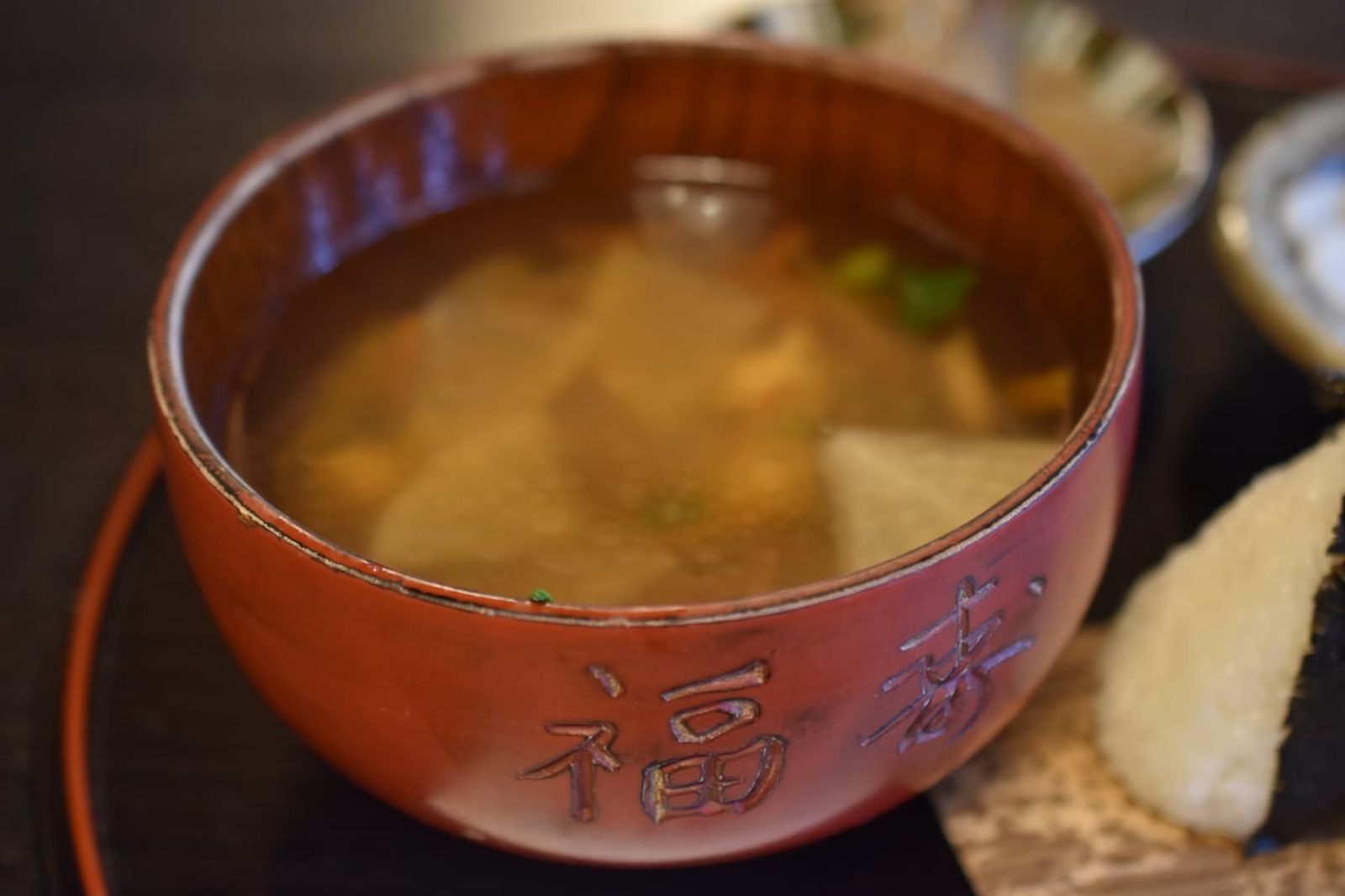
Kenchin-jiru served near Kencho-ji, Kamakura · Photo: Fred Cherrygarden / CC BY-SA 4.0 (Wikimedia Commons)
 JapanKamakura
Kenchin-jiru: The Vegetable Soup Said to Come from Kamakura's Kencho-ji Temple
Kenchin-jiru, a vegetable soup found in homes all over Japan, is said to have begun at Kencho-ji, a Zen temple in Kamakura. Here are the two theories about its name, the story of the broken tofu, how it gets its flavor without meat and how it varies by region.
Kencho-ji, Kamakura's Great Zen Temple
The story of kenchin-jiru is set at Kencho-ji, a Zen temple in Kita-Kamakura. Kencho-ji was founded in 1253, and its founding abbot was Lanxi Daolong (Rankei Doryu in Japanese), a Zen monk who came from Song-dynasty China. Supported by the samurai of the Kamakura shogunate, it played a major part in rooting Zen in Japan and ranks first among the Five Great Zen Temples of Kamakura. Monastic life at Zen temples meant shojin ryori, cooking without meat or fish. Kenchin-jiru is said to have begun as just such temple food before spreading into home kitchens across Japan. To this day it is a familiar soup that Japanese families make by the potful on cold days.
Two Theories: "Kenchoji-jiru" or "Kenchin"?
The best-known theory is that "Kenchoji-jiru" (Kencho-ji soup), made by the temple's trainee monks, gradually came to be pronounced "kenchin-jiru." When Japan's Agency for Cultural Affairs certified the soup as a "100-Year Food" in fiscal 2025 under the name 建長汁 (kenchin-jiru), it too explained that the name comes from Kencho-ji's "Kenchoji-jiru." On the other hand, Japanese dictionaries write "kenchin" as 巻繊 and connect it to kenchin in fucha ryori, a style of temple cooking brought from China: vegetables and tofu stir-fried, rolled in fried tofu skin or yuba and deep-fried. Some also point out that the spelling 建長汁 does not appear in encyclopedias or standard dictionaries, so which theory is right depends on the source.
The Monk Who Would Not Waste Broken Tofu
A very Zen anecdote comes with kenchin-jiru. According to the Agency for Cultural Affairs, Lanxi Daolong, the temple's founder, passed on the method of stir-frying vegetables in oil before simmering them, and when a trainee monk accidentally crumbled some tofu, the master put it into the pot instead of throwing it away. That, the story goes, is why the tofu in kenchin-jiru is crumbled by hand rather than neatly cubed. In another version, the founding abbot picked up tofu a trainee had dropped, washed it and added it to the soup, so the characters and details vary. Either way the message is the same: this is a soup carrying the Zen spirit of using everything, even the peels and scraps that are easy to throw away.
How It Gets Its Flavor Without Meat
The basic ingredients are daikon radish, carrot, burdock root, taro, konnyaku and tofu. They are stir-fried in sesame oil, simmered in stock and seasoned with soy sauce to make a clear soup, the standard version. Because it was originally temple food, it contains no meat or fish, and the stock is made from kombu and shiitake rather than bonito flakes or dried sardines. The initial frying is the key step. The sweetness of the vegetables and the nuttiness of sesame oil seep into the broth, giving it a deep, satisfying flavor without any meat. As the Agency for Cultural Affairs notes, it also uses vegetable parts that are usually discarded, so it is nutritious too. That said, some homes and restaurants add pork or chicken, so vegetarian travelers should check the stock and ingredients before ordering.
Regional Kenchin, and Tasting It in Kamakura
As kenchin-jiru spread across Japan, it changed in many ways. Versions seasoned with miso are called "kokusei-jiru" or "miso kenchin," and Ibaraki Prefecture has "kenchin soba," buckwheat noodles served in or dipped into hot kenchin-jiru. In Niigata a similar soup is called "kenchon-jiru," and add udon and it becomes "kenchin udon." In Kamakura you can find kenchin-jiru on the menus of Japanese restaurants and temple-cuisine eateries along the road from Kita-Kamakura Station to Kencho-ji and in central Kamakura. A warm bowl after visiting Kencho-ji is a fine way to reflect on the more than 770-year story behind it. It suits a trip to Kamakura especially well from late autumn into winter, when the wind turns cold.