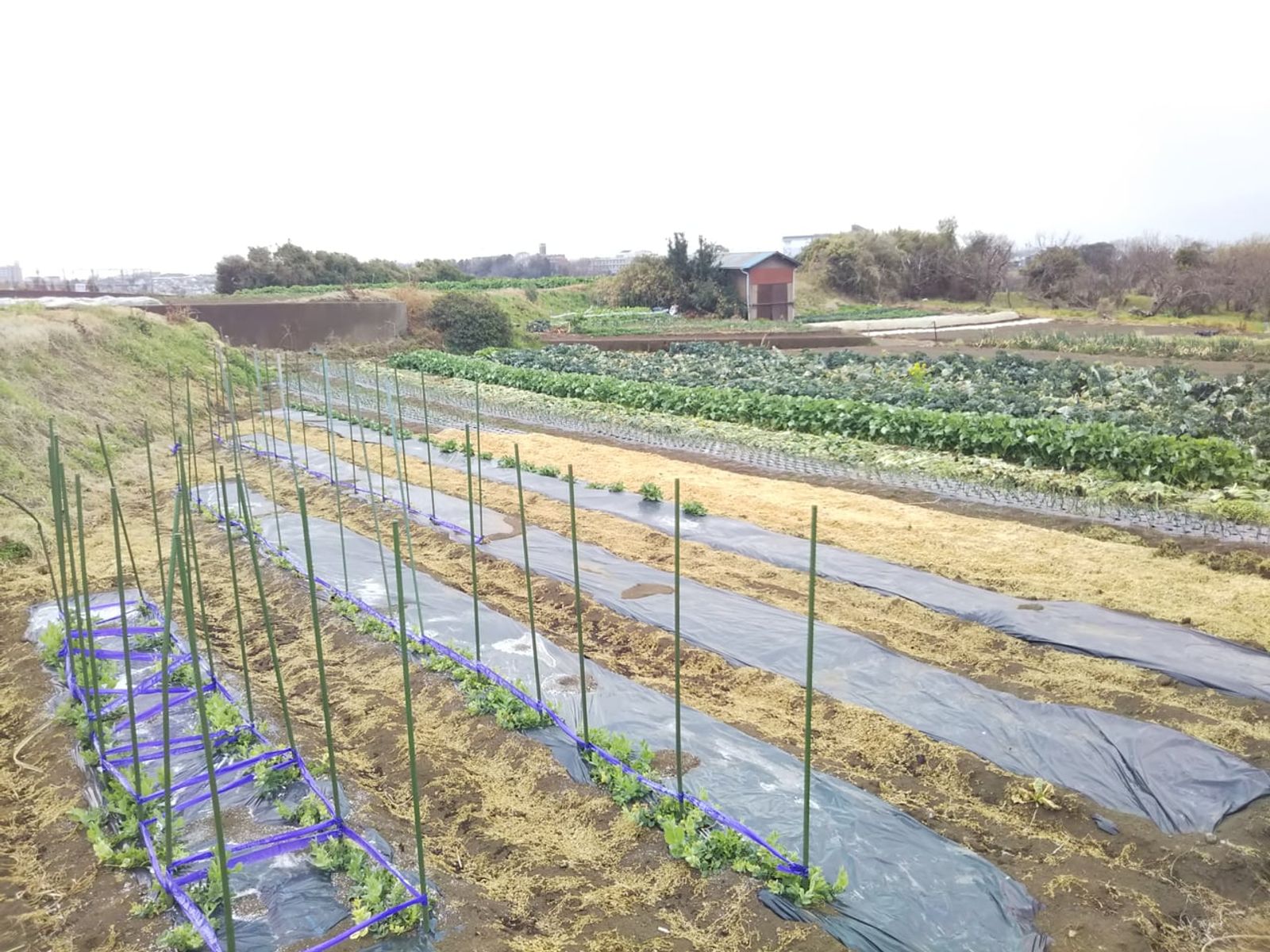
Vegetable fields in Sekiya, Kamakura · Photo: 妖精書士 / CC0 (Wikimedia Commons)
 JapanKamakura
Kamakura Vegetables and Renbai: A Farmers' Market With Nearly 100 Years of History
A few minutes' walk from Kamakura Station, on the Wakamiya-oji avenue, is an old market where farmers sell their own vegetables. Locals call it "Renbai." Here is why Kamakura vegetables are said to be special, the market's history, how it works and how travelers can enjoy it.
What Are "Kamakura Vegetables"?
Kamakura vegetables are not a single variety but a collective name for the many vegetables grown on farms within Kamakura. According to Kanagawa Prefecture's official tourism site, the main growing areas are Sekiya, Nagaodai and Tebiro, flatlands and plateaus outside the hills that surround central Kamakura. Sekiya is described as a broad farming area with views of Mt. Fuji on clear days. The same source says the vegetables grow in soil rich in minerals from the nearby sea and mountains, giving them an intense flavor. Many farms grow small amounts of many different crops in a single field, earning them the nickname "seven-color fields" (nanairo-batake). Part of the appeal is the colorful mix of produce, including Western varieties in many colors.
Renbai, Officially the Kamakura City Agricultural Cooperative Market
The easiest place to find Kamakura vegetables is the Kamakura City Agricultural Cooperative Market (Kamakura-shi Nokyoren Sokubaijo), a few minutes' walk from Kamakura Station's east exit on Wakamiya-oji, the avenue leading to Tsurugaoka Hachimangu Shrine. Locals call it "Renbai," taking "ren" from nokyoren (cooperative federation) and "bai" from sokubaijo (direct sales place). Kanagawa's official tourism site describes it as having "nearly 100 years of history." Several media outlets say it began in 1928 and call it Japan's first European-style marché, or farmers' market. Treat "first" as a media description rather than an official title. The market itself is a simple building with rows of stalls under a modest roof.
A Market Without Middlemen
Renbai's defining feature is that farmers sell directly. According to Kanagawa's tourism site, most Kamakura vegetables are sold without passing through intermediate wholesalers, so they are fresh and buyers stay close to growers. Several media outlets report that the farmers are divided into groups that take turns staffing the stalls day by day. As a result, what is on display depends on which farmers are selling that day, and the market looks different every time you visit. The customers are varied too: local residents and tourists shop alongside chefs from restaurants in Yokohama and Tokyo. Being able to hear about each vegetable and how to cook it straight from the farmer is what sets it apart from a supermarket.
How Travelers Can Actually Eat Kamakura Vegetables
Even if you buy vegetables at Renbai, cooking them at your hotel is hard. The most realistic option is to seek out restaurants and cafes that use Kamakura vegetables. Around Kamakura Station, along Komachi-dori and at seaside cafes, you will easily find menus featuring "Kamakura vegetables": salads, roasted vegetable plates, curries and pasta. Look for the characters 鎌倉野菜 on the menu. At Renbai you can also buy a few things you can eat right away, such as cucumbers or tomatoes, to snack on during your walk, or pick up processed goods like pickles and jams as souvenirs. What is on sale depends on the farmers and the season, so browsing to see what is there is part of the fun.
Visiting Tips and Import Rules to Know
Renbai is described as open from morning until early evening, but popular vegetables often sell out early, so a morning visit is best. It sits on the approach to Tsurugaoka Hachimangu, so it is easy to drop by on the way to or from the shrine. Many items are sold in small lots, and some stalls may take cash only, so bring some small change. The most important thing is what happens when you fly home. For plant quarantine reasons, Korea and many other countries prohibit or strictly limit bringing in fresh vegetables and fruit. Buy only what you will eat during your trip, choose processed goods for souvenirs, and check your country's import rules for those too. Kamakura vegetables taste best eaten right there.