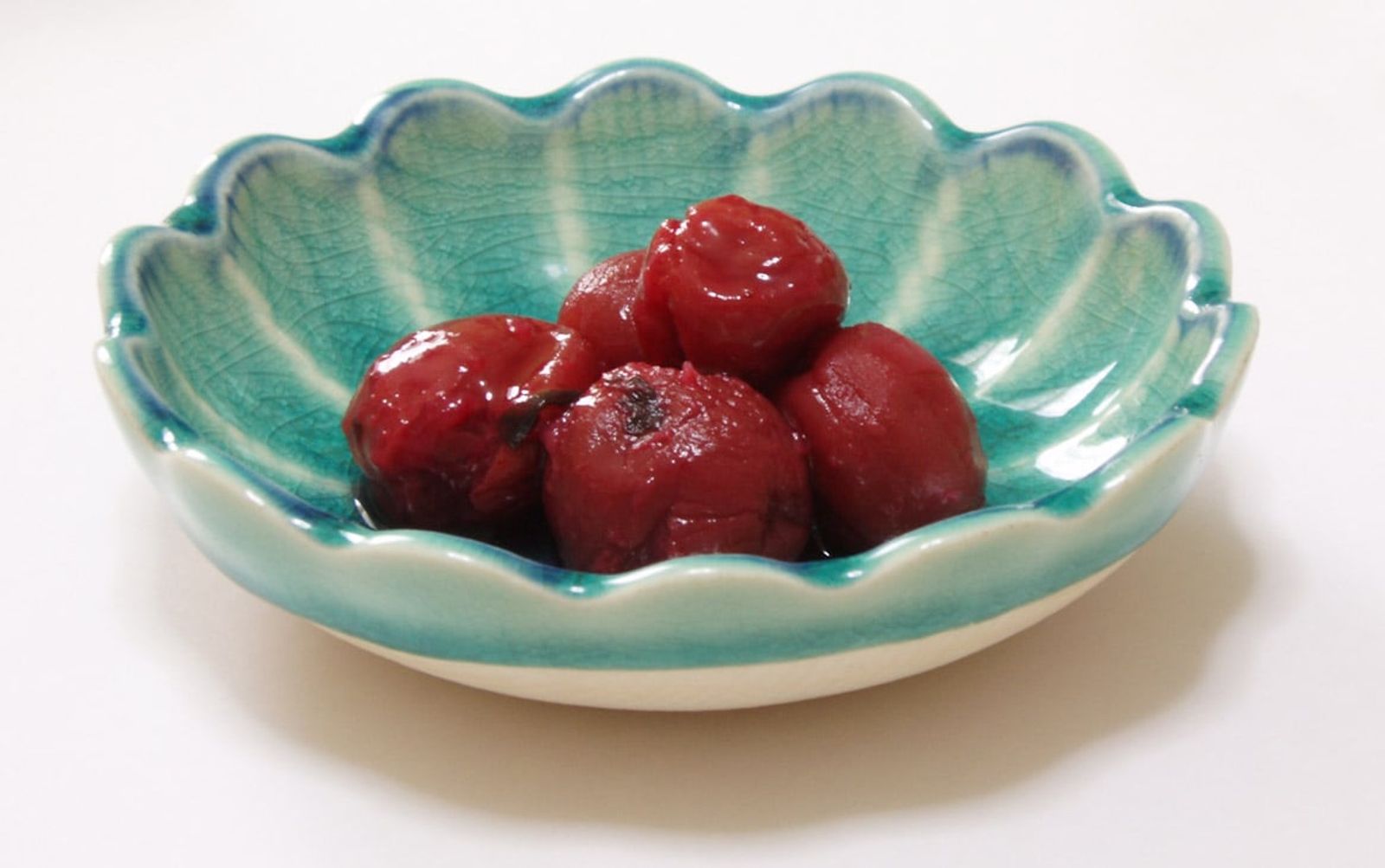
Umeboshi · Photo: SEKIUCHI / CC BY-SA 3.0 (Wikimedia Commons)
 JapanHakone
Odawara Umeboshi: The Pickled Plums That Protected Travelers' Lunches Over the Hakone Pass
For Edo-period travelers, the Hakone Pass was the toughest stretch of the Tokaido highway, and at its gateway, Odawara, pickled plums were a travel essential. Here are the stories of a warlord and his plum trees, the traditional method using only plums and salt, and the Soga umeboshi recognized as a 100-Year Food.
The Hakone Pass, the Toughest Stretch of the Tokaido
On the Tokaido, the old trunk road linking Edo and Kyoto, the Hakone Pass was considered the most grueling section. The mountain road from Odawara over Hakone to Mishima was known as "Hakone Hachiri" (the eight ri of Hakone), and at the top stood the Hakone checkpoint, which strictly inspected travelers. Odawara was a castle town and post town at the pass's eastern entrance. Travelers stayed there the night before the climb and rested there after coming down, so food and goods for travelers flourished. In its profile of Soga umeboshi, the Agency for Cultural Affairs also notes that Odawara was a post town for travelers crossing Hakone. Today a train whisks you past in minutes, but traces of those days survive in the local food.
Hojo Soun and the Plum Trees
Odawara's plum story goes back to the Warring States period. It is said to have begun when Hojo Soun, founder of the Hojo clan that ruled the Kanto region from Odawara, had plum trees planted below his castle so the fruit could be used as emergency rations for his soldiers. One theory holds that "shiso-maki umeboshi," pickled plums wrapped in shiso leaves, also came from such battlefield ingenuity. Sources describing this story differ slightly, some dating it to the Muromachi period and others to the Warring States period, and it is closer to a local origin tale than a documented fact. Still, there is no doubt that Odawara has had a deep connection with plums for a very long time.
The Little Plum That Guarded Travelers' Lunches
For travelers crossing the Hakone Pass, umeboshi were a practical necessity. According to the sources, pickled plums kept travelers' packed lunches from spoiling and helped relieve fatigue on the mountain road, which made them a famous Odawara product. The Japanese habit of placing an umeboshi in the middle of a rice ball or on top of the rice in a bento is linked to this kind of everyday wisdom. In an age without refrigerators, salty, sour umeboshi were a precious preserved food that kept for a long time. On a pass that took a full day to walk, the mouth-watering tang would also have helped ease thirst. That is how Odawara's umeboshi made their name alongside the travelers.
Just Plums and Salt: Shirazuke and Doyo-boshi
Soga umeboshi, made in the Soga district of Odawara, are described as being produced by the traditional "shirazuke" method using only plums and salt. The salted plums are finished by "doyo-boshi," drying them in the sun for several days around the midsummer doyo period. At first they have few wrinkles, but as the days pass they lose moisture and become the wrinkled umeboshi we know. Without red shiso to dye them, shirazuke plums are pale in color, with a clear plum flavor and saltiness. If you are used to mild umeboshi sweetened with honey or flavored with kombu, they may taste quite salty and sour at first. Eat them a little at a time with rice, or place one on ochazuke, rice with green tea poured over it, to enjoy their flavor.
The Soga Plum Groves and the 100-Year Food
The plums used for umeboshi come largely from the Soga Plum Groves in the Soga area east of Odawara. According to tourism materials, Soga is counted among the three great plum groves of the Kanto region and has about 35,000 plum trees. In early spring, when the blossoms open, it becomes a popular flower-viewing spot, and in summer the fruit becomes umeboshi. Japan's Agency for Cultural Affairs has listed Soga umeboshi among its "100-Year Foods," which recognize regional foods handed down over generations. The agency's list shows it as certified in 2022, while some media give a different year, so the exact year varies by source. You can buy umeboshi in shopping streets and souvenir shops around Odawara Station, so pick up a jar at the start or end of your Hakone trip. Check your home country's import rules first.