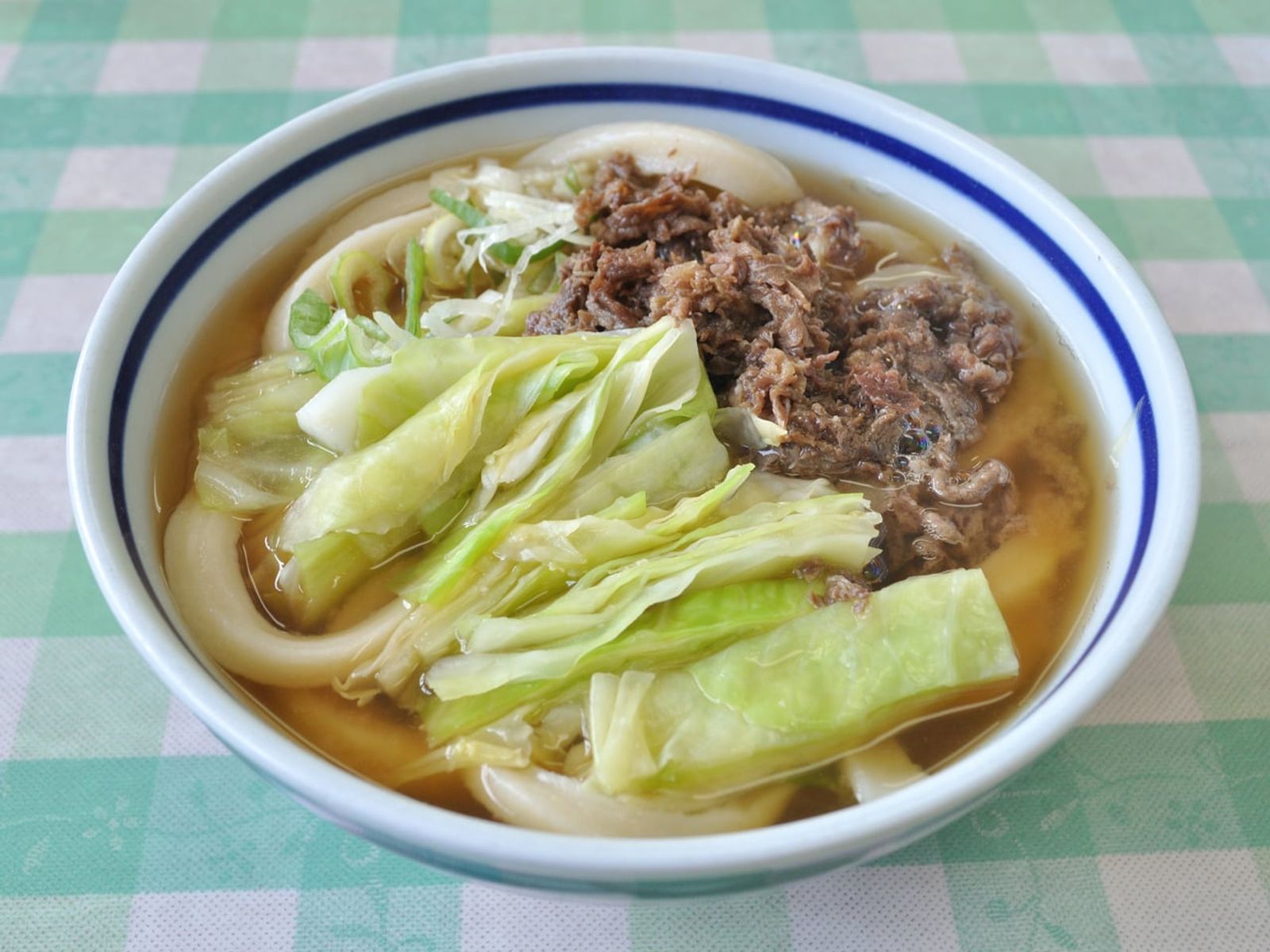
Yoshida udon topped with cabbage and meat · Photo: Ocdp / CC0 (Wikimedia Commons)
 JapanKawaguchiko
Yoshida Udon: Fujiyoshida's Famously Firm Noodles, Made by the Men of a Weaving Town
Fujiyoshida, right next to Lake Kawaguchi, is an udon town with more than 60 udon shops for a population of about 50,000. From the very chewy noodles to boiled cabbage, horse meat and the spicy condiment suridane, here is how Yoshida udon came about and how to eat it.
60 Udon Shops in a City of 50,000
Yoshida udon is a local dish eaten mainly in Fujiyoshida City, Yamanashi Prefecture, on the northern foot of Mt. Fuji, and the surrounding Gunnai region. According to Japanese Wikipedia, Fujiyoshida, a city of about 50,000 people, has more than 60 udon shops, and a local udon map lists about 50 of them. It is also one of the "100 Local Dishes of Farming, Mountain and Fishing Villages" chosen by Japan's Ministry of Agriculture, Forestry and Fisheries. Fujiyoshida borders Lake Kawaguchi, so as you tour spots such as Arakurayama Sengen Park with its view of Mt. Fuji, Fuji-Q Highland or Fujiyoshida's Honcho street, you will see "うどん" signs everywhere. If you are staying at Lake Kawaguchi, consider making one lunch a bowl of Yoshida udon.
Women at the Looms, Men at the Dough
Local industry is deeply tied to the birth of Yoshida udon. From the late Edo period through the Showa era, the Gunnai region's core industries were silk farming and weaving, both done by women. So the men cooked the meals and made the udon. It is also often said that women stayed out of the kitchen because roughened hands made delicate fabrics hard to handle. The men's strong arms kneading local flour hard are said to explain the noodles' distinctive firmness. In the Edo period the area also drew many pilgrims of the Fuji-ko, groups that climbed Mt. Fuji as an act of faith. In a land where rice was scarce, wheat was the people's staple.
What It Looks Like: Firm Noodles, Cabbage and Horse Meat
The defining feature of Yoshida udon is noodles so firm and chewy they can feel almost hard. Chewing through the thick, heavy noodles is part of the pleasure, a completely different experience from soft Sanuki or Kansai udon. The toppings are distinctive too. Boiled cabbage comes standard, along with fried tofu and sweet-savory simmered meat. Horse meat was traditionally common, and pork is now widely used as well. The broth is made from dried sardine or shiitake stock seasoned with soy sauce, miso or a blend of both, depending on the home or shop. On the menu, "肉うどん" (niku udon) means meat topping and "月見" (tsukimi) means a raw egg on top.
Suridane, the Spicy Secret Condiment
Most Yoshida udon shops keep a condiment called "suridane" on the table. It is a spicy mixture centered on red chili, with sesame and sansho pepper fried in oil, and every shop has its own recipe. A little stirred into your udon adds a nutty, tingling heat that brings out the firm noodles and rich broth. Heat levels vary widely from shop to shop, so start with a tiny amount and add more after tasting. Travelers used to chili seasonings may feel right at home, but the numbing tingle of sansho makes it quite different from Korean chili flakes. Some places sell suridane in jars as a souvenir.
Tips for Eating Yoshida Udon
Many Yoshida udon shops are said to open mainly at lunchtime and close early once the noodles run out. If you plan to eat in the evening you may find many of them shut, so aim for lunch. Many are modest places that look like converted family homes, where you can enjoy eating among the locals. Besides noodles in hot broth, there is also a tsukemen style, chilled noodles dipped into broth. Portions tend to be large, so order a regular size first and customize with extra toppings such as meat, fried tofu or a raw egg. These noodles demand serious chewing, so taking your time is the way to really enjoy Yoshida udon.