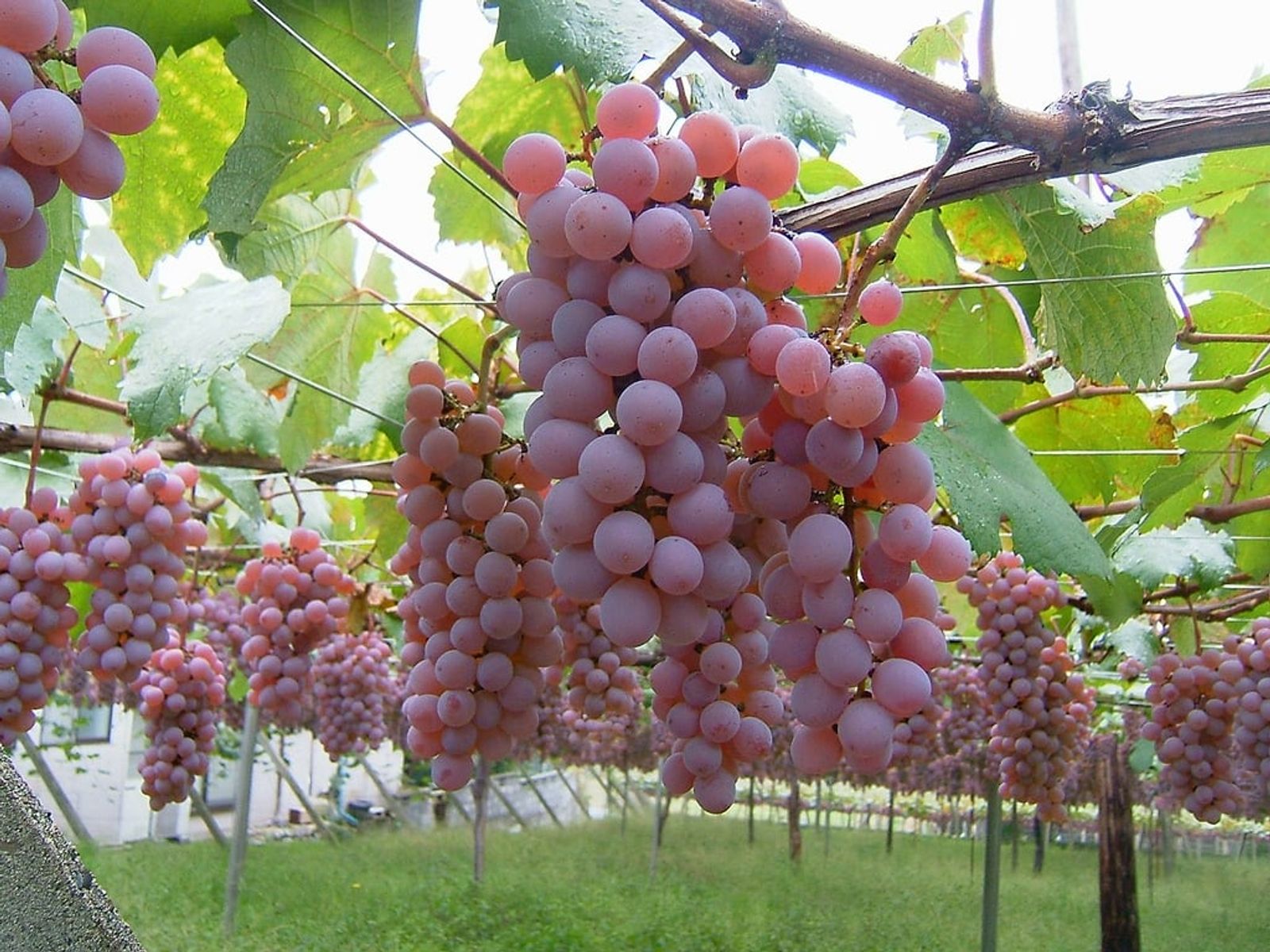
A vineyard in Katsunuma · Photo: genta_hgr / CC BY 2.0 (Wikimedia Commons)
 JapanKawaguchiko
Koshu Grapes and Yamanashi Wine: The Story of Japan's Wine Country
Yamanashi, home of Mt. Fuji, leads Japan in both the number of wineries and the production of Japanese wine. Here are the legends and DNA of Japan's native Koshu grape, the two young men who went to France in the Meiji era and how travelers can enjoy it all.
Koshu, Japan's Oldest Cultivated Grape
Koshu is a grape variety native to Japan, grown mainly in Yamanashi Prefecture, with pale reddish-purple skins. Yamanashi Prefecture calls it "Japan's oldest cultivated grape variety," and it is eaten fresh as well as used to make crisp white wine. Two legends describe its origins. In one, in 1186 a man named Amemiya Kageyu of Kami-Iwasaki village found an unfamiliar vine on a mountain path, took it home to plant, and it bore fruit five years later. In the other, the Nara-period monk Gyoki discovered a grapevine when founding Daizen-ji temple. In the early Edo period, a physician named Nagata Tokuhon is said to have devised the overhead trellis method still used today.
What DNA Revealed About Koshu
Koshu's long-mysterious roots have gradually been uncovered by DNA analysis. A 2004 study confirmed it is a hybrid derived from the European grape species Vitis vinifera, and a 2013 analysis by Japan's National Research Institute of Brewing found it is most likely a cross between European vinifera and a hybrid of vinifera with the Chinese wild grape Vitis davidii. In other words, it suggests a grape that crossed Eurasia along the Silk Road and settled in Japan over a very long time. In June 2010, Koshu became the first Japanese native grape registered with the International Organisation of Vine and Wine (OIV), allowing wine to be exported to the European Union labeled with the variety name "Koshu."
Two Young Men Sent to France in the Meiji Era
According to Yamanashi Prefecture, wine production in the prefecture began around 1870, when two men from Kofu, Yamada Hironori and Takuma Norihisa, made wine from wild grapes and Koshu grapes. Then in 1877 a private wine company founded by local backers sent two young men, Takano Masanari and Tsuchiya Ryuken, to France to learn grape growing and winemaking. The two reportedly left Yokohama on a French ship that October, studied French in Paris and then trained in Troyes in the Champagne region. But the astringency of the French-style wine they made after returning was too far from Japanese tastes of the time, and the company closed in 1886. Even so, the seeds they planted are remembered as the starting point of Yamanashi's wine industry.
Yamanashi Wine Today: About 90 Wineries
According to Yamanashi Prefecture, the prefecture has about 90 wineries, from long-established houses founded in the Meiji era to small new domaines, the most in Japan, and it produces about 30% of Japan's "Japanese wine" (wine made in Japan from grapes grown in Japan), also the most in the country. Two varieties stand out. Koshu, for white wine, has gentle acidity and delicate citrus aromas and is said to pair well with Japanese food. Muscat Bailey A, for red wine, is a Japanese variety bred by Kawakami Zenbei, known for sweet aromas and light tannins. Only wines that meet strict standards may carry the geographical indication "GI Yamanashi," so look for it on the label.
How Lake Kawaguchi Visitors Can Enjoy It
The heart of Yamanashi wine is the Katsunuma area on the east side of the Kofu Basin, where vineyards and wineries cluster. A day trip from Lake Kawaguchi needs plenty of travel time, so if you are short on time, simply tasting Yamanashi wine at souvenir shops, restaurants or your hotel around the lake is a fine way to enjoy it. Pairing Koshu wine with a local dish like hoto works nicely. Grapes are in season from late summer into autumn, when many farms offer grape-picking. If you plan to taste at wineries, do not drive a rental car. Japan's drink-driving rules are very strict, so use public transport or a tour. If you take wine home as a souvenir, check your country's duty-free allowance and import rules first.