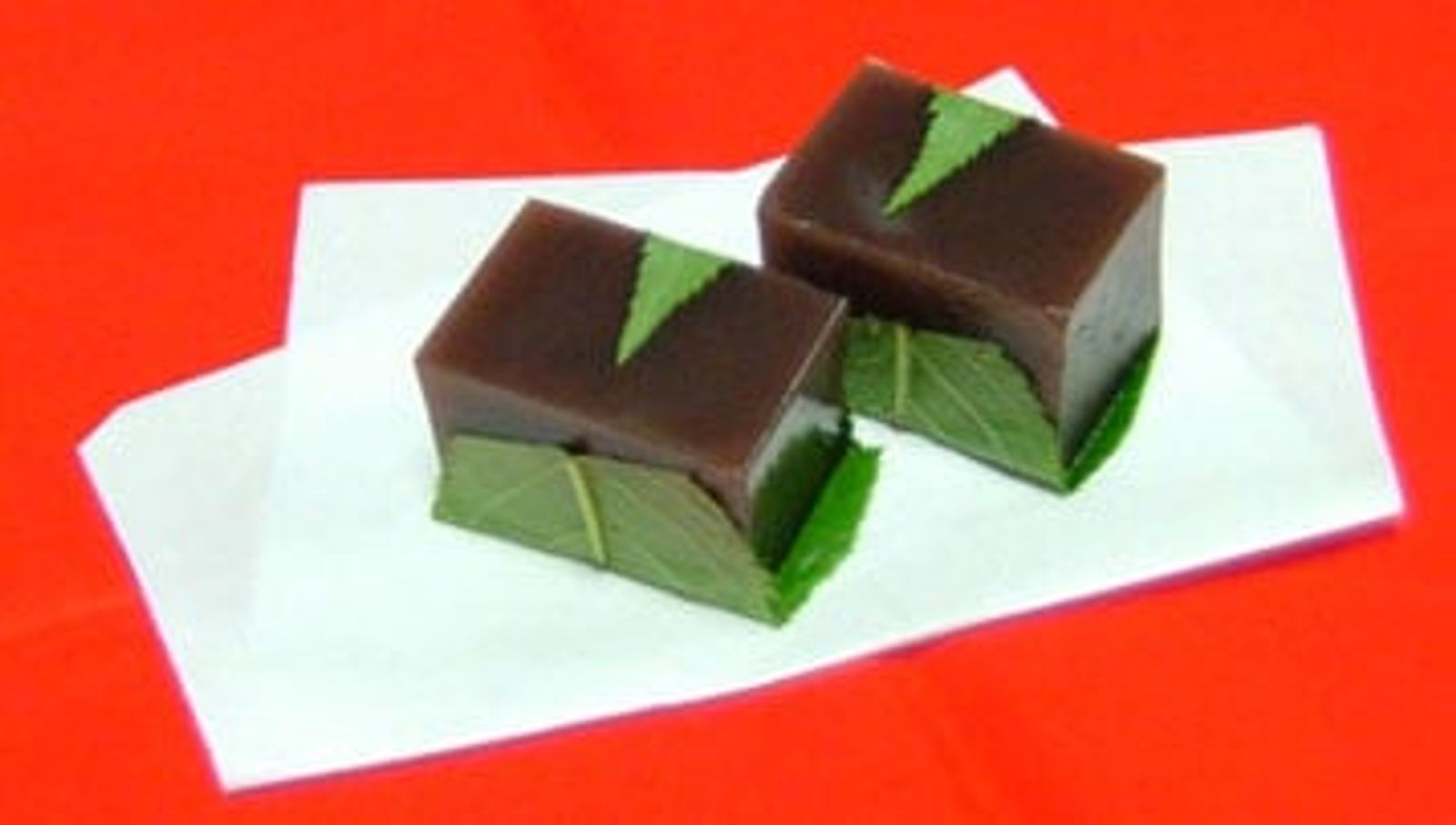
Yokan · Photo: Tarobo (ja.wikipedia) / CC BY-SA 3.0 (Wikimedia Commons)
 JapanNikko
Nikko Yokan: An Edo Pilgrim's Souvenir and a Mizu-Yokan Eaten in Winter
In the Edo period, when pilgrims thronged to Toshogu, sweet shops lined Nikko's approach roads, and the most popular treat was yokan. Here is the history of yokan shops more than 200 years old, Nikko's mizu-yokan eaten in winter rather than summer, and tips for choosing.
What Is Yokan? Red Beans, Agar and Sugar
Yokan is a Japanese confection made by cooking sweet red bean paste with agar and sugar and setting it in a mold. There are two main types: "neri-yokan," cooked down until firm and rich, and "mizu-yokan," made with more water for a soft, moist texture. Neri-yokan has little moisture and lots of sugar, so it keeps well and makes a good gift, while mizu-yokan melts on the tongue but has a short shelf life. In most of Japan, mizu-yokan is considered a chilled summer sweet, but Nikko has a slightly different tradition. Nikko is a town with deep ties to yokan, with close to ten yokan shops in the city.
Edo-Era Pilgrimage to Nikko and Yokan
The history of Nikko yokan begins with pilgrimages to Toshogu. Nikko Toshogu, which enshrines Tokugawa Ieyasu, drew not only feudal lords and hatamoto (the shogun's direct retainers) but also commoners in the Edo period. According to the Japanese lifestyle magazine Serai, in the late Edo period, when the Kasei culture flourished, the number of commoner pilgrims rose sharply, reaching 30,000 within just a few years. Shops selling sweets lined the approach roads, and the most popular of all was yokan. It kept for a long time without spoiling, making it the perfect gift for pilgrims to carry home on their long journey. On trips that took several days on foot, a sweet that kept well was the most welcome souvenir of all.
Yokan Shops with More Than 200 Years of History
Several long-established yokan shops survive in Nikko today. According to Serai, Nikko's oldest yokan shop was founded in 1787 and in the Edo period filled gift orders for Toshogu, feudal lords and the imperial court, spreading the name of "Nikko neri-yokan" nationwide. Others followed: a shop that started in 1804 making sake buns and began producing yokan in the Meiji era, one that opened in the early Meiji era, and one founded in 1895 as a yokan specialist. Each puts its own character into Nikko's water, its beans and its methods, so the sweetness and texture vary slightly from shop to shop. Shops born in different eras coexisting on the same streets is part of the fun of Nikko yokan.
Nikko's Mizu-Yokan: A Winter Sweet, Not a Summer One
The most intriguing thing about Nikko yokan is the season for mizu-yokan. In most of Japan, mizu-yokan is a chilled summer sweet, but according to Serai, in Nikko it was a winter food eaten while sitting at the kotatsu (heated table), and it was even included in osechi, the New Year feast. The reason lies in Nikko's cold climate. Mizu-yokan is high in moisture and spoils easily, and before refrigerators, Nikko's bitter cold served as a natural refrigerator. So shops made mizu-yokan in winter, taking advantage of the bone-chilling weather, and are said to have stored it in snow. It is available year-round today, but eating mizu-yokan in a warm room in wintry Nikko is an experience unique to this town.
Tips for Choosing and Enjoying
Nikko's yokan shops cluster around the main street leading to Toshogu, especially in the town center near Shinkyo Bridge. For gifts, long-keeping neri-yokan is the safe choice; if you will eat it there or within a day or two, try moist mizu-yokan. Flavors vary slightly from shop to shop, so buying small sizes from several shops to compare is a fun approach. Yokan tastes gentler with strong green tea. It is usually cut into thin slices and eaten a little at a time, and mizu-yokan is sometimes scooped with a spoon or pick. Mizu-yokan spoils easily, so always check the expiry date and storage instructions when buying. A slice of yokan and a cup of tea after your visit to the shrines may give you a small taste of how Edo-era pilgrims felt.