Hongseong's Namdang Port Torigai
 KoreaSouth Chungcheong · Hongseong
Hongseong's Namdang Port Torigai: The Winter Shabu-Shabu Clam of Cheonsuman Bay
In the dead of winter, Namdang Port in Hongseong fills with people who have come for saejogae, a clam named for its bird-beak-shaped flesh. Here is how it became a Cheonsuman Bay specialty, when to go, how to eat it shabu-shabu style and what else to see nearby.
A Clam Shaped Like a Bird's Beak
Saejogae, literally bird clam, gets its name from the shape of the flesh revealed when the shell opens, which looks like a bird's beak. It belongs to the same group as Japan's torigai, a sushi topping whose name also means bird shellfish. The flesh is large and thick, and it gets sweeter the more you chew. Saejogae is considered a precious catch. It cannot be farmed, so the entire supply is wild, and the harvest swings from year to year, which also makes the price vary a lot. Nutritionally, it is described as richer in taurine than most clams, low in fat and calories, and high in protein and minerals such as iron and zinc.
Cheonsuman Bay and Namdang Port
Namdang Port, famous for saejogae, is a small harbor in Seobu-myeon, Hongseong, on the eastern shore of Cheonsuman Bay. The bay, enclosed by Seosan, Hongseong and Boryeong, is shallow and calm, with rich mudflats and nutrients that make it ideal for shellfish. A 2010 Seoul Shinmun report says saejogae began to thrive in Cheonsuman after the Seosan A and B land reclamation projects, suggesting the changed marine environment happened to suit them. Namdang is also known for king prawns in autumn, so the port stays busy most of the year: prawns in the fall, saejogae in winter. Raw fish and shellfish restaurants line the waterfront, and in winter every tank is packed with saejogae. Cheonsuman is also a famous wintering ground for migratory birds, so you may spot flocks on your way to lunch.
When to Go
Saejogae starts being caught in December, when the sea wind turns cold. Reports agree that the tastiest period is January to March, as the clams fatten before spawning, and that February and March in particular bring the plumpest flesh and more of the sweet-tasting amino acids glycine and alanine. Accounts vary, though: one report says January and February are best and the flesh turns tougher from March, while others say you can still enjoy them into April. So plan a saejogae trip for midwinter to early spring. Keep in mind that because the clams are wild, the catch and the market price change a great deal from year to year. In a good year you can eat generously; in a poor one, prices can jump or the season can end early. Checking recent Namdang news or local reports before you set out can save you a wasted trip.
How to Eat Saejogae Shabu-Shabu
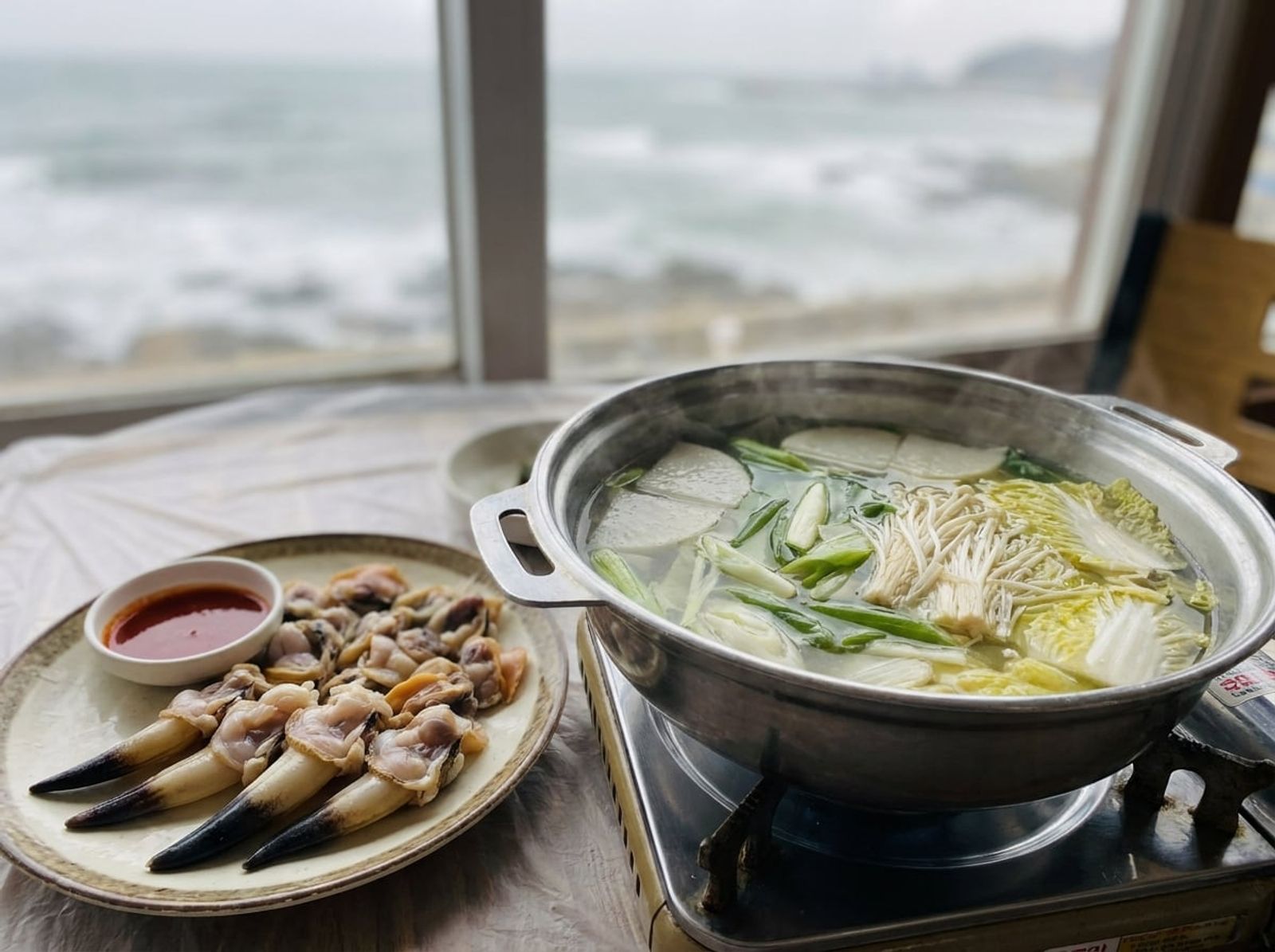
The classic way to eat saejogae at Namdang is shabu-shabu. A clear vegetable broth is set on the table; you hold a piece of cleaned clam with your chopsticks, dip it briefly and pull it out the moment it changes color. Cook it too long and it turns chewy and loses its sweetness, so a quick dip is the key. It is sweet on its own, and also good with chogochujang or a soy dipping sauce. Once the clams are gone, the Namdang way to finish is to cook kalguksu noodles or ramyeon in the broth, now full of shellfish flavor. Some restaurants also offer saejogae sashimi, grilled saejogae or a spicy salad. Prices follow that season's market rate, so ask about the price and how much your group needs before ordering.
The Festival and What to See Nearby
Namdang holds a saejogae festival every winter, a local favorite that reached its 23rd edition in 2026. Recent festivals have promoted fixed prices to prevent overcharging and stricter hygiene, with concerts, a singing contest and a clam-shucking competition. Extra parking and shuttle buses are sometimes provided during the festival. Dates are set each year according to the catch, so check Hongseong County's announcements. After lunch, take a drive along Cheonsuman. Gungni Port, about ten minutes from Namdang by car, is the starting point of a coastal drive along the bay and a well-known sunset spot. The roughly 65-meter Hongseong Sky Tower offers a 360-degree view over Cheonsuman and the west coast. A winter sunset over the Yellow Sea and a pot of saejogae are what a Namdang trip is all about.